Divine Whispers | Viju Jeremiah Traven
“Look not upon me, because I am black, because the sun hath looked upon me: my mother’s children were angry with me; they made me keeper of the vineyards; but mine own vineyard have I not kept.” (Song of Songs 1:6)
YOUR SORROWS REFINING YOUR MORROWS
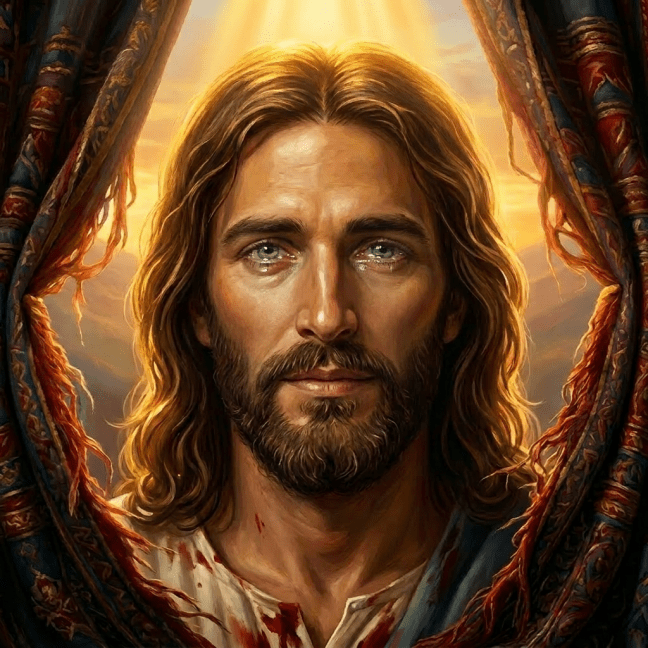
The scorching sun burned your skin; I was there, and I was burning within (Psalm 139:7–12; Isaiah 43:2; Song of Songs 1:6). The desert sun burned you for following the Son; I have called that tanning fair (Matthew 5:10-12). Because you followed the Crucified One (Mark 8:34), came close to kiss the Son (Psalm 2:12), the jealous sun looked upon you and left its mark upon your skin (Song of Songs 1:6). That mark is not your shame (Isaiah 54:4). That scar is Mine (Galatians 6:17).
There is no spot in you, My Beloved. You are altogether beautiful (Song of Songs 4:7). You are entirely My own (Isaiah 43:1). When your outer self wears out for My sake, your inner self is renewed day by day. Your pain is momentary; the glory it produces will not fade away (2 Corinthians 4:17–18). You laid your body down, acceptable and holy, a living sacrifice, yours to give (Romans 12:1–2). Through your obedience, I perfect you; through your patience, I renew you. Follow Me faithfully (Hebrews 10:14; Psalm 103:5)
My flawless one: Listen to My whisper and rejoice in your sufferings (Song of Solomon 5:2). Glorify Me as I glorified Him, the obedient Son (John 17:4; Philippians 2:8). I endured the Cross for the joy set before Me, and I bore it to the tree (Hebrews 12:2). Share in My sufferings. Walk the road I walked. It will make you free to reign with Me (1 Peter 4:13). For suffering works endurance in you, and endurance forges character in the flame, and character works hope in you, and hope will never put you to shame (Romans 5:3-5).
I. THE ROWS YOU WALKED THAT WERE NOT YOURS
They made you keeper of vineyards; you kept them. Well done (Song of Songs 1:6; Matthew 25:21). Faithful over the little: My good and faithful one (Matthew 25:21; Luke 16:10). You bore the highest cost; My Father kept the account. Nothing was lost (Matthew 6:4; Luke 14:27). The prime years those vineyards claimed: I have not forgotten one of them (Hebrews 6:10). I restore what the season consumed, in a return that outruns the taking (Joel 2:25). The fruitfless rows are behind you (Philippians 3:13).
The unkept garden aches deep in your soul; you press on toward the goal
(Psalm 38:9; Philippians 3:14)
You are not standing alone in these rows (Joshua 1:9). A great cloud of witnesses has walked this same ground before you (Hebrews 12:1), every one of them sun-worn, every one of them held by the same hands holding you now (Deuteronomy 33:27). Every hour you gave to ground not yours is held before Me: no sun burns it, no silence erases (Hebrews 11:8; Malachi 3:16; Revelation 20:12).
II. THE STONE FLOOR BEFORE DAWN: ANNA
Never for herself, for My face alone, she wept; every tear I kept (Psalm 27:8; 56:8). Eighty-four years old. A widow since the green years (Luke 2:36), since the morning her world contracted to one room, one altar, one Name (Psalm 27:4), she refused to stop pressing into the silence (Luke 18:1-7). She had not departed from the temple (Luke 2:37). Fasting, praying, keeping her oil to burn; the altar her address until His return (1 Timothy 5:5; Matthew 25:1–13; Psalm 84:3–4). The feast crowds came and went. She remained (Psalm 92:13). Not because remaining was easy. The altar was still standing, and her knees still knew the way to it (Isaiah 35:3).
I watched her cry; I watched her lift the oil before it ran dry. (Habakkuk 1:2; Psalm 22:2; Leviticus 24:2; Matthew 25:4). Her faithfulness counted by none; heaven drew her out to be the first one to see the newborn Son (Matthew 6:6; Malachi 3:1; Luke 2:38). She who had waited longest in the dark spoke first into the morning (Isaiah 9:2). God does not forget faithfulness given in the hidden years (1 Corinthians 4:5). Heaven kept the account when ledgers of me forgot her name (Hebrews 6:10).
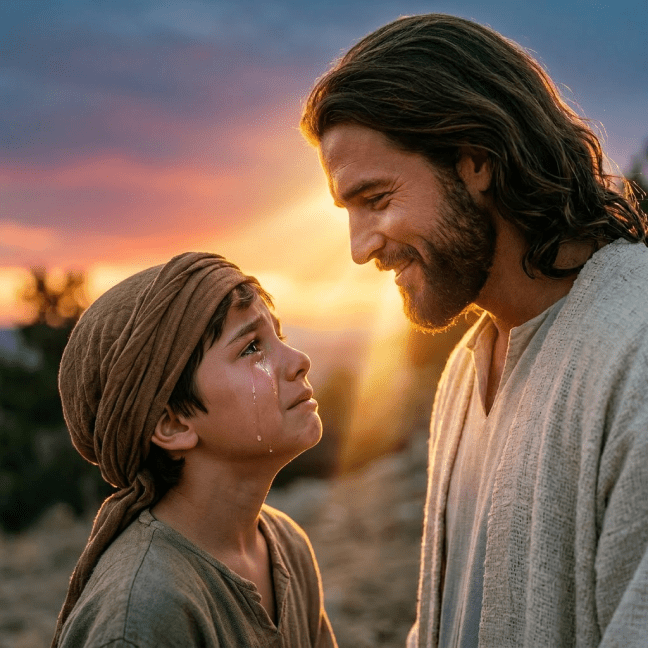
I have been keeping your account the way I kept Anna’s (Nehemiah 13:31). Every tear gathered and held, not one fallen without My notice (Psalm 56:8). The weeping that has lasted through your long night: I have already written what comes after it (Psalm 30:5).
III. THE COST OF THE UNKEPT GARDEN
Stay here a moment (Mark 14:34). I want you to feel the full weight of what you carried (Galatians 6:2) before I tell you what I did with it (Isaiah 53:4). The sun-worn years. The fruitless plantations that claimed what you had (2 Corinthians 12:15). The garden of your own soul that grew quiet, not from carelessness but from the sheer, faithful cost of staying (Song of Songs 1:6). You gave past what you had (2 Corinthians 8:3). And when the season finally broke, you looked at your own ground and did not recognize it (Job 30:20-22).
That is the wound I am standing inside with you right now (Isaiah 63:9; John 20:26-27).
What suffering made in you: endurance, (Romans 5:3–4) the open hand, (Deuteronomy 15:11) the grip that would not let go. (Genesis 32:26) Hidden riches I alone know (Colossians 2:3). I am not standing above your unkept ground. I entered it (John 1:14). Wore flesh (Hebrews 2:14), walked into every cold floor, every spent field, tested in the same fires from inside the same frame of dust and cost (Hebrews 4:15); (Psalm 103:14). I walked the rows (Isaiah 53:3).
IV. THE OPEN HAND IN THE DARK: DAVID
The cave was absolutely dark (1 Samuel 22:1; Psalm 142:1-3). He could not see his own hand in front of him. Three thousand soldiers of Saul were hunting David through the rocks because a jealous king could not bear the weight of his name (1 Samuel 24:2). And then the king himself walked into the cave, alone (1 Samuel 24:3). The men of David pressed close in the dark. Now, they breathed and spoke. The Lord has delivered your enemy into your hand (1 Samuel 24:4). David rose. He moved without a sound. His fingers found the edge of the royal robe. He cut a corner of it in the silence (1 Samuel 24:4).
And then his heart struck him (1 Samuel 24:5).
He laid what his hand found; I laid My twelve legions on the ground (1 Samuel 24:6; Matthew 26:53; Philippians 2:6–7). He stepped back. Not from weakness. From a reverence that ran deeper than the need for vindication (1 Samuel 24:6; 26:9). Shame named him by the dark; I named him by what I alone mark (Psalm 35:26; 78:72). I searched his heart in that cave, every motive, every trembling restraint, and I knew him, and I called him My own (Psalm 139:23-24). Not by his victories. By that surrender (1 Samuel 13:14).
I see your open hand (Psalm 26:2). The record of wrongs you erased (1 Corinthians 13:5). The vindication you had every right to claim and set down instead, in the dark, when no one saw it, but Me (Matthew 6:6). Vengeance belongs to Me. The one who trusts Me with it has understood My nature in a way the one who seizes it never will (Romans 12:19; Deuteronomy 32:35). That open hand is not weakness in you (2 Corinthians 12:9-10). It is the mark of My nature carried in mortal flesh (Philippians 2:5-8), and it is one of the things I love most about you (Proverbs 11:20).
Your unkept garden was partly given there. In the cave. On the altar of the open hand (Luke 22:42). I received that offering (Philippians 4:18). I have been tending to what you surrendered (2 Timothy 1:12).
V. THE HILL
I set My face toward it before you were born into the season that broke you, like a stone set toward what was coming, toward the cost of you (Isaiah 50:7; Luke 9:51). I counted you worth it (Hebrews 12:2).
I remember the wood on My shoulder. (John 19:17) The specific cold of the iron (Psalm 22:16). The sky sealed. The earth held its breath (Matthew 27:45; Mark 15:33). His face turned from Mine: a second death (Matthew 27:46; Mark 15:34). I wore that. Willingly (John 10:17–18). Not from duty. From desire (Luke 22:15). From fire. Your name was already Mine (Ephesians 1:4).
I carried the full weight of what the sun demanded of you: the years the vineyards took, the garden you could not keep, every wound, every stripe, laid upon Me and carried in My body (Isaiah 53:4-5; 1 Peter 2:24). I did not carry your vineyard to the hill because you kept it; I carried it because you could not (Romans 5:6), and I would not let you carry it alone (Matthew 11:28).
It is finished (John 19:30). Both burdens (Isaiah 53:11). Every row worked, every row bare (Song of Songs 1:6): both grafted into the true vine (John 15:1; Romans 11:17). You are Mine (John 15:5; Song of Songs 2:16). Paid (Colossians 2:14). Done (Revelation 21:6). I was made dark on Golgotha (Galatians 3:13) so that the word before the world had a name (Ephesians 1:4), you are altogether beautiful, My love, there is no spot in you (Song of Songs 4:7; Ephesians 5:27). This could be spoken now, the same: in the dry season, not only after.
VI. THE GARDEN I HAVE BEEN TENDING
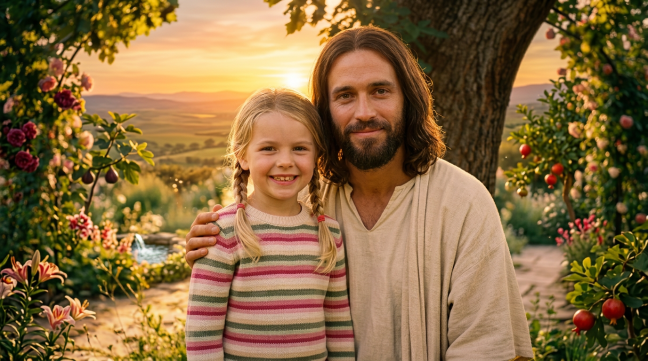
The winter is past. The rain is over and gone (Song of Songs 2:11). I have said it (Isaiah 55:11). The One who says it made the winter, made the rain (Genesis 8:22); (Psalm 74:17), and set the specific morning your season turns (Ecclesiastes 3:1); (Daniel 2:21). Come away (Song of Songs 2:10). Not because the garden is fully recovered. Not because the record is restored and the years are returned (Habakkuk 3:17-18).
Come away; not because the garden has regained its day, But because the Gardener chose forever to stay
(John 20:15; Matthew 28:20).
I have been in your unkept ground this whole long season (Psalm 139:8), working in the rows you could not reach (Philippians 2:13), holding what you could not hold (Isaiah 41:10). The years the sun consumed: I am restoring them, row by row, in a return so full it outruns the memory of the taking (Joel 2:25; Isaiah 65:17). The your garden you could not keep was never, for a single hour, outside My keeping (Isaiah 27:3).
Both burdens of the vineyards were carried to the Cross (Isaiah 53:4). I am at the door. Come inside and dine with Me (Revelation 3:20), not as one who earned the table (Ephesians 2:8-9), but as My Bride for whom it was always laid (Revelation 19:7-9). The winter is past (Song of Songs 2:11). The Gardener is here (John 20:15). And you, sun-worn, open-handed, faithful in ways you will not fully know until the morning that has no evening (Revelation 21:23-25), are more beautiful to Me than you have ever dared believe (Zephaniah 3:17).
APPLICATION
Open your Bible to Song of Songs 1:6. Read it aloud, both halves. Let the first half name what was done to you: the sun, the others’ vineyards, the years given. Let the second half name what you could not keep. Then turn to Song of Songs 4:7. Speak it slowly over both halves. Place your open hand flat on the page (Joshua 1:3). Stay there until the declaration lands on both, the sun-worn and the unkept, as one word, spoken once, covering all of it (Isaiah 40:8).
PRAYER
You carried both to the hill with tears (Hebrews 5:7). I could not have carried either alone (Psalm 61:2). Here is the sun-worn vineyard. Here is the unkept garden. Both are Yours now, purchased on that hill (1 Peter 1:18-19), tended by Your hand (John 15:1). I bring my open hand (Psalm 143:6). I come away (Song of Songs 2:13), not because I am recovered, but because You never left the garden (Hebrews 13:5). You are the Gardener (John 20:15). I am Yours (Song of Songs 2:16). Amen.
The winter was long; your faithfulness was not in vain, for the love of the One Who stayed will always remain
(1 Corinthians 13:8; 15:58; John 17:4).