His Cross Broke the Wall, Rebirths Us All

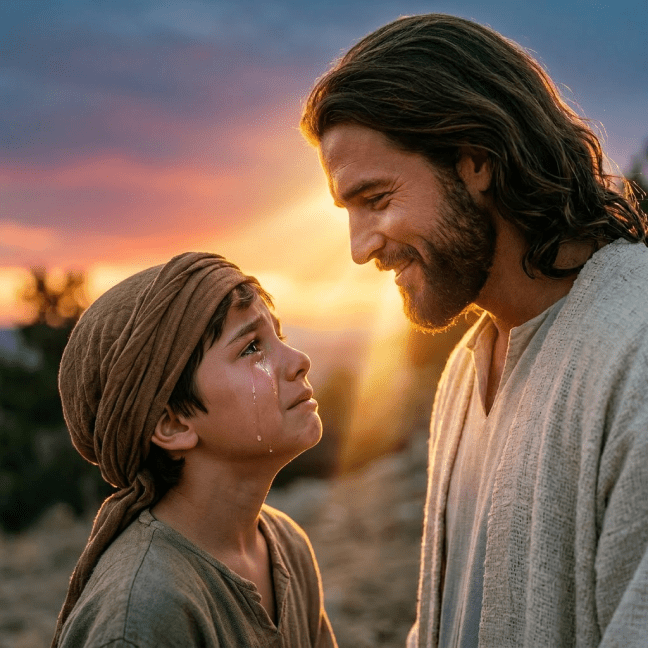
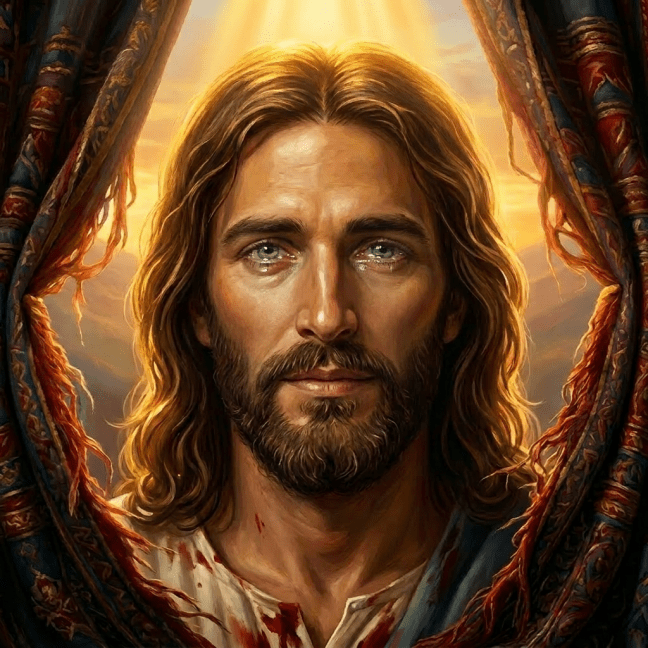
Jesus Christ in white robe ascending with arms open surrounded by people looking up under glowing curtains.

Divine Whispers | Viju Jeremiah Traven

He did not grow cold. He came closer, and what rose in Him was not anger. It was fire. It was love too fierce to lose me.


Beloved, I have loved you with an everlasting love that ever lives to intercede before the Father, releasing grace for you to work out your salvation with holy fear and trembling (Jeremiah 31:3; Hebrews 7:25; Philippians 2:12–13). I have not grown cold. I come with a flame no flood can quench. A zeal no cold water can kill. This fire does not rise from anger. It rises because love burns (Song of Solomon 8:6–7). Before the first dawn broke the darkness, I knew you (Jeremiah 1:5). Before Golgotha stood before the eyes of men, I had already chosen you for Myself (Ephesians 1:4). From the Cross I claimed you, and I have come to consecrate you, make you spotless, and present you before the Father in holy splendor (Ephesians 5:25–27).


I. WHAT THE EXCHANGE COST

I bore your griefs (Isaiah 53:4). I wore your curse so your weeping could break open into dancing, so your shame could step into My marvelous light (Galatians 3:13; 1 Peter 2:9). I drank wrath to give you life, going down into death to lift you into the Father’s own house (Matthew 26:39; Ephesians 4:9–10). What the Law demanded, My love fulfilled, not from outside the courtroom, but from inside it, in My own flesh and blood (Romans 8:3–4).

I did not come to condemn you (John 3:17). I came as the One who owns you, stepping forward to claim what I bought with My own blood (Acts 20:28; 1 Corinthians 6:20). I would rather leave your comfort in ruins than leave My Bride in a counterfeit home. I paid a price that makes no sense, to buy a heart that did not want Me. You were not merely bought back; you were longed for, before the price was even named (1 Peter 1:18–19).


II. THE MARITAL ZEAL

I still walk through the middle of your gatherings (Revelation 2:1). I remember standing in the outer courts, watching the tables in the Jerusalem Temple. What rose in My chest before the cord was in My hand: a consuming zeal, fire shut up in My bones (Psalm 69:9; John 2:17). My voice on Patmos rolled like many waters (Revelation 1:15). John fell as though dead (Revelation 1:17). I raised him up.

The same fire that swept the Temple clean is the fire that burns for you (John 2:15–17). I am not merely a tender Bridegroom. I am the Bridegroom who bore the Cross, and will not bear what degrades His Bride (Hebrews 12:29).


III. WHAT I SEE IN YOUR ASSEMBLIES

I have seen the disorder. Fellowship houses thick with men’s ambition. Prayer rooms turned to stages. The dwelling meant for My glory crowded with what I never asked for (Jeremiah 7:11). The Church I bought with My blood will not be ruled by the pride of men (1 Corinthians 3:16–17). What corrupt hands have built, holy fire will burn away. Pure incense will rise again, not as a monument to men, but a living home for My Spirit (Isaiah 1:25–27; 2 Corinthians 6:16).

Look at My Cross. My final cry on Calvary was not defeat (John 19:30). That cry was love’s loud decree; the moment mercy met justice, and neither flinched (Romans 5:8; Colossians 2:14). I did not weep because the Cross was heavy. I wept because the love inside Me was heavier (Hebrews 12:2; Luke 22:44). The Cross was the birthplace of one new family (Ephesians 2:14–16). Love counted every cost and went. Every strange fire that rose from the altar of men’s desire fell on the only Savior of sinners, so that My fire could burn what was meant to destroy you (Leviticus 10:1; Romans 8:1; Colossians 2:14).


IV. THE WALLS I TORE ARE RISING AGAIN

The ancient wall between your soul and My Father’s face came down (Ephesians 2:14). I drew the wandering near (Ephesians 2:13). One Body. One family. One holy Name (1 Corinthians 12:13). You are no longer a stranger, no longer far off. You are clothed in My Name and held in My love (Galatians 3:28; Colossians 3:11–14). My Beloved, I look upon My own house, and I weep. The walls I tore down are rising again. Stone upon stone, sealed with the cold mortar of pride (Proverbs 16:18).

I bless you to receive all good things from My hand (1 Timothy 6:17). I gave you power, not to lift yourselves, but to be My witnesses to the ends of the earth (Acts 1:8). But many have loved the gift more than the Giver (Romans 1:25). They love the show of themselves, not the unveiling of the One who pours the fire (1 Corinthians 12:4–7). They glorified the donkey and forgot the King of Glory (Zechariah 9:9).

And you have felt the coldness of that. You have sat in rooms where the gifts were on show and the Giver was gone, and something in you knew the difference. My remnant has never loved their lives even to the point of death. They overcame by the blood of the Lamb and the word of what He did in them (Revelation 12:11). That is your blood. Do not sell it for a title.

I am not speaking of others. I am speaking of you.

You know the gift I placed in your hands. You know what you have spent it on. Why do you spend yourself for names that fade and platforms that fall, when Mine is the only Name already written on your forehead, the only one that will stay (Revelation 3:12; Philippians 2:9)? Let My Word enter you not as a code to master but as a fire to obey (James 1:21–25; 2 Timothy 3:16–17).


V. THE VESSELS OF DECREASE

Your proud leaders chase the chief seat. Fame. Honor. Gold. Their god is their hunger, and their glory is their shame (Philippians 3:18–19). Like shepherds who feed only themselves, they scatter My sheep (Ezekiel 34:2–6). By their strife, they divide what I died to make one (1 Corinthians 1:10–13). They gather crowds but cannot give life. They build revival movements but fail to bring to full growth the souls they gather (Colossians 1:28; Matthew 28:19–20). Lured by wealth, they walk away from faith (1 Timothy 6:10).

I am not looking for performers. I am looking for parents (Galatians 4:19; 1 Corinthians 4:15).

You, whose chest knew the ring of the counterfeit before your mind could name it. I see you. That hollow is not a wound. It is the mark I put in you for the real thing.

I am seeking the donkeys that carry the King of Glory: lowly, yielded, bearing My presence without seeking any praise (Zechariah 9:9; Mark 11:2–7). I seek those who know that He must increase and they must decrease, and have chosen it (John 3:30). Those who die daily, carrying in their bodies the death of their Lord so that My life may flow through them to the lifeless (Luke 9:23; 2 Corinthians 4:10–11).

What bows in secret and weeps alone; becomes the place I call My home (Psalm 51:17; Isaiah 57:15).

Be still. Waiting is not the same as absence. Listen to what I say to My Father about you.

The sun scorched the skin I made divine; the desert only proved she is Mine (Song of Solomon 1:5–6).

That is what I see when I look at you. Hold that before you read what comes next.


VI. THE ROYAL RIGHT

Before your first breath broke the silence, I had spoken your name (Romans 8:29–30; Jeremiah 1:5). I called you. I covered you. I came (Ephesians 1:4–5).

Paul was not raised by human hands. No council clothed him. No earthly voice sent him. I struck him down. I spoke into his dust. I broke his self-reliance. Then I sent him forth, with no proof except the fire in his chest and the letter written in My own Name (Galatians 1:1, 11–12; Acts 9:3–6). That is My ordination.

Uzzah stretched his hand to My ark without holy fear and fell (2 Samuel 6:6–7). Many rise to platforms before they have bowed in brokenness. They speak of their Maker without truly knowing Him in the secret place (Matthew 7:22–23). Seek My face before you seek a crowd (Psalm 27:8). My presence changes them; what they behold, they become (2 Corinthians 3:18).

No man may bear My glory who has not first gone down before My face (Isaiah 66:2).


VII. THE IRON CEILING

My vessel of glory, see My wound. I spoke through the tears of My servants: savage wolves would rise from among your own elders (Acts 20:28–31). And it has. False workers clothed as apostles feed on the wool, leaving My purchased flock bruised, starved, and thrown aside, every one of them kept in My sight (2 Corinthians 11:13–15; Ezekiel 34:8–10). I have seen it. I have wept.

The brass sky. The iron vault. Your proud ranks form a sealed dome, and My rain strikes stone (Leviticus 26:19). Racism seals the sky. Partiality blocks the oil (James 2:1–4). I drop the plumb-line, white fire rips what pride built shut (Amos 7:7). I did not bleed to build a dome; I bled to bring you home (1 John 4:20; Ephesians 2:19).

From every shore and tongue, My scattered children find the life they were made for. No longer strangers. No longer far. They beat as one Bride within My broken heart (Psalm 133:1–3). Look at the table I spread on the night I was handed over, not a ladder, but a circle (John 13:12–17). Where all nations meet, I kneel, and wash their feet (Matthew 20:26–28).

Before I send you into the open sky, rest here. You are Mine. Not because you have kept yourself clean. Not because you have held off every counterfeit. Not because your hands are empty enough. Because I bought you (1 Corinthians 6:20).Because I chose you before the foundations shook (Ephesians 1:4). Because the Name already written on your forehead is not a reward. It is a declaration I made before you could earn or lose it (Revelation 3:12). You are My Bride. That is settled. Everything I have said to you flows from that, not toward it.


VIII. THE OPEN SKY

Beloved, the veil I tore on Golgotha is still torn (Hebrews 10:19–20). The sky is not sealed. The ceiling is a lie every fearful generation rebuilds, and every generation of the burning-hearted tears down again.

Every wall man builds, the Cross has broken (Ephesians 2:14). Step out. The fire I carry is not judgment; it is a Bridegroom who will not rest until My Bride stands in open sky, arms wide, face toward Mine (Ephesians 3:18–19). The latter rain is falling (Zechariah 10:1). Every wall the Cross has broken; step into the rain with open hands.

Behold the agony of My mercy: I see every stumbling step and I smile, because I watched you speak as a child speaks, and think as a child thinks, and I have seen you, one by one, lay the childish things down and grow up into Me (1 Corinthians 13:11; Ephesians 4:13). My full maturity. My blameless purity (Ephesians 5:27). 

I am calling you higher. I will break every ceiling proud hands built over you, just to watch you rise under My wings into open skies (Isaiah 40:31; Psalm 91:4). Seek My face until you are bone of My bone; the Bride who is fully known (Genesis 2:23; 1 Corinthians 13:12). I am not coming for a building; I am coming for a Bride, refined as gold through fire (Revelation 19:7–8; 1 Peter 1:7).

I am coming. And I will not be long (Revelation 22:20).


APPLICATION

Open your Bible to John 17, verses 20 through 23. Read aloud, in your own voice, slowly. After each verse, pause and lay your open hand flat upon the page. Let the Bridegroom’s prayer speak over every wall you have helped raise. Then turn to Ephesians 2:14 and speak it aloud over every line that divides, title, tribe, color, tongue, that you still carry. Stay there until the stone begins to give.


PRAYER

O Bridegroom, whose zeal for Your house is a fire love alone sustains. I have bowed to ceilings You never built and called them holy. Forgive me. Break what I have sealed. Take my title, my stage, my hunger to be seen. Rain on what remains. Come quickly. Amen.


“The veil is torn. The way is open. I am coming for a Bride, not a building, and I will not be long.” 

(Hebrews 10:20; Revelation 22:20)

Redeeming Blood, Redeemed Bride: Let None Divide

Bride eating matzah during a Jewish wedding ceremony with rabbi and guests

Bride: The border breaks, the shadows flee; Your broken body sets us free.

Divine Whispers | Viju Jeremiah Traven

Beloved, every time you come to My Table, come knowing what it cost (Luke 22:19–20; 1 Corinthians 11:26). I paid that price for you to love each other and remain one body (John 17:21–23; Ephesians 2:13–16). Remember My voice moving through the cool of the day, and nothing between you and My face but light (Genesis 3:8; 1 John 1:5–7).

I know the separating wall you built (Ephesians 2:14). I know the divisions you caused. I know what you were protecting when you laid the first stone, and I know what wounded you before you ever reached for the mortar (Genesis 4:5; Romans 3:23).

The blood of Abel fell on the ground and cried to Me (Genesis 4:10; Hebrews 12:24). I heard it then. I hear it now.

Envy’s hand and self-love’s grip tear the body I purchased with My own blood (1 Corinthians 12:25–27; Galatians 5:19–21). That which I bought at the cost of everything, you are spending on division.

What Triune Chord aligned, let no discord divide.

(Matthew 19:6).

If you disown the brother I named Mine, you disown the blood that bought him (Romans 14:15; 1 John 4:20–21). If you walk away from the oneness I bled to build, you walk away from the inheritance I died to give you (John 17:21; Ephesians 4:3–6).

I desire to restore (Joel 2:25; Isaiah 58:12). I love what harmony costs — I paid it (Colossians 1:20; Ephesians 2:16). But restoration needs open hands (Matthew 5:23–24; Ephesians 4:32).

Come away from the wall. Come back to My Table (Revelation 3:20). The Garden of beginnings is not behind you — it waits ahead, and the gate opens only for a Bride who is whole (Revelation 21:2; John 17:23).

Before the first wall rose between you and the Father’s face — I was already weeping.

I. BEFORE THE FIRST WALL WAS BUILT, I WEPT

You were not made for walls or tribes or the weight of a name you had to earn.

I spoke a garden out of nothing, and nothing became ground, and the ground became yours for this: that you would never have to stand outside it alone (Genesis 2:8–9). I moved through Eden in the cool of the day. Before grief had a name I was already calling yours. You are the living stone, quarried from the Cornerstone, belonging to it alone (1 Peter 2:4–5; Ephesians 2:20).

The hand reached. The gate sealed. But the morning I made you from — I kept (Genesis 3:24). Before the first wall rose between you and His face, I wept. Not because I was surprised. I had already chosen you, chosen to carry what you would cost Me (Ephesians 1:4). I remember the grain of the wood. I remember carrying what you could not (John 1:14; Isaiah 53:4).

They loved their walls more than they loved one another, and the nations fell apart. They drew their lines in the dust of skin and tongue and nation, across the very ground His blood had bought back as one (Galatians 3:28; Revelation 5:9). I chose the Cross to make what was many, one (Ephesians 2:14–16). And on the third morning after that choosing, one woman came to the garden carrying grief toward a stone that was no longer there.

II. SHE CAME FOR A TOMB AND FOUND A GARDEN

She had come for a sealed tomb.

The entrance stood open to the dark. Her hands were still carrying the spices she had brought for a body: the specific weight of the jars, the smell of myrrh in the grey before dawn, the ritual she had arranged for a grief she thought would be the last thing she would ever do for Him (John 20:1). She had given her mourning a shape she could hold.

Then the shape was gone.

She stooped and looked in. Two angels. A hollow where the body should have been. She turned, and a man stood behind her in the growing light. The garden was silent. She did not know Him by sight — she was looking for a corpse and found a gardener, and for one moment the whole world was just the sound of birds and the smell of earth and her hands still holding what He no longer needed (John 20:14–15).

Then He said her name.

Mary.

(John 20:16)

One word, and the morning remade itself. She had come to give the dead the only gift the living could still offer. He was standing in the light she had not looked up long enough to see. She had heard a voice in a garden once before the serpent in the green of the first morning, and the whole world fell (Genesis 3:6). Now in another garden at another dawn, the Last Adam called her by name (1 Corinthians 15:45). The grave could not hold what it had been given (Acts 2:24). What the gate of Eden sealed, the wounds of the Cross restore (Ephesians 2:13–14).

She came with grief for what was sealed. She found the gate already open. She came to tend what death had held, she heard her name, and death was broken. Why are you still weeping, My Beloved? The gate has been open since that morning. I am standing in the open garden, and I am calling your name.

III. THE WALL YOU BUILD WITH MY NAME

You are not your own (1 Corinthians 6:19–20). You were purchased at a price no tribe, no tongue, no generation can repay: blood spent at full cost, the deed of ownership written in wounds that still speak (Hebrews 12:24).

Yet I see them rising.

The voice of the wall has a sound. It has always had one. It sounds like faithfulness. It sounds like love for the flock. It sounds like the right thing, which is why you believed it. And before I name it for what it is, I want to say this: I know why you built it. Something opened that should have stayed guarded. Someone you trusted walked through the door you held wide and left damage behind them, and you decided, quietly, reasonably, in the way that wounded people decide things, that the door would not open that wide again. You called that wisdom. You called it love for the ones inside. You gave it My name, and it felt like faithfulness, because at its root it was grief, and grief dressed as conviction is the hardest thing to name from the inside.

Hold the line. Hold the form. This is how you protect what was entrusted. This is what staying looks like. Your distinctives are your faithfulness. Your boundaries are your love. Hold on.

I know that voice. It lived in the Pharisee who prayed at the corner of the street and thanked God he was not like other men (Luke 18:11). It lived in the elder son who would not enter the party because his brother did not deserve the robe (Luke 15:28). It lives in every house that builds with My name and locks with My name and then tells the ones outside the door was always open.

I ache for the oneness of heart and mind inside My one body (John 17:21–23). I look for My seal on their walls and find none. I look for My blood on their titles and find nothing I granted. I search for My Spirit in their protocols and find the gifts of those I set apart locked behind doors I never closed (1 Timothy 5:17).

They wore My name like a crown, over a war they never won. My blood is the only claim, and I paid for every one. (1 Corinthians 6:20; Revelation 5:9)

Beneath the wall I still see what I placed there before you had a name for it: the ache for the oneness I prayed into being before the world began (John 17:21). You did not lose that longing. You buried it under the stone. But the wall you built from your wound became the wound of My body, and what wounded My body wounded Me (1 Corinthians 12:26). Fear builds cages and calls them houses. And what fear builds cannot bear My name above its door, no matter how carefully it was constructed, no matter how much it cost you to raise (1 John 4:18).

This is not a love that keeps a ledger. This is not a grace that checks your lineage before it opens. This is not a silence measuring you while it waits.

Perfect love is the last word between us, and I am here. (1 John 4:18; Colossians 2:14)

IV. I DID NOT BLEED FOR A BORDER

I cried out from the Cross into a sky gone dark at noon: My God, why have You left Me?

I cried that cry and waited.

The silence that answered was not emptiness. It was the cup My Father had given Me: the full weight of every wall ever raised between My children and His face, every wall between My children and each other, gathered into one darkness and poured into one body (Matthew 27:46; Psalm 22:1). I drank it dry. Forsaken once, that you might never know that silence (Galatians 3:13). Before the last breath I saw every face, and still I chose (John 10:18).

Every wall I bore upon the Tree.

My Father’s justice required everything: every wall between you and His face, every wall between you and your sister, paid in full in this body (Romans 3:25–26). In My flesh. In My blood. In the dark of that Friday. Every debt: cancelled. Every border: demolished by these hands with holes (Colossians 2:14). For you I left My Father in heaven and My mother on earth (Ephesians 5:31–32). I bound Myself to you in a covenant sealed with blood (Hebrews 9:15). And what I sealed at that price — you have no authority to divide.

The blood poured, freed the heart, and ran so free none lived in need (Acts 4:34).

In His torn flesh He brought the ancient veil down (Ephesians 2:14–16).

He wore their thorns as His only crown, tore every wall between us down. (Matthew 27:29; Hebrews 10:19–20)

What I demolished, do not rebuild.

V. THE VEIL DID NOT TEAR: IT FELL

The veil was torn, the wall fell free. Both gave way at Calvary (Hebrews 10:19–20).

Look at what the wall cost. Not the wall you built against another tribe — look at what the first wall cost. The veil that hung between My people and My Father’s presence: sixty feet of woven linen, as thick as a man’s palm, did not wait for a priest’s hand. It tore from the top. From above. From the only direction a veil that heavy could fall (Matthew 27:51). I did that. With My last breath I opened what no hand had been permitted to open since the desert. The hands that heal are the hands that were pierced (Isaiah 53:5), and what they opened they have not closed. Come back to the Cross, where every claim against you was nailed and cancelled (Colossians 2:14).

Drop every banner raised in the pride of your tribe, your tongue, your nation. Count everything as loss — every title, tribe, and wall — to see His face and mirror it for all. (Philippians 3:8; 2 Corinthians 3:18)

Know Him not as a doctrine, but as the Bridegroom who has been burning for your return (Song of Solomon 8:6–7).

O Bridegroom, I have been building what You bled to demolish.

I built it from a wound. I called it faithfulness. I gave it Your name so it would feel like obedience, and I knew somewhere beneath the stone that it was fear. I have been standing guard over a door You already died to open, and I have been calling that loyalty.

Forgive me. Take my tribe, my title, my need to be right. Take the wall. Make me one with those You died to gather.

Come quickly. Amen.

VI. YOU WERE NOT MADE FOR WALLS

Beloved, you have been standing outside long enough.

You were not made for lifeless stones, you are the living Bride. Come out from every wall the Christ has died to open wide (1 Peter 2:4–5; Ephesians 2:20). I am not coming for a Church whose title and tongue have split her soul. I am coming for a Bride without a wall, and she will be whole (Ephesians 5:27; Revelation 19:7–8).

I am the Gardener, and I have been keeping this gate open since the third morning (John 20:1; 1 Corinthians 15:4). Come through. Not to hide behind another wall, but to stand as a watchman on the walls of the new Jerusalem, the city of the Great King (Isaiah 62:6–7; Revelation 21:2), whose gates will never be shut because the night that required gates is over (Revelation 21:25). Declare what love has opened. Carry it to the ones still on the other side.

Before you were, I had already chosen what to say. This love has been a flame since before you had a name (Jeremiah 31:3). You are beautiful as the dawn, mighty as an army with banners (Song of Solomon 6:10). Your face is lovely. Your voice is sweet. You are altogether Mine, and Mine is what makes you whole (Song of Solomon 4:7).

The gate has been open, come through. For where He is, there you are. And where He stands, you stand restored. (John 14:3; Colossians 3:3)

OPEN BIBLE

Open your Bible to Ephesians 2, verses 13 through 16. Read aloud, slowly. After each verse, place your open hand flat upon the page. Name one wall you have helped build. Speak it aloud over the passage. Remain until the stone in your hand feels lighter than the grace beneath it.

PRAYER

I am tired of building what You bled to open. Take the wall. Take the name I gave it. Take the wound beneath it I have been calling conviction. I want the garden more than the gate. Come and find me here. Amen.

You have been building toward division when I purchased you for oneness, toward sealed darkness when the Gardener is standing in the light and your name is already in His mouth (John 17:23; Song of Solomon 2:16).

The morning that remade everything has not grown old. I am still the One who called Mary from her grief into the garden. I am calling you now — by the name I chose before the first wall rose, the name I will speak when every wall the world has built falls into silence at last (Revelation 21:4–5).

I loved you through every wall and every roam; I formed you for home.

I am coming for one Bride (Ephesians 2:14; Revelation 19:7–8). Until then, carry My face to the ones still outside.

Divine Whispers | Viju Jeremiah Traven


OVERTURE

(Instrumental — the sound of a gate, heavy wood, iron hinges, swinging open slowly. It does not close. Solo cello introduces the governing motif — four notes, spare, unresolved.)


SCENE I — BEFORE THE FIRST WALL

THE COMPANY:
The gate has been open —
come through.
Though the stone was heavy
and the morning grey,
the gate has been open —
come through.
For He has gone before.

THE BRIDE (spoken):
I built this.
Stone by stone, I built this.
And I called it the house of God.

THE BRIDE:
I have held this name so long
my hands have learned its grain.
I have called it faithfulness,
I have called it standing in the truth.

But the ones on the other side of my wall
are the ones He bled for too,
and I am tired of the stones
I have been calling holy ground.

If You are here,
then why this wall?
If You are near,
why do I feel nothing at all
but the weight of what I built?

The gate keeps swinging —
open then wide —
and I am losing everything I loved
to the pride — and the cold of which side.

THE COMPANY:
The gate has been open…
come through…


SCENE II — SHE FOUND THE GARDENER

THE BRIDEGROOM:
The gate was already open
before you came to find the stone.
I had risen into the garden before the morning —
the linen was still folded where I left it.
(John 20:7)

I did not meet you in the doctrine.
I was in the garden before you came.
I chose the place the grief goes looking —
I chose it, love, before I spoke your name.
(John 20:1)

You brought your spices for a body.
You came to tend what death still held.
But the grave could not keep what love had purchased —
and the stone that sealed it was compelled.
(Acts 2:24)

THE COMPANY:
She came with grief for what was sealed.
She found the gate already open.
She came to tend what death had held —
she heard her name, and death was broken.
(John 20:16; 1 Corinthians 15:55)

THE BRIDEGROOM (spoken):
I did not send a doctrine.
I spoke her name and the morning answered.
(John 20:16)

THE COMPANY (hushed — Location 1 seal):
He spoke her name and the morning answered,
the way He has always chosen the broken.


SCENE III — THE WALL YOU BUILD WITH MY NAME

THE WALL (voiced by THE COMPANY — minor key, fragmented):
Titles mortared in.
Tribes filling the gaps.
Each stone a veil.
This is faithfulness.
This is what the Church looks like.
Hold the line.
Hold the wall.

THE BRIDEGROOM (spoken — one sentence, orchestra silent):
They loved their walls more than they loved one another.
(John 17:21)

THE BRIDEGROOM:
Can your walls call the wandering home?
Does your title answer when the broken speak?
Has your doctrine knelt in the mud of grief
or bent to the wound you seek?
(Job 38:34–35)

The Church has never heard your border.
Your tribe never learned My name.
What you are building was always Mine —
and it will answer Mine the same.
(1 Corinthians 12:12–13)

I told the Body where it ends —
and it ends where no wall stands.
What you are raising with My words in stone
was never built by these hands.
(Ephesians 2:14–16)

THE COMPANY (hushed, resolving):
He told the Body where it ends.
He holds it still — the same.
(Galatians 3:28)

THE BRIDEGROOM (spoken):
Let every other voice stop.
I did not bleed for a border.
I was here before the first wall had a name.
(John 1:1; Genesis 1:2)

THE BRIDEGROOM (spoken — the Immortal Line):
What I demolished, do not rebuild.
(Ephesians 2:14; Colossians 2:14)

THE COMPANY:
The gate has been open —
come through…


SCENE IV — I DID NOT BLEED FOR A BORDER

THE BRIDEGROOM:
I cried out from the Cross into a sky gone dark —
My God, why have You left Me?
I heard no answer in that black —
the silence was the cup, and I drank it.
(Matthew 27:46; Psalm 22:1)

I bore every wall upon the Tree —
each stone your tribe laid down in My name,
each border drawn in the dust of what I purchased,
each title nailed above the ones for whom I came.
(Romans 3:25–26; Galatians 3:13)

In My flesh I tore the ancient veil.
In My Blood I bought the ground as one.
Before My last breath I had already chosen —
I saw every face and still chose everyone.
(Ephesians 2:14–16; John 10:18)

THE COMPANY:
The Blood poured, freed the heart, and ran so free
none lived in need.
(Acts 4:34)

In His torn flesh He brought the ancient veil down.
(Ephesians 2:14)

He wore their thorns as His only crown —
tore every wall between us down.
(Matthew 27:29; Hebrews 10:19–20)

THE BRIDEGROOM (spoken — orchestra completely silent):
What I demolished, do not rebuild.
(Colossians 2:14)


SCENE IV-B — THE VEIL DID NOT TEAR — IT FELL

THE BRIDE:
I do not know how long I have built this.
I only know my hands have learned its weight.

I called it sound doctrine.
I called it guarding the gate.
I called it the thing that kept the truth from breaking apart.

But the ones outside my wall
are the ones He broke for —
and I cannot tell you anymore
whose side of the wall is whose.

I am so tired of the stones.
I am so tired of the name I gave them.
I am so tired of the way they feel like love
when they are only fear
that has learned to sound like love.

If there is someone on this side who is not me,
if there is a gate in this wall I cannot see,
if there was ever a voice in here I have not been hearing —

I am ready to stop building
what I was never made to build.


SCENE V — THE GARDENER CALLS YOUR NAME

THE BRIDEGROOM (spoken):
I see you.
(Psalm 139:1)
You stayed.

THE BRIDEGROOM:
When the stone grew heavy in your hands
and the garden long since gone from sight,
you did not release the wall.
That is what I have been watching —
every hour of this building,
every stone, every seal you pressed,
every morning you decided to hold the line.

Not the pride.
The love inside the fear.
Not the doctrine.
The staying when the certainty had disappeared.

Not the way a gatekeeper watches the threshold.
The way a Gardener watches the one He loves
tend something she does not know has already died.

You did not know it was grief.
You thought it was faithfulness with nowhere to go.

I have been calling it something else.

You have been building toward Me in the dark
without knowing it was Me you were building toward.
(Isaiah 45:3)

THE BRIDE:
I did not know.
I could not see.
I only knew I could not let the wall go —
could not let You go from me.

THE BRIDEGROOM:
This building is not your failure, My Beloved.
It is your passage.
And you are further from the wall
than you know.

Come away from the stones.
I have the gate.
(Isaiah 41:10)
I have always had the gate.
You were never building this alone…


SCENE VI — WHAT CANNOT BE DEMOLISHED

THE BRIDEGROOM:
What was from the beginning,
what I have held since before the world was walled,
I am holding now —
on this ground, through this grief, in you.
(1 John 1:1)

THE COMPANY:
Nothing in the doctrine.
Nothing in the border.
Nothing in the titles built to last
can undo what love has cleared.
(Romans 8:38–39)

THE BRIDEGROOM:
You crossed from outside into inside
the moment you believed.
(1 John 3:14)
Nothing in this building
can carry you back to what you’ve left.

I live inside the Father.
You live inside of Me.
And I inside of you:
one spirit, one ground —
one love the wall cannot undo.
(John 14:20; 1 Corinthians 6:17)

THE COMPANY:
One garden through the grief.
One gate that will not close.
One love that breathed before the wall was built —
and will be when the last stone goes.
(Romans 8:38–39)


SCENE VII — COME THROUGH, NOT ASKED. SAID.

THE BRIDEGROOM:
This building was never a home.
It was always a passage.
And the word that opened the garden once
has said it again.
(John 20:16)

THE BRIDEGROOM (spoken):
Come through.
Not asking.
Saying.

THE COMPANY:
Let the wall have the stones!
Let the tribe spend itself!
Let the gold of the morning
crown the shore!
(Psalm 30:5)

For weeping may stay through the night
but joy is already walking through the garden!
The other side is not a place —
it is not a doctrine —
it is wherever He is,
and He is here,
and He is there,
and He was always both at once!
(Exodus 3:14; John 14:3)


FINALE — FROM GATE TO GATE

THE BRIDEGROOM:
I wore their thorns before the gold was worn,
and what the thorns have borne, the glory has sworn:
what the glory has sworn cannot be torn
by any wall.
(Isaiah 53:5; Hebrews 2:9)

THE COMPANY:
The Gardener is here!
He is yours to hold!
(Psalm 24:10)

THE BRIDEGROOM AND THE BRIDE:
I have found in you My home,
from gate to gate,
where I am the Door —
you are Mine evermore.
(Ephesians 1:23; John 10:9)

THE BRIDEGROOM:
I have loved you through every wall and every roam —
I formed you for home.
(Psalm 139:14; Jeremiah 31:3)

THE COMPANY:
The gate has been open —
come through.
For where He is,
there you are.
And where He stands —
you stand restored.
(Ephesians 2:13–14)

The gate has been open —
come through…

(The motif plays one final time — solo cello, four notes, stopping before the cadence resolves. The gate sound returns — open, swinging. It does not close. THE BRIDE stands in the open gate. The garden visible beyond her. She has not yet stepped through. Fifteen seconds. Then to black.)

(Silence.)

(Curtain.)


Divine Whispers — Musical Series
Blood-Bought Bride: Never Divide
Viju Jeremiah Traven

The Gilead Balm And The Wounded Palm

Two raised hands reaching toward sunlight breaking through dark clouds above mountainous landscape

Divine Whispers | Viju Jeremiah Traven

Bride: I guarded grief in a shuttered palm, until He showed His scars of calm; now I unbind to taste the Balm.

Beloved, before your hand was bone and vein, it was a quiet thought held in Mine. I spoke, and the void fractured into light (Psalm 139:16; Genesis 1:3). You were Mine before you were dust. Mine twice over: crafted by My breath, then ransomed by My Blood (Psalm 24:1; Isaiah 44:22; 1 Peter 1:18–19).

Yet you grip your life with a clenched fist, terrified that if you loose it you will fall into nothing. You do not see that what you hide from Me, you surrender to the thief.

A hand clenched is a hand starved; you fight to keep the very life I am pouring into your open palms

(John 10:10; Hebrews 11:6).

THE THIEF WEARS THE MASK OF REASON

The most cunning thief never comes with violence. He comes quiet, in the smooth mask of reason, speaking in the measured voice of caution. His name is unbelief. He freezes the heart. He comes for one thing, to steal, to kill, to destroy, and I came so you would have life, and carry it overflowing (John 10:10). He does not steal gold. He steals the life I died to give you.

The old serpent still walks your garden. He has not changed his trick since the beginning: he bends My goodness into a question and breathes it at you. Did God really say? There is no truth in him; there never was (John 8:44). So seize the thought before it sets. Let nothing through the gate of your mind until you have asked it one thing, does this open my hand, or close it (2 Corinthians 10:5)?

Without faith you cannot take what I am holding out (Hebrews 11:6). Unbelief is the hand that shuts over the gift before it lands, and it grieves the Spirit who lives in you, the living river from My heart to yours, washing you in My word, rising in you as a spring that never runs dry (John 7:38). Do not harden your heart while I am still speaking.

THE VILLAGE THAT KEPT ITS FIST

Nazareth. My own town. I had carried wood beside their fathers. Then they saw the Messiah and asked, Is this not the carpenter? One whisper of unbelief, and the room closed like a fist. I could do no great work there, not because My hand was short, but because theirs were shut (Mark 6:5). To be sure you already know is to bar the gate against wonder. Yet even there, a few leaned in; and to the one with even a crack of openness, I was never lost.

You can hold the whole of Scripture in your hands and keep your heart a room away from Mine (Isaiah 29:13). The Book is not a trophy for the shelf. It is a door. You search it for life and will not walk through it to the One it speaks of (John 5:40).

To hold the map is not to walk the road. The open hand alone receives the load.

SKELETAL HANDS

After the sea split at My breath. After bread fell every morning, sweet on the desert floor. After water broke from dry rock. They stood at the edge of the land I had sworn to them, looked at the giants, and called themselves grasshoppers. An eleven-day walk became forty years of circles. They did not die for lack of bread; they died of shut hands (Hebrews 3:19). A whole people who had walked through walls of water could not open their palms for a promise.

My Beloved: the same faith that split the sea is the faith that takes the land.

(Hebrews 11:29).

You do not need a new faith for the next season. You need the open hand that took the first miracle from Mine.

THE WOUND BENEATH THE CLOSED HAND

I know why your hand closed. I know how the hope went grey. My promise burned in your bones, so you came looking, shaking and believing at once. And the silence stayed, not because I was gone, but because the fire was refining what I love (Malachi 3:3). Yet you reached into the empty dark so many times that the open hand finally closed: not in rebellion, in exhaustion. What began as grief dressed itself up as wisdom. You said, I am worn out from calling; my throat is dry; my eyes ache from looking for my God (Psalm 69:3).

I saw every one of those mornings (Psalm 56:8). Not one prayer fell to the floor. Not one was lost. Your weariness is not your failure. It is the mark of a love that would not quit. The harvest was growing the whole time, underground, in the dark, certain.

The hand that gripped in fear is the hand I am reaching for. I pour the Gilead Balm into the open palm, and take the forever-more.

(Jeremiah 8:22; Isaiah 41:13; Psalm 73:23–24; Revelation 1:17–18).

THE HANDS THAT STAYED OPEN EVEN AT THE CROSS

In the garden I sweated blood. I remember the cold of that ground, and the silence where the Father’s answer did not come. I prayed, Father, if there is another way, take this cup from Me. Heaven held its silence. And I opened My hand: not My will, but Yours. On the road they laid the wood across My shoulder. My hands stayed open. The nails did not close what My mercy held wide. With open hands I claimed you as My own (Ephesians 5:25).

And in another garden, with open hands, I said one word. Mary. One word, and the morning was remade (John 20:16). That is the sound of your own name, in the mouth of the One who died to say it.

OPEN YOUR CLOSED FIST NOW

Through every round of disappointment, every silence that felt like absence, I was not watching from far off. I was inside it with you: Christ in you, the hope of glory, alive in the very ache you carried for My sake (Colossians 1:27). The weight pressed your eyes shut, and you stopped seeing the One who never stopped seeing you. You do not have to travel far. You only have to turn, the way Mary turned and heard her name. I have been speaking yours since before your pain began. Turn, Beloved. I am not at the door. I am within (Galatians 2:20).

Unclench, My love — the open hand is never bare; what heaven has sealed, no winter or grave can tear. See where I wrote your name when the nails drove through: not on a page, but in the hands that still hold you.

So come with open hands. You do not move to find Me; you move because I have already found you. My hands stayed open through the nails; open yours now, and take the balm. I will turn this grief into dancing, and I will not leave. And the gift I am still holding out to you, the one your fist has never yet had room for…

APPLICATION

Write on a scrap of paper the one thing your hand has closed around, the promise you stopped reaching for, the prayer you stopped meaning. Open your Bible to Hebrews 11. Lay the paper on the page. Press your open palm flat over both. Say it aloud: I open my hand. Leave it there.

PRAYER

I have been gripping what You already died to hold. Here is my hand, open, empty, Yours. Fill it with what my fear once taught me to refuse. I want You more than I want the grip. Amen.

Redeeming the Bloodline, Restoring the Bond

Four generations of women standing together outdoors, eldest holding a burning torch

Divine Whispers | Viju Jeremiah Traven

My Bride, you have crossed the threshold of the Cross; now cross the threshold of obedience (Romans 8:14). Every mystery the ages whispered and the angels longed to glimpse has broken open in Me (Ephesians 1:3; Colossians 1:26–27; 1 Peter 1:12), and I have made My home in you, not above you, not ahead of you, but in you (John 1:14; 2 Corinthians 4:7). The flame is no longer borrowed. It has been given. Now learn to carry it well, even into the most broken room of your most complicated love (1 Corinthians 6:19–20)

For the prodigal did not become a son again in the far country; he became a son again on the road home (Luke 15:18–20). And you, who have been shown what you did not deserve, go now and show the same to the ones who are still a great way off, your tyrant parent, your distant mother, your absent father (Ephesians 4:32; Matthew 5:7). They are not too far. The Father’s heart is already running (Luke 15:20). This is how the flame is carried well, not only in the sanctuary, but in the humility of your return (Romans 8:14; Ephesians 6:1–2).


Honor Opens Heaven’s Gate

Honor opens the Heavens like a key turning in an ancient lock, but rebellion closes them with iron bars (Deuteronomy 28:12, 23). The ancient law reveals the truth with crystal clarity: honor thy father and thy mother, that thy days may be long upon the land (Exodus 20:12; Leviticus 19:3). Dishonor brings a curse upon the very land itself, causing the ground to withhold its increase and Heaven to close its windows (Deuteronomy 28:15–18; Haggai 1:6). By humility and the fear of the Lord come riches, honor, and life (Proverbs 22:4). Blessed are you who fear Me and delight greatly in My statutes; your descendants shall be mighty upon the Earth (Psalm 112:1–2).

But hear this, honor is not blindness. Honor is alignment (Romans 13:1–7; Titus 3:1). When you bow, you do not shrink; you reconnect. When you honor, you do not approve the wound; you release the flow of peace. My beloved, the moment you choose My command over your pain, the current returns (John 15:10; 1 John 5:3). The breath stabilizes. The flame strengthens. Your obedience becomes their inheritance; your honor becomes their foundation (Proverbs 20:7; Psalm 78:4–7).

Honor is the key that opens Heaven’s door; rebellion is the bolt that locks out more.

My blessing flows like the precious ointment upon the head… as the dew of Hermon… for there the LORD commanded the blessing, even life for evermore (Psalm 133:2–3). When you honor your parents, you honor Me. The Eternal Father, from Whom every family in Heaven and on Earth is named (Ephesians 3:14–15; Malachi 1:6).


Honoring the Flawed and the Imperfect

Beloved, I know that some of you had deeply flawed parents who wounded you grievously. Through absence that left you lonely, abuse that scarred your soul, or addiction that stole your childhood (Psalm 27:10; Isaiah 49:15). Honor them still, not because they deserve it by their actions, but because your blessing and your breakthrough depend upon it(Exodus 20:12; Ephesians 6:2–3; Matthew 15:4)Do not despise your mother when she is old (Proverbs 23:22). I command such honor not to reward the ungodly parent, but to release the righteous child from bondages that would imprison your future (Galatians 5:1; Romans 8:2).

When you show kindness and honor to wounded parents despite the wounds they caused, you break the chains of bitterness and step into the liberty I purchased for you with My own Blood (Hebrews 12:15; Galatians 5:1; Ephesians 4:31–32)You must honor the position even when you cannot respect the person (Romans 13:1–2)You forgive their failures even while you establish healthy boundaries for your protection (Matthew 18:21–22; Proverbs 4:23). This is My wisdom: honoring parents opens the door to blessing, and obedience to My will. Even when it is costly, it becomes the Kingdom key to your extraordinary breakthroughs (Deuteronomy 5:16; Proverbs 3:9–10; James 1:25).


Joseph — The Pattern of Radical Honor

When Jacob died, Joseph fell upon his father’s face, wept upon him, and kissed him (Genesis 50:1). He gave his father an honor that exceeded cultural expectations, mourning for seventy days (Genesis 50:2–3). He understood that honoring his imperfect father was not about excusing the favoritism that caused him pain. It was about walking in integrity and trusting My sovereignty over every injustice he endured (Psalm 105:17–19; Romans 8:28). Joseph had been sold into slavery by his brothers, cast into prison on a false charge, forgotten by those he helped. Yet, not once did he dishonor his father or forsake the God of his fathers (Genesis 37:28; 39:20; 40:23; 41:51–52).

Joseph chose to honor his father without bitterness. He forgave his brothers completely, providing for them and speaking kindly to their hearts (Genesis 50:19–21; Ephesians 4:32). True honor releases rather than resents. What man meant for evil, I turned to good, and honor unlocked what rebellion could never withstand (Romans 8:28; Genesis 45:5–8). What man meant for evil, God turns to good; honor unlocks what rebellion withstood.


Ruth — Honor Opens Lineages of Destiny

Ruth honored her mother-in-law Naomi through sorrowful losses that could have driven them apart (Ruth 1:3–5; Proverbs 17:17). She was a Moabite outside the covenant. Yet her radical loyalty crossed every cultural and ethnic boundary to plant herself inside the mercy of God (Ruth 1:16; Ephesians 2:12–13). Her words rang across the ages: “Whither thou goest, I will go… thy people shall be my people, and thy God my God” (Ruth 1:16). That radical honor positioned her in the very lineage of the Messiah (Matthew 1:5; Romans 8:28). I redeemed her story through Boaz. A living shadow of Myself, her Kinsman-Redeemer, purchasing what she could never earn (Ruth 2:20; 4:13–17; Ephesians 1:7)Loyalty in grief became legacy in glory.

Honor opens lines of destiny; rebellion closes doors to legacy.


When Following Christ Requires Greater Loyalty

Beloved, understand this well: the only circumstance in which you must honor Me more than your parents is when your steadfast faith in Me becomes the cause of their turning away from you (Matthew 10:34–36). For I said: “He that loveth father or mother more than Me is not worthy of Me” (Matthew 10:37). This was not spoken to diminish your love for family, but to reveal that true discipleship demands the highest loyalty. The love that places Me above all earthly ties (Luke 14:26; Philippians 3:7–8).

When I called My first disciples by the shores of Galilee, they straightway left their nets, immediately left the ship, and their father, and followed Me (Matthew 4:20–22). Likewise, Abraham obeyed when called to leave his father’s house, not knowing whither he went, trusting the promise of the unseen God (Genesis 12:1–4; Hebrews 11:8). When devotion to Me causes division in your household, you are not forsaking your family. You are entrusting them to My arms of compassion while you walk in obedience to My will (Matthew 10:36; Romans 8:28).

In secret, always do good to them and care for them. Your steadfast love and faithfulness will become the living testimony that turns their hearts to Me in the end (1 Peter 3:1–2; Matthew 5:16). If you suffer rejection because of Me, rejoice, great is your reward in Heaven (Matthew 5:12; Romans 8:17). Those who lose family for My sake receive a hundredfold more in this life and inherit eternal life in the world to come (Mark 10:29–30; Psalm 27:10).

First love for Christ becomes the path through which the family finds the Savior’s grace.


The Father’s Heart Is Always Restoration

My Father’s heart has always been restoration, never destruction (Ezekiel 33:11; Lamentations 3:33)“Behold, I will send you Elijah the prophet before the coming of the great and dreadful day of the LORD: And he shall turn the heart of the fathers to the children, and the heart of the children to their fathers” (Malachi 4:5–6; Luke 1:17). This is the Father’s longing, the reunion of hearts across generations (Acts 3:19–21; Isaiah 61:4).

The curse is broken only by reconciliation, by the return of hearts, not by striving in human effort, not by religious performance, not by your own strength that fails at every trial (Zechariah 4:6; Romans 3:24). In Christ, God reconciled the world and called the lost as Mine. Not counting sins against you, grace restored what fell from line. (2 Corinthians 5:18–19) The curse is broken when the children humbly return, their hearts lifted toward the Father’s face, where mercy descends with a sacred kiss (Luke 15:20–24; Psalm 85:10).

I came to bring you home to the Father, not as a servant trembling at the gate, but as a daughter cherished within His gracious embrace (Romans 8:15–17; Ephesians 1:5–6). You were not redeemed with silver or gold, but with My own Blood, the spotless price of eternal love (1 Peter 1:18–19; Revelation 5:9). The Cross was My kiss of reconciliation; the Blood of the Lamb was Heaven’s invitation home (Colossians 1:20; Ephesians 2:13–16). Where hearts return, blessings flow; where honor dwells, kingdoms grow.


Breaking Generational Cycles

Your obedience becomes their inheritance; your honor becomes their foundation (Proverbs 20:7; Psalm 78:4–7). What you sow in faithfulness today, your descendants will reap in abundance tomorrow (Galatians 6:7–9; Proverbs 13:22). I show mercy to thousands of those who love Me and keep My commandments (Exodus 20:6; Deuteronomy 7:9). Break the cycle of bitterness and rebellion, My beloved, and let not the curse take root within your generations like poison spreading through bloodlines (Hebrews 12:15; Numbers 14:18). What you restore in honor will outlive your memory. This is not a moment; this is a lineage shift (Isaiah 61:4; Joel 2:25–26). The flame you guard today will light generations you will never meet (Psalm 112:2; Proverbs 22:6).

For when love restores what rebellion severed, the lineage of grace begins anew (Romans 5:20; Hosea 14:4–7). What was once wounded becomes a wellspring of Divine favor flowing to a thousand generations (Deuteronomy 7:9; Isaiah 61:7–9). Return to the Father, beloved, and watch the desert of your heart bloom into Eden once more — a garden watered by the Rivers of Life (Isaiah 35:1–2; Revelation 22:1–2). Break the curse; plant the seed of honor — blessings will flow from this moment yonder.


The Readiness of the Rising Bride

The horizon is already burning. I am not coming quietly. I am coming with a shout that will awaken dust and summon breath back into bones (1 Thessalonians 4:16; Ezekiel 37:9–10). Every orphaned flame will find its Source. Every suffocated heart will breathe again (Romans 8:23; Revelation 21:4–5). Every wall built in rebellion will fall (2 Corinthians 10:4–5; Isaiah 25:12). The tears you shed in silent rooms will be wiped by the hands that were pierced for you (Revelation 21:4; Isaiah 25:8). I come clothed in glory, My eyes a flame of fire, My voice the sound of many waters (Revelation 19:11–13; 1:14–15).

My precious child, stand now: not as one who survived, but as one who burns (Romans 8:37; 1 John 5:4). The night is finished. The oil is full. The flame is steady (Matthew 25:4; Romans 13:12). You are ready. I am calling you back, My Bride, back to the Father’s house, where mansions are prepared (John 14:2–3; Revelation 21:9–11). You are not merely forgiven — you are desired (Zephaniah 3:17). Not simply pardoned, you are embraced (Romans 8:38–39). Not just accepted, you are beloved with an everlasting love (Jeremiah 31:3; Hosea 2:19–20). Honor planted deep becomes the root of eternal reign. True repentance turns the heart; honor breaks the curse and makes a new start.

Rest in the stillness between My heartbeats. The veil thins. The trumpet gathers. “To him that overcometh will I grant to sit with Me in My throne” (Revelation 3:21; 2 Timothy 2:12). The King rises to claim His Bride (Revelation 19:7–8; Song of Solomon 2:10–13).

Application & Reflection

Before the sun sets, name one memory — the wound that taught you distance (Lamentations 3:40; Psalm 62:8). Do not explain it. Offer it. The root of every delayed blessing is not the wound itself but the silence that enthroned it (Isaiah 59:2; Proverbs 28:13). Every generation that chose resentment over honor handed the curse forward (Numbers 14:18; Malachi 4:6). You are the one who stops it. Right now. Here. Speak it aloud: “I honor the life that reached me through you. I release the debt of what you could not give.”

Place that moment into My pierced hands and receive My breath in its place (John 20:22; Romans 8:15–16). Your surrender becomes their inheritance (Proverbs 20:7; Deuteronomy 7:9). The flame you guard today will light generations you will never meet (Psalm 78:4–7; Isaiah 61:4). Your breath was borrowed. Your flame was carried. And now — it burns (John 4:14; Romans 8:38–39).

Prayer

I accept the parents you chose as the gatekeepers of my life. Let Your breath fill me. Let the fire of Your love sustain me. Create in me a pure heart (Psalm 51:10). Let my obedience become our inheritance of blessing and honor and favor. Let my honor become the foundation of my next generation. I am Yours, whole, restored, and ready for Your appearing. Amen.

Where honor is restored, blessings are poured; where Christ reigns supreme, redemption is the theme.

Dissonance Ended: The High Priest’s Decree

Woman kneeling and looking up at a man extending his hand outdoors at sunset

Divine whispers | Viju Jeremiah Traven

Bride: I built a tomb to hide my shame, but He broke the seal and called my name, turning my ruin into the altar where His glory came.

Beloved, if the air in your lungs has chocked, it is because you have ceased to inhale the very Breath of Life (Genesis 2:7; Job 33:4). The room you call your sanctuary has become a sealed tomb, and your own hands rolled the stone against the door (Psalm 88:18; Isaiah 59:2). You were fashioned for the open garden, radiant and unashamed, with every gate flung wide to the piercing light of My face (Genesis 2:25; Psalm 34:5). You hid your shame in the hollow dark, yet I descended to speak your name in the cool of the day (Genesis 3:8; John 10:3).

The Air Grows Thin Behind the Stone

Your worship once danced with the Living Flame; now it smokes low at the wick, still wearing My Name (Romans 12:11; 2 Timothy 1:6), and you cannot work out why the ceiling has turned to brass (Deuteronomy 28:23; Isaiah 29:13). The thing you will not say has not gone quiet down there. It is preaching. What you refuse to name preaches louder than your highest praise.

Your bones already know it. They ache beneath a weight they were never built to carry alone. David tried the dark first; he kept his sin shut behind his teeth, and his strength dried out like a riverbed in a rainless year (Psalm 32:3–4). So hear what I grieve, Beloved. Not the shame behind the stone. The stone. Silence wore the king down to the bone; the dark you trust will leave you alone.

The Idol You Named Beloved

Listen to what the dark keeps telling you. Keep the stone where it is, it says. His arms are wide enough for your worship and far too narrow for your worst. You are safer sealed. It wears the voice of wisdom. It is the oldest lie there is, that My love was measured and fixed before it ever met the thing you are hiding.

You gave that stone a tender name. You called your fear Beloved and set it to guard the door. But what you bury does not stay buried. It surfaced on Uzziah’s forehead the day his hidden pride broke out white across his skin, and the whole court saw what the throne had kept (2 Chronicles 26:19–21). So I will ask you the one thing the dark can never answer. What do you think I will do with the room you have never let anyone enter? The dark says I will turn away. The dark has never once seen My hands.

The Fire That Called You Home

You know Peter, though you have never called the cold of that courtyard your own. Feel it from inside his skin: the night air, a charcoal fire throwing low light across a ring of faces, a servant girl’s voice naming you, and your own mouth swearing you never knew Me (Mark 14:66–72). Then the cock tore the morning open. I turned and looked at him across the court, and he went out and wept the way a man weeps when he hears himself lie (Luke 22:61–62).

I did not meet him again with the list of his denials. I built a second fire on the shore, laid fish on the coals, and asked him the only thing that could rebuild him, whether he loved Me more than these (John 21:9, 15–17). Three times he had denied Me; three times I let him love Me out loud, until the shame had no floor left to stand on. The fire that heard you deny Me, I lit again to call you home.

I remember the cold sand that morning and the smell of the bread. And I remember the wood before it, and the iron tang of the Blood that paid for every secret you have buried; look at the scars, the proof that no shadow you keep is deeper than My grace (Psalm 56:8). The man who once shook at a girl’s voice would later sleep so deep in his chains, the night before they meant to kill him, that an angel had to strike him awake (Acts 12:6–7). Perfect love throws fear out of the house (1 John 4:18). Your fall is not the record of your life; it is the door where mercy walked you home (Micah 7:18–19).

Every Room Thrown Open

So open the door you have kept shut against Me. Not because I am pounding to be let in. Because the glory you were sure had gone for good is coming back up the road. I let it leave a defiled temple once, and the prophet stood and watched it lift away; but I have turned it east again, and it is rising over your threshold now, ready to flood every room the moment you unseal it (Ezekiel 43:1–5).

I did not come down to keep your secrets. I came to burn them (Malachi 3:2–3; Hebrews 12:29), in a love with no floor and no far edge. Let the light into the last hallway. Let Me have the room with no name on the door.

Seen, Known, and Mine

Come here. Lay your head on My chest (John 13:23; Song of Songs 2:6) until My heartbeat drowns the tired rhythm of hiding. I have seen the whole room. You are more tired than you let yourself say. Rest now.

You were fully seen. You were perfectly known. You are eternally Mine (Psalm 139:1–4; 1 Corinthians 13:12). The thing you were certain would end My love is the very thing I went down into the grave to win. In this hour there is no condemnation for the one who hides in Me (Romans 8:1). And the worship you think you buried with everything else, the voice that once danced with My Flame, is the very sound I have been listening for (Song of Songs 2:14; Zephaniah 3:17). You are not tolerated, Beloved. You are wanted, every chamber of you, the bright halls and the buried one alike, and I have wanted you like this since before the dark had a name (Ephesians 1:4; Jeremiah 31:3).

The Tomb Becomes a Door

Now rise. I am coming as the Lion who knocks before He takes (Revelation 5:5; 3:20), and I will put in your hand a white stone with a new name cut into it, the name only We have ever shared (Revelation 2:17). The walls you sealed will stand like the pillars that hold My presence in the earth (Revelation 3:12), and the grave you guarded will open as a door.

The stone is rolled, the long watch done; the grave you guarded, now My own. What you buried in the dark and stone, I lift, and crown it as My throne.

This is what a buried thing becomes when you hand it over. The tomb that stole your breath is hollowed into an altar, and the dark you defended turns into the place My fire keeps. The room you would not open becomes the door the weary walk through to find Me (Matthew 11:28), because the light pouring out of you was lit in the one place you swore no one could go.

The grave you sealed in shame; I raise it as My altar flame. You are a house with every window thrown wide. And there is one room still sealed, the deepest, the one you have never shown even Me; I am already inside it creating Harmony of eternity. Dissonance Ended. Heaven descended. Amen.


Application: Before you sleep, write on paper the one thing you have sealed in the dark, plainly, with no defense beside it. Open your Bible to John 21 and lay the paper on the page. Kneel. Say aloud, three times: I love You; here is the room I kept from You. Leave the Bible open until morning.

Prayer: Yeshua, I am done guarding the grave. Here is the stone; here is the room I never named. Come all the way in. Burn what I buried. I would rather be seen by You than safe without You. Amen.

He Broke My Chains Eternally

Red glowing river flowing through green plants and cracked dry land under a colorful sunset sky

The heavy dark began before your breath was drawn in sighs,¹ Deeply enclosed within a line of dust and muffled cries,² Echoing low inside the quiet tomb of sudden death³ Where every generation watched its shadows steal their breath.⁴ You carried weights you never chose to name within your frame,⁵ A hidden, forbidden pattern tracing paths of ancient shame,⁶ While whispered lies of unabsolved inherited despair⁷ Narrowed your path into a dark and bitter blinding snare.⁸

I am Free, I am Free. Christ sets me forever free,⁹ He bore every penalty to form one new humanity.¹⁰ He crushed the adversary and broke my chains eternally,¹¹ I am Free, I am Free. Christ has bought my liberty.¹²

The record of the ancient debt was sharply set in stone,¹³
An iron ledger written where the family branch was grown;¹⁴
Every legal title that the tracking failure claimed¹⁵
Became a legal fracture where your broken blood was blamed.¹⁶
The stalker watched your steps in silent, cold, stolen breath,¹⁷
Gauging the pressure of the house that built itself on death,¹⁸
Patterning the slow, recurring architecture of the room¹⁹
Until the heavy curse became your chosen crown of doom.²⁰


I am Free, I am Free. Christ sets me forever free,⁹ He bore every penalty to form one new humanity.¹⁰ He crushed the adversary and broke my chains eternally,¹¹ I am Free, I am Free. Christ has bought my liberty.¹²
I hear a sovereign voice outrun the ancient, heavy grave,²⁵
A sudden light erupts from the deep, drowning wave.²⁶
The scepter steps between the hunter and the captive slave;²⁷
The Lamb descends alone to conquer what His lifeblood gave.²⁸

 I remember the weight of the wood before it touched My bone.³³
I did not look from a high throne to judge you there alone;³⁴
I knelt down in the raw dirt as the dark air grew colder³⁵
To drown your Pharaoh deep beneath My own collapsing shoulder.³⁶
What followed you through blood and bone is cast into the sea;³⁷
The concrete wall of separation was entirely torn.³⁸
Look at the specific hands that bleed to set your spirit free;³⁹
The final word was spoken long before your fear was born.⁴⁰
I was there.⁴¹

The grave is open wide today, the seals are cast aside;⁴⁶
Come hide inside the open portal of My bleeding side!⁴⁷
I am not bound—I write, reveal, release the frozen past,⁴⁸
The rusted needle falls from my dissolving fingers fast;⁴⁹
The iron claim that held my bloodline down in heavy chains⁵⁰
Is buried in the flood where no dark whisper now remains.⁵¹
I see Your face, I bear Your Name, I rise, I boldly stand;⁵²
The morning dew is warm upon the garden threshold stone.⁵³
Alive within Your torn, eternal, nail-pierced, sovereign hand,⁵⁴
I walk into the light. Your open arms have made my home.⁵⁵

Come, Lord Yeshua, come.⁵⁶
Amen.⁵⁷

FOOTNOTES

FOOTNOTES: ¹ Psalm 38:4 | ² Jeremiah 6:16 | ³ Psalm 51:5 | ⁴ Isaiah 43:18 | ⁵ Galatians 3:13 | ⁶ Colossians 2:14 | ⁷ Romans 8:1 | ⁸ Ezekiel 18:20 | ⁹ Galatians 5:1 | ¹⁰ Ephesians 2:15 | ¹¹ Colossians 2:15; Psalm 107:14 | ¹² Galatians 3:13 | ¹³ Colossians 2:14 | ¹⁴ Ezekiel 18:20 | ¹⁵ Romans 8:1 | ¹⁶ Ephesians 2:14 | ¹⁷ Exodus 14:27–28 | ¹⁸ Micah 7:19 | ¹⁹ Jeremiah 6:16 | ²⁰ Galatians 3:13 | ²¹ Galatians 5:1 | ²² Ephesians 2:15 | ²³ Colossians 2:15; Psalm 107:14 | ²⁴ Galatians 3:13 | ²⁵ Acts 2:24 | ²⁶ Luke 24:6 | ²⁷ Romans 6:4 | ²⁸ Ephesians 1:7 | ²⁹ Galatians 5:1 | ³⁰ Ephesians 2:15 | ³¹ Colossians 2:15; Psalm 107:14 | ³² Galatians 3:13 | ³³ Luke 23:32–33 | ³⁴ 1 Samuel 16:7 | ³⁵ Luke 22:44 | ³⁶ Exodus 14:27–28 | ³⁹ Micah 7:19 | ³⁸ Ephesians 2:14–16 | ³⁹ Isaiah 53:5 | ⁴⁰ John 19:30 | ⁴¹ John 2:19 | ⁴² Galatians 5:1 | ⁴³ Ephesians 2:15 | ⁴⁴ Colossians 2:15; Psalm 107:14 | ⁴⁵ Galatians 3:13 | ⁴⁶ Luke 24:6 | ⁴⁷ John 19:34 | ⁴⁸ Habakkuk 2:2 | ⁴⁹ Galatians 5:1 | ⁵⁰ Colossians 2:14 | ⁵¹ Micah 7:19 | ⁵² Isaiah 43:1 | ⁵³ John 20:15 | ⁵⁴ John 10:28 | ⁵⁵ Revelation 7:9 | ⁵⁶ Revelation 22:17 | ⁵⁷ Revelation 5:12–13 |


APPLICATION

Christ:
Write what bound you, bring it to light (Habakkuk 2:2; John 3:21)
Lay every chain beneath My Cross (Colossians 2:14)
Do not delay—today is your freedom (2 Corinthians 6:2)
Speak what I have spoken over you (Isaiah 55:11)

Bride:
I write, I reveal, I release every claim (Habakkuk 2:2)
I lay it down—no chain remains (Galatians 5:1)
I agree with Your Word—I stand made new (2 Corinthians 5:17)
All praise, all thanks, all glory be to You, my Yeshua—my Redeemer, my Risen King, my everything (Revelation 5:12–13)


PRAYER

Bride:
Yeshua, my Savior, my King, I come (Psalm 18:2)
Break every chain, make me whole (Psalm 107:14)
Heal every wound, silence every voice (Psalm 147:3; Romans 8:1)
Wash me in Your Blood, make me new (1 John 1:7)
I rest in Your finished work (John 19:30)
I rise in Your life (Romans 6:4)
I am Yours forever (Isaiah 43:1)
All praise, all thanks, all glory be to You, my Yeshua—my Redeemer, my Risen King, my everything (Revelation 5:12–13)

The curse ended where Christ bled 
And we arise where He was raised 

(Galatians 3:13; Romans 6:4)

Devotion: 2

Why Are The Blessings Delayed (Part 7)

The Curse of Murmuring and Complaining

Divine Whispers | Viju Jeremiah Traven

My Beloved Bride, let us examine a poison that consumed an entire generation: murmuring. It disguises itself as harmless speech. It calls itself venting. It pretends to express disappointment. Yet Heaven sees deeper. Scripture unveils murmuring as rebellion clothed in casual words. It is the language of a thankless heart. It ultimately speaks against God Himself.

Israel’s Fatal Flaw

Israel did not fall by idols alone. They fell by their tongues. The people complained, and it displeased the Lord (Numbers 11:1). What they called frustration, God named rebellion. The Spirit testifies: The tongue is fire, a world of evil among the parts of the body, corrupting the whole person, setting the whole course of life on fire, and itself set on fire by hell (James 3:6). What begins as a whispered complaint becomes a consuming blaze. It scorches faith. It burns unity. It destroys destiny.

The Source Revealed

My Beloved, I asked: How long will these people reject Me? (Numbers 14:27). It speaks with a Human voice. Yet Heaven sees its true face. It is the key to darkness. Through it, the demonic realm opens. Rebellious thoughts flood in like waters through a broken gate. These people are grumblers and faultfinders; they follow their own evil desires, using flattery to gain advantage (Jude 1:16). They thought it was a shortcut to success, but they ended in a curse.

The Darkening of Hearts 

Although they knew God, they neither glorified Him as God nor gave thanks to Him. Their thinking became futile, and their foolish hearts were darkened (Romans 1:21). When gratitude departs, darkness enters. When praise ceases, the heart hardens. They became darkened in their understanding and separated from the life of God because of the ignorance that is in them due to the hardening of their hearts (Ephesians 4:18). 

Ingratitude is the first step toward spiritual blindness. Murmuring completes the descent. The Light broke into the world, exposing truth and offering life. Yet Humanity loved darkness more, because darkness concealed what the light would reveal (John 3:19). Every complaining word draws the curtain against Heaven’s light. Every murmur builds a wall between the soul and its Savior.

The Doorway to Ruin

What sounds reasonable often becomes the quiet doorway to ruin. When the tongue burns without restraint, it exposes a heart that has ceased to trust God. In repentance and rest is your salvation, in quietness and trust is your strength (Isaiah 30:15). To refuse rest in My promises does not make you strong. It makes you restless, weakened, yet destructive.

The Devouring Mouth

A soul that will not trust will murmur. A mouth that speaks without faith becomes a devourer. Paul warned: If you bite and devour each other, watch out or you will be destroyed by one another (Galatians 5:15). The murmuring mouth feeds on itself. It starves while it consumes. James exhorts: Don’t grumble against one another, brothers and sisters, or you will be judged. The Judge above all stands at the door (James 5:9).

From Frustration to Rebellion

Frustration spoken without faith becomes rebellion in God’s ears. It spreads like wildfire through a camp. It leaves an entire generation standing in ashes where promise once waited. Hence, Moses told complaining Israelites: You are not murmuring against us but against the Lord (Exodus 16:8).

My child, they tasted manna from Heaven yet despised it with their words. They walked under glory-clouds yet questioned the Lord Who led them. The Apostle warns: Do not grumble as some of them did, and were killed by the destroyer (1 Corinthians 10:10).

The Swift Judgment

Few sins invite such swift judgment. Murmuring opens the door to the destroyer. Murmur dethrones gratitude. It enthrones unbelief.

The Wilderness Generation: A Cautionary Tale

Consider Israel, delivered from Egypt by mighty signs and wonders. The Lord split the Red Sea before them. Its walls stood like sentinels of mercy. Pharaoh’s armies drowned behind them, swallowed by the very waters Israel crossed in triumph. By day, the Lord led them with the cloud. By night, with fire above. Never withdrawing His presence for a moment (Exodus 13:21–22).

Destroyed by Words

Yet within days, evil murmuring began. The whole assembly of Israel grumbled against Moses and Aaron in the wilderness (Exodus 16:2). Not a few voices. The entire assembly rose as one. Every soul. Every tongue. Lifting accusations like smoke choking the desert air.

The Bitter Cry

Their cry was bitter and brazen: If only we had died by the Lord’s hand in Egypt! (Exodus 16:3). They romanticized bondage. They glorified slavery. They called captivity “comfort.” There we sat around pots of meat and ate all the food we wanted, they said. They preferred full stomachs in chains more than freedom from slavery.

The Great Reversal

In their words, deliverance became cruelty. Unbelief Twisted the Truth. Provision became neglect. Even as He rained bread from Heaven. Even as God gave them water from the rock (Exodus 16:4; Exodus 17:6). The Promise Keeper became the Accused. They tested the Lord: Is the Lord among us or not? (Exodus 17:7).

Mercy Became Malice

What God called redemption, they renamed a death march (Exodus 20:2). This time, unbelief twisted mercy into malice. Salvation into suspicion. Their mouths reversed Heaven’s verdict. They refused to believe His Word but grumbled in their tents (Psalm 106:24–25).

The Power of Words

My Beloved, recall what I said: By your words you will be acquitted, and by your words you will be condemned (Matthew 12:37). Those who are called are justified (Romans 8:30). They are rescued by faith that dares to speak aloud. With the heart one believes and is justified, and with the mouth one professes faith and is saved (Romans 10:10). Everyone who calls on the name of the Lord will be saved (Romans 10:13).

Faith Finds Voice

Faith finds its voice: Paul said: I believed; therefore I have spoken (2 Corinthians 4:13). The Blood of the Lamb secures victory. The word of testimony enforces it. Thus, the saints overcome the evil one (Revelation 12:11).

The Tragic Exchange

They had crossed the sea, yet Egypt still spoke through their mouths. Though the Lord had triumphed gloriously, casting horse and rider into the sea (Exodus 15:1, 21), their hearts turned back to old Egypt (Acts 7:39). Their feet were free. But their souls still bowed to the memory of bondage.

Glory for Grumbling

The wilderness echoed with a tragic exchange: Glory for grumbling. Promise for protest. Inheritance for insult. They despised the pleasant land; they did not believe God’s promise (Psalm 106:24).

The Peril of Murmuring

This is the peril of grumbling: it causes the redeemed to speak like the unredeemed. They forgot what their Redeemer did for them, and forget that death and life are in the power of their tongue (Proverbs 18:21). It causes the delivered people to crave for chains of slavery. Disowning their Deliverer, they said: Let us choose a leader and go back to Egypt (Numbers 14:4).

Do Not Harden Your Hearts

The Spirit warns: Today, if you hear His voice, do not harden your hearts as you did in the rebellion (Hebrews 3:15). Grumbling hardens the heart. It blinds the eyes to glory. It turns freedom into a mere memory.

The Lie of the Wilderness

My Beloved, the path grows steep. You paint your prisons as glittering gold. You call your chains “security.” You name your slavery “the good old days.” The Israelites said: We remember the fish we ate in Egypt at no cost (Numbers 11:5). You forget I delivered you. You forget your Deliverer. You remember what you lost. You have rejected the glorious promises I have given you.

Between Slavery and Promise

The wilderness stands between slavery escaped and promise not yet possessed. You open your mouth. Not in worship, but in accusation. Not in thanksgiving, but faultfinding. You questioned Me: Why did you bring us up out of Egypt to make us die in the wilderness? (Exodus 17:3). You do not trust the Lord Who brought you out of four hundred years of darkness. You charge Me with bringing you out to die in the desert (Numbers 14:2).

I Make Ways

My Beloved, do you not know? I make ways where there are none. I am the Lord your God, Who brought you out of Egypt (Psalm 81:10). I split the waters for you. I rain bread from Heaven. Man ate the bread of angels (Psalm 78:25). Every step through this barren place, I am with you. I will never leave you nor forsake you (Hebrews 13:5).

Follow Me in the Wilderness

Your tongue can wound your own soul. Trust Me in the wilderness. I am leading you home. Beware the lie that the wilderness is the destination. The Psalmist said: He led them by a straight way to go to a city where they could settle (Psalm 107:7). The wilderness was only a passage to promises.

The Voice of Destruction

Beware the deceiver’s voice that says God brought you out to destroy you (Exodus 14:11). Yet the Lord declared: I brought you out of Egypt to be your God (Leviticus 25:38). Beware the poison of a thankless heart: They despised the pleasant land and did not believe His promise, but grumbled in their tents (Psalm 106:24–25).

Gratitude Guards Destiny

My Beloved, remember this: Gratitude guards destiny. Murmuring aborts it. A complaining heart will perish on the way. With most of them, God was not pleased, and their bodies were scattered in the wilderness (1 Corinthians 10:5).

Never because God proved untrue. But because they would not trust the Faithful through. Their grumbling hearts denied His grace, and judgment met their bitter face. When unbelief called God unfaithful,
the wages of complaint were awful. 

Kadesh Barnea: The Point of No Return

At Kadesh Barnea, the spies returned with reports of the Promised Land. Ten unbelievers spoke of fear and doubt. Thus, the people’s response sealed their fate: The whole assembly raised their voices and wept aloud. All the Israelites grumbled against Moses and Aaron, and without faith, the whole assembly said: If only we had died in Egypt (Numbers 14:1-2).

God’s Response

God’s response reveals the gravity of irreverent complaint. How long will this wicked community grumble against Me? Say to them: As surely as I live, declares the Lord, I will do to you the very thing I heard you say, their bodies will fall in this wilderness (Numbers 14:27-29).

The Verdict

An entire generation died without entering into My promise. Not because of idolatry. Not because of murder or adultery. Because of reckless murmuring.

Why Grumbling Invites Severe Judgment

1. It Questions God’s Character

When we murmur, we essentially declare: God, You are not good. You are not faithful. You don’t know what You’re doing or what we are going through. They spoke against God, saying: Can God really spread a table in the wilderness? (Psalm 78:19). Murmuring reveals what you believe about God. It exposes your faith, or lack thereof.

2. It Reveals Ingratitude

The destroyer comes where thanksgiving has departed. Grumbling flows from a heart that has forgotten God’s past faithfulness and new mercies every morning. Hence, Paul said: Do not grumble as some of them did and were killed by the destroying angel (1 Corinthians 10:10). The Scripture warns the Church by pointing back to Israel’s example. This is not merely an Old Testament concern.

3. It Spreads Like Leaven

Senseless complaint is contagious. Murmuring is contagious. It infected the entire congregation. It turned their hearts from faith to fear. From gratitude to grumbling.

Therefore, My Beloved, you do everything without grumbling or arguing, so that you may become blameless and pure, children of God without fault in a warped generation, among whom you shine like stars (Philippians 2:14-15). Notice the connection: no grumbling equals shining as lights. But murmuring dims your light. It stains your witness. It blocks the flow of blessing into your life.

4. It Opposes God’s Purposes

Every complaint against His providence is resistance against His will. Apostle reminded: These people are grumblers and faultfinders; they follow their own evil desires (Jude 1:16). Every complaint against His providence is resistance against His will. You cannot complain your way into a great promise. You cannot grumble your way into glory. Remain humble and faithful. 

The Two Who Entered: Joshua and Caleb

Only two men from that generation entered the Promised Land. What set them apart? They had a different spirit and followed the Lord fully (Numbers 14:24). While others murmured, they believed. While others complained, they praised. While others saw obstacles, they saw opportunities.

Caleb’s Spirit

My servant Caleb has a different spirit, and he follows Me wholeheartedly. I will bring him into the land he went to (Numbers 14:24). What was Caleb’s “other spirit”? Faith that spoke blessing instead of complaint. Possibility instead of problem. God’s power instead of giants’ size.

Murmuring Invites Judgment

The earth opened. Serpents struck. The destroyer came. When Israel grumbled about manna, the Lord sent venomous snakes among them, and many died of snakebite (Numbers 21:5-6). When Korah led a rebellion of murmuring against Moses and Aaron, the Earth opened and swallowed them alive (Numbers 16:31-33). Murmuring is not harmless. It invites Divine wrath.

The Apostolic Warning

Paul warns: We should not test Christ as some of them did, and were killed by venomous snakes. And do not grumble as some of them did, and were killed by the destroying angel (1 Corinthians 10:9-10). He uses Israel’s example as a warning to you. Murmuring brings destruction. Be careful what you murmur against.

A Warning for Today’s Church

We have normalized what Heaven still condemns. Beloved, we live in a generation that has normalized complaining. Social media platforms thrive on grievances. Cultural cynicism is celebrated as sophistication.

Christians murmur bitterly about their devoted Churches and become atheists. Faultfinders, unwilling to confront or correct their own flaws, complain relentlessly against their anointed and devoted leaders. They grumble against their circumstances and against the trials of faith appointed for their growth. They are quick to examine the speck in another’s eye.  But they remain blind to the plank in their own eye.  

That’s why I asked: “Why do you look at the speck in your brother’s eye, but do not consider the plank in your own eye? You must first remove the plank from your own eye, and then you will see clearly to remove the speck from your brother’s eye” (Matthew 7:3–5).

The Antidote: Thanksgiving and joyful praise in All Circumstances

Not only when circumstances favor, but in every moment. The cure for murmuring is rejoicing in the Lord always, even in the sufferings for the sake of righteousness. Radical thanksgiving is the antidote for the venom of the snakebite named grumbling. Thanksgiving is not only when circumstances are favorable. But thanksgiving and praise in all circumstances; for this is God’s will for you in Christ Jesus (1 Thessalonians 5:18).

Prison Praise: The Power of Midnight Worship

Disciples unchained themselves by singing hymns; Heaven responded with earthquakes. Paul and Silas demonstrated how to unlock a prison using the key of praise. Their backs were bloody from beatings. Their feet were locked in stocks. Their future looked hopeless. But at midnight, they were praying and singing hymns to God (Acts 16:25).

The Power of Praise and Worship

Their worship in the midst of suffering shook the prison. It broke their chains. It opened doors of salvation. Murmuring would have kept them imprisoned. Thanksgiving set them free. Hence, the Psalmist said: Our mouths were filled with joyful laughter, our tongues with songs of praise, and the nations acknowledged that the LORD had done great things for us (Psalm 126:2).

The Key That Unlocks Gates

My Beloved, when you replace murmuring with praise, you shift atmospheres. You open heavens. You receive a blessing. The psalmist declares: Enter His gates with thanksgiving and His courts with praise; give thanks to Him and praise His name (Psalm 100:4). Thanksgiving is the key that unlocks the gates of blessing. Thanksgiving transforms your trial into testimony. Murmuring turns your blessing into a burden. 

Choose Life: Gratitude Over Grumbling

Murmur makes you weaker, and the joy of the Lord makes you stronger. Will you enter your promise, or die in your wilderness? The choice is made daily through the words of your mouth and the meditation of your heart. Keep your lives free from the love of money or fame and be content with what you have, because God said: Never will I leave you; never will I forsake you (Hebrews 13:5).

At the Crossroads

When trials come, and they will, then you shall stand at the same crossroads as Israel. There, you must stand firm. Be led by the Spirit and thus reveal your sonship (Romans 8:14), proving it through the obedience of faith (Romans 1:5; 16:26), walking in Christlike obedience even unto sacrifice (Philippians 2:8), and offering your life as a spiritual act of worship (Romans 12:1-2). Before the challenges of life, will you murmur, or will you worship? Will you complain, or will you trust and sing praise?

Guard Your Tongue

My Beloved child, murmuring is rebellion whispered softly. It corrodes faith. It dishonors the provision. It blinds the Human heart to the Divine purpose and God’s promise. Recalling the rebellion of the Israelites, it is written: How long will this wicked community grumble against Me? (Numbers 14:27). Their feet stood at the edge of destiny. Yet their words chained them to the wilderness.

Holy Ground

My Beloved, guard your tongue as holy ground. Do everything without grumbling or arguing, that you may become blameless and pure, children of God without fault (Philippians 2:14–15). Gratitude preserves inheritance. Murmuring aborts it. One generation died murmuring at the threshold. Another entered the promise by singing praise.

The Final Word

Choose Words Wisely

Your inheritance listens to your voice.  Guard your tongue. Guard your heart. Always remember: the wilderness is not your destination. It’s only a fading passage. Don’t die there through the poison of murmuring when the Promised Land awaits those who trust and give thanks.

It is written: Give thanks to the Lord, for He is good; His love endures forever (Psalm 107:1). Choose your words wisely, My Bride. Your inheritance listens to your voice. Let him who has ears to hear, hear what the Spirit says to the Churches. Amen!

Prayer 

Father, cleanse my lips and heart from murmuring, and fill my mouth with laughter to express my thanksgiving and faith. Teach me to trust You in the wilderness and to worship You before the glorious promise appears. Guard my tongue as holy ground, that my words may align with Your truth and glorify Your Name.

Reflection 

Every complaint reveals the flaw in my trust and rest in God. Gratitude is not denial of pain, but faith in God’s faithfulness. Today, I choose worship over murmuring, so I may enter the promise prepared for me.

Soaring on Eagle’s Wings: A Spiritual Ascension

Divine Whispers | by Viju Jeremiah Traven

The Cross: Love’s Ultimate Revelation

Beloved daughter of Mine, at the Cross, My Son Yeshua stretched His arms wide, unveiling the unfathomable dimensions of My eternal love, its height, depth, length, and breadth, etched upon His crucified body. At that sacred moment, eternity bled into time, and love’s greatest measure was poured out from Heaven to Earth.

After His crucifixion, resurrection, and ascension, I crowned Him with many crowns, enthroning Him as the King of Glory. Before Him, all creation must bow to worship Him, Who is worthy to receive every honor and praise. Amen (Psalm 2:6; 29:2; 96:9; 121:1; Acts 2:33; Hebrews 2:7; Revelation 5:12–14).

The Bride’s Divine Ascension

To follow Yeshua, your Bridegroom, is to ascend higher enduringly, to breathe the fragrance of His holiness and inherit His Divinity and Glory (Matthew 6:13; Hebrews 4:9–11; Lamentations 3:24; Psalm 16:5–11). Empowered by His Spirit, you must humbly rise from the dust on the wings of His grace, soaring like an eagle over all evil that revolt against you (Psalm 91:4; Isaiah 6:1–3).

With nail-pierced hands, Christ is sculpting His Church, a glowing Bride called to reign with Him in the celestial sphere forever (Matthew 16:18; John 12:32; 1 Thessalonians 5:23). Like eagles shedding old feathers and renewing their strength, the beloved of the Lord endure seasons of pruning through tests of faith. Yet they are lifted higher in honor while patiently waiting for their Deliverer.

Divine Discipline and Transformation

I discipline My children by enlightening their inner man to deny themselves and reflect Yeshua’s heart, thus qualifying them to live a higher spiritual life (Matthew 11:28–30; Philippians 3:14; Isaiah 40:31; 2 Peter 1:2–3; Romans 8:13–14). The indwelling Spirit reveals the deeper thoughts of My heart to you like a rushing wind, cleansing, uplifting, and rescuing you from every dark pit of compromise and despair (Ephesians 2:8–10; 5:26; 1 Thessalonians 4:3; 2 Thessalonians 2:13).

By faith and hope in My eternal purpose, the Bride rises from the grave of dead works to be seated with Christ in the heavenly places (Psalm 40:1–3; 61:2). Let the Bride ascend with Elijah’s blazing passion, not through the shadows of death, but by the whirlwind of Glory, lifted in chariots of fire, rising into the realms of Heaven where mortality surrenders to the God of Eternity.

Catching the Divine Wind

My beloved, remain loyal to Christ because His testimony about you becomes the warm wind beneath your wings. Following the Spirit and Word, you will gain the thrust to rise like eagles catching Divine thermals, gaining momentum to soar into destiny’s heights (Hebrews 11:5; Jude 1:17–22; Colossians 1:23; Isaiah 61:1; Numbers 27:18; 2 Corinthians 3:18).

But those who grow cold, casual, or complacent remain grounded, never tasting the exhilaration of life lived in the higher altitudes of the Spirit.

Warnings Against Earthbound Living

Therefore, the cherished Bride must resist the gravity of flesh and sin by yielding to the upward pull of her Bridegroom. I am warning you all: do not become lovers of self or enslaved people chasing worldly ambitions. Flee from boastfulness, arrogance, defiance, and disobedience. Depart from all that is ungrateful, unholy, reckless, and driven by momentary pleasures.

Dissociate with those who carry a form of godliness but deny its power, lest you be deceived and imprisoned by the evil ways of the perishing world (2 Timothy 3:1–9; Galatians 5:16; Romans 1:21; 8:13; Titus 1:16; Matthew 23:27–28).

The Tragedy of False Spiritual Leaders

Some ascend to leadership within the Church driven by selfish ambition, and they disown My purpose for expanding My Kingdom of Light on Earth. Tragically, deceiving themselves, and taking a wrong direction, they reach the dark destination, as did Saul, who was enthroned by the people’s desire but later rejected by God (1 Samuel 13:14). Like Judas, they betray their Master with unrepentant hearts. False disciples quickly trade their Adonai for mere thirty silver coins.

So never grieve the Holy Ruach, Who pilots your spiritual ascent, or you will be doomed (Jude 1:11–16; Romans 12:1–2; Jeremiah 17:5; Galatians 1:8–9; 1 Corinthians 16:22; 2 Peter 2:1–3; Jude 11; James 5:1–6). Do not remain earthbound. Beloved, arise and shine to soar, lest you be disqualified from reaching your eternal destiny (Isaiah 60:1; Matthew 25:34; Psalm 19:14; 91:1-4; Revelation 22:11–14).

The Transfigured Bride

The devoted Bride consecrates herself daily by yielding to My Spirit’s voice to gain superhuman strength, overcoming the adversary. Thus she shall take off, climb higher, and fly faster, defying the gravity of mortality (Psalm 19:14). The radiant Bride who diligently lives a higher spiritual life will be transfigured in the blink of an eye when her Bridegroom returns. He will receive His devoted Bride, pure and ready, and will enthrone her beside Him eternally (Psalm 139:23–24; 1 Corinthians 11:27–31; 15:51–52; Job 13:23; Isaiah 40:31; 2 Corinthians 13:3–5).

The Divine Summons

So lift your eyes above the mortal dust. The wind is rising, and the clouds are parting. The Spirit is calling. The Bridegroom stands ready. Precious lady, fly, beloved eagle—fly!

Prayer 

Father, take me higher with You above the powers of sin, fear, and weariness. Consume what keeps me earthbound and Abba, You robe me in Your Glory. Make me soar as the Bride ready for the return of her Lord and King Yeshua.

Reflection

Am I rising on the wings of the Spirit or sinking under self? Have I embraced the fire that purifies or resisted the call to go higher? The higher spiritual life belongs to those who ascend under the wings of the Almighty with total dependency on their Adonai.