Divine Whispers | Viju Jeremiah Traven
INTRODUCTION
More than a hymn, this is a liturgical mirror; its Scriptural footnotes, a magnifying lens. It is a midnight cry, rousing the global Church to replenish her oil and trim her lamps for the Marriage Supper of the Lamb.
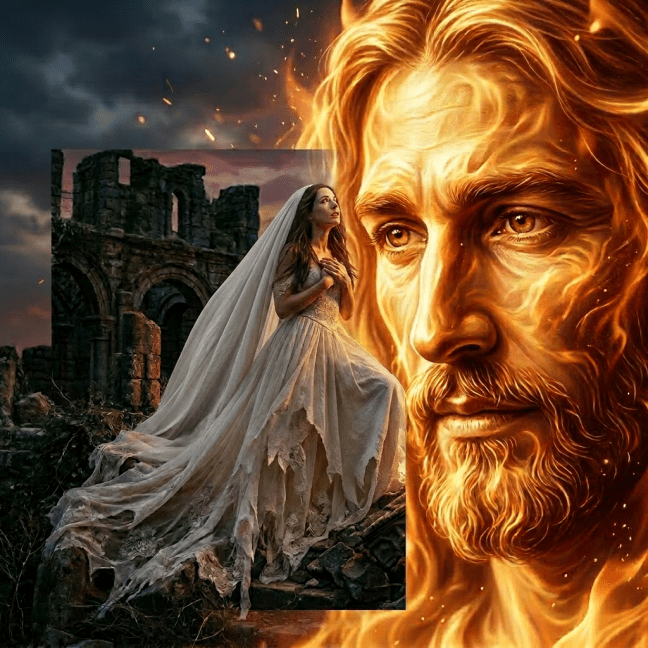
It drives Yeshua’s disciples into the Great Commission, tracing an eternal arc through four movements: Identity, Corruption, Cost, and Glory. Here, the Ministry is a living sacrifice, sharing Christ’s sufferings to rescue sinners from condemnation and present His Bride blameless. She is a furnace of holy fire, where true worshippers are refined to the full stature of Christ and blaze with His splendor.
She rises while it is yet night, her lamp aglow, her hands outstretched to the poor—the Proverbs 31 Bride who serves unseen and is praised in the gates. Let the Latter House shine with the glory of the LORD, bearing Children of Light until the Bridegroom splits the clouds to claim His own.
Fifty-two stanzas pulse with a rhythmic refrain, crafted for memory, meditation, and thunderous recitation—a poetic theology to awaken the Bride, strengthen her Ministry, and lead her to reign with Christ through all eternity.
James 1:23–25; Psalm 119:18; Matthew 25:6–7; Revelation 19:9; Matthew 28:19–20; Romans 12:1; Philippians 3:10; Romans 8:1; Ephesians 5:27; Malachi 3:2–3; John 4:23; Ephesians 4:13; Proverbs 31:15, 18, 20, 31; Haggai 2:9; 1 Thessalonians 5:5; 1 Thessalonians 4:16–17; Colossians 3:16; Psalm 1:2; Revelation 22:5
THE SYMPHONY OF SACRED MINISTRY
The Ministry of the Evangelist
Preaches Christ crucified, planting trees of righteousness,
While the Teacher roots the newborn disciples deep
In Scripture’s intent and authority.¹
The Ministry of the Shepherd
Leads God’s flock to green pastures and still waters,
And keeps the night watch against the prowling wolf’s
Murderous treachery.²
The Ministry of the Prophet
Burns with Yeshua’s blazing heart,
Arrays His Bride in the gold of Ophir,
Till she sees the King in His beauty.³
The Ministry of the Apostle
Lays Christ’s foundation on untrodden ground,
And governs the Church, as His ambassador announcing
Adonai the Almighty.⁴
The Ministry is Abba’s co-laborer,
Sowing His Seed, soaked in her tears, by His Spirit,
Awakening barren souls till Christ is formed,
The indwelling Hope of Glory.⁵
The Ministry is the Trumpet of the Lord;
Thunder peals; like lightning, Satan falls:
Every rebel knee shall bow, every voice roar—
Yeshua is El Shaddai!⁶
The Ministry is the song
Of the interceding Great High Priest,
Restoring David’s tent with perpetual praise
In surging tidal symphony.⁷
The Ministry is the womb of faith in Christ,
Rebirthing Jew and Gentile
As God’s own household—justified, sanctified, adopted
By His Blood, the propitiation of Calvary.⁸
The Ministry is the holy flame of the zealous Lamb,
For He alone is Worthy
To receive all dominion, power, riches, strength, and honor,
As elders cast their crowns before His Majesty.⁹
The Ministry is the stewardship entrusted
To the one who answers “yes”
When the risen Messiah asks: “Do you love Me
More than these?”¹⁰
The Ministry is the Great Commission
Of Christ, Who died and conquered the grave
To breathe life into the dry bones and raise up
An army from fallen humanity.¹¹
The Ministry is the Lion of Judah’s
Gentle yoke and triumphant decree,
Never lording it like Diotrephes or heathen kings
With whips of slavery.¹²
The Ministry is the labor of
Abba’s tender mercy.
God sent His only begotten Son to die
And purchase the Adamic family.
Holy, Holy, Holy
Is the Father of Glory,
Who was and Who is and
Who is to come eternally.¹³
The Ministry, unleashing the Word upon the Earth,
Dawned when God commanded, “Let there be light,”
And His Son cried, “Eli, Eli, lama sabachthani,”
And tore the black veil of obscurity.¹⁴
The Ministry, mirroring the Maker of galaxies,
Fair as the moon, clear as the sun,
Washes and heals the withering world in radiant joy
Of immortality.¹⁵
The Ministry, working signs and wonders,
Sets the dead rising and the blind beholding
The unseen gravity and unending grace
Of His greater glory.¹⁶
The Ministry, pursuing Elohim Whom her soul loves,
Fixes her gaze on Him alone, and blooms
Among the bleeding thorns as Yeshua’s fragrant
Lily of the Valley.¹⁷
The Ministry, reviling elders
Worthy of double honor, mocks and provokes
El Elyon, as at Horeb, and disgracefully melts
Into a golden calf of apostasy.¹⁸
The Ministry, corrupting the intent
Of Scripture, like the beguiling serpent,
Will not divide the Truth rightly, nor testify
The counsel of the Spirit of Prophecy.¹⁹
The Ministry, spinning the spider’s web of deceit,
Ensnares the darkened multitudes,
And drags her captives down to the Lake of Fire,
Tormented in bottomless misery.²⁰
The Ministry, laying down her life,
Carries Yeshua’s death in her body,
Gains His mercies and newness of Life to pour
Over His engrafted progeny.²¹
The Ministry, adoring Christ
With all her heart and strength,
Stoops like a Good Samaritan, binding the broken
With His boundless charity.²²
The Ministry, hearing the widows’ silent cry
And orphans’ wailing plea,
Becomes Yeshua’s nail-pierced hands, and leaves
None solitary.²³
The Ministry, masking bitter envy,
Slays her brethren, as Cain slew Abel,
And turns the House of Prayer into a den of thieves,
Bloodstained and guilty.²⁴
The Ministry, despising the anointed prophets
And their heavenly vision,
Stones the devoted disciples and drowns herself
In the blackest infamy.²⁵
The Ministry is the labor of
Yeshua’s grace and beauty,
Adorning His chosen Bride
In garments of His royalty.
Worthy, Worthy, Worthy
Is the Son of Glory,
Who was and Who is and
Who is to come eternally.²⁶
The Ministry, examining herself,
Kneels beneath the Blood of the New Covenant,
Repents with trembling, then partakes of the Lord’s Table
In reverent intimacy.²⁷
The Ministry, disowning her own self,
Falls like a grain of wheat,
Dies daily, then rises in every season to bear
The fruit of the Spirit of Glory.²⁸
The Ministry, clutching her fellow servant’s throat,
Withholds the very pardon she received,
Effacing the brand-marks of Christ
From her redeemed Body.²⁹
The Ministry, submitting in lowliness
In awe of Yeshua, the Supreme Head of the brethren,
Strips every secret bare with transparency,
Till oil of joy seals their unity.³⁰
The Ministry, rebuilding the tower of Babel,
Quenches the flame the Ruach kindled,
Nails Christ anew, scatters the sheep, then vanishes
Like vapor into vanity.³¹
The Ministry, guiding the flock with the rod and staff
Of the stern and kind Chief Shepherd,
Girds on His towel to wash the dusty pilgrims,
And keeps her heart holy, as He is Holy.³²
The Ministry, re-yoking the ransomed prisoners
Whom the King of kings has set free,
Enslaves them to men’s traditions, grieving
The Spirit of Liberty.³³
The Ministry, living by faith in God,
Loathes covetousness, sows with pity,
Cultivates generosity, and richly harvests
Equality without partiality.³⁴
The Ministry, casting the Gospel net
For souls chosen unto salvation, crucifies
The flesh, forsakes the fading gleam of gold,
And the pride of life’s false deity.³⁵
The Ministry, seeking first God’s Kingdom
And His righteousness, gains wealth and honor,
Opens her storehouse for every good work,
And glorifies her Rabboni.³⁶
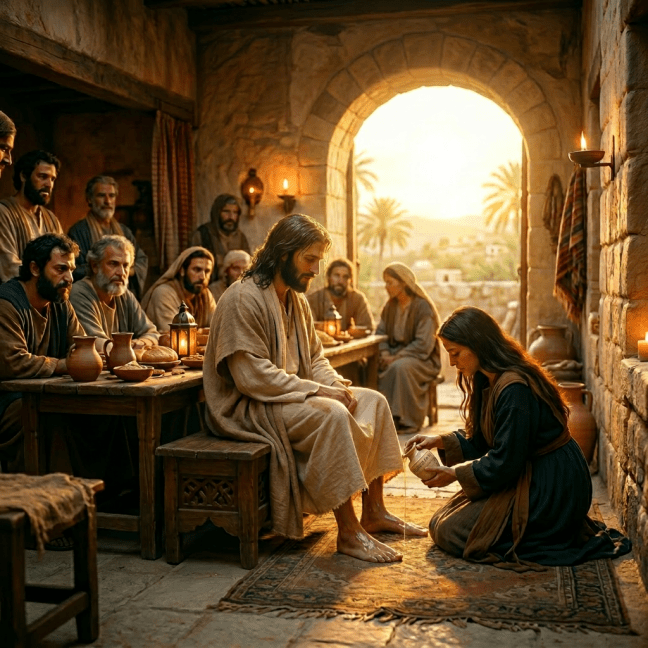
The Ministry, breaking the alabaster jar,
Crowns Christ with praise, and pours her tears of love
At her Master’s feet, while cunning wolves can only
Growl their hostility.³⁷
The Ministry, travailing to birth
Children of Light, as Paul once birthed Onesimus,
Becomes a pillar of Truth in New Jerusalem,
The God-built City.³⁸
The Ministry is the labor of the Ruach,
Making the Bride spotless and ready;
He implants the incorruptible Seed
That bears fruit abundantly.
Holy, Holy, Holy
Is the Spirit of Glory,
Who was and Who is and
Who is to come eternally.³⁹
The Ministry, subjecting herself
To the Law of the Spirit of Life,
Sheds sin and death like graveclothes, and sings,
“O grave, where is thy victory?”⁴⁰
The Ministry, yielding her heart
To blaze within the Consuming Fire,
Ignites the gifts of grace He gave, to hallow
The Name of the Father of Glory.⁴¹
The Ministry, nurturing artists
Like Bezalel, trains them in godliness
To embrace their Creator and unveil
His beauty and creativity.⁴²
The Ministry, harboring spiritual pride,
Casts off pure conscience, scorns reproof,
Shipwrecks faith, and sinks like a millstone into
The roaring sea of calamity.⁴³
The Ministry, walking with the God of Peace,
Splits the serpent’s head beneath her feet—
That ancient dragon, the counterfeit lion,
The accuser and adversary.⁴⁴
The Ministry, denying self, puts on God’s whole armor,
Drives out demons, yet delights in Christ alone,
Who confesses her name, engraved in His Book of Life,
Before the Firstborn’s assembly.⁴⁵
The Ministry, fighting the good fight of faith
And finishing her course, receives
The Crown of Righteousness, and enters
Her Master’s joy and jubilee.⁴⁶
The Ministry, swinging the Sword of the Spirit,
Compelled by the love of Christ, boldly exposes
The father of all lies to the light,
And shuts the mouths of heresy.⁴⁷
The Ministry, enduring sound doctrine,
Abides steadfast unto death through flood and fire,
And fastens her soul’s anchor within the veil
In her Forerunner’s sanctuary.⁴⁸
The Ministry, yearning for her Beloved,
Lifts her doves’ eyes, pure and undefiled,
To ravish His heart with one glance, then faints
In the arms of her Adonai.⁴⁹
The Ministry, hiding in the cleft of the Rock,
Follows the Lamb wherever He goes,
And rides forth with Him to conquer and gain
Her seat beside His Majesty.⁵⁰
The Ministry, pleading, “Let Him kiss me,”
Kisses the unseen Son day by day, till she beholds Him
Face to face, cleaves to Him as one spirit, and reigns
As the Queen of the King of Glory.⁵¹
The Ministry is the labor of
The Most Holy Trinity,
Uniting Yeshua and His Bride
In everlasting matrimony.
Holy, Holy, Holy
Is the Lord God Almighty,
Who was and Who is and
Who is to come eternally.⁵²
APPLICATION
Examine your heart; search your pulpit, your platform, and your hidden motives for any trace of the self-crowned lord where the broken bondservant must stand faithful.
Inscribe that worldly ambition upon a scrap of parchment. Set it on your windowsill and, on your knees, surrender it to God Almighty:
“I am a grain of wheat; let me fall and die today, that Your life alone may spring forth and remain.”
Leave it beneath the silent stars; at the first break of dawn, rise and serve unseen under His majesty.
2 Corinthians 13:5; Psalm 139:23–24; 1 Peter 5:3; Matthew 20:25–27; 1 Corinthians 4:2; Psalm 51:17; John 12:24; John 15:16; Proverbs 31:15; Psalm 30:5; Matthew 6:4; Hebrews 8:1
PRAYER
Father, thank You for drawing me to my Kinsman-Redeemer, as You drew Ruth to the threshing floor of Boaz. I lay my heart, my breath, and my Ministry upon Your altar as a living sacrifice, that I may seek Your face and please You all my days.
Purge from me Cain’s ruthless envy and Diotrephes’ lust for preeminence. Break me, melt me, mold me into a hollow, resonant vessel of honor.
Abba, breathe through me. Let my mortal flesh enshrine Your beloved Son, that all generations may behold the King of Glory reigning in me. Let them worship the Author of our salvation in Spirit and in Truth, forever and ever.
Amen.
John 6:44; Ruth 3:9; Romans 12:1; Psalm 27:8; Psalm 51:7; 1 John 3:12; 3 John 1:9; Jeremiah 18:4; 2 Timothy 2:21; 2 Corinthians 4:11; Hebrews 5:9; John 4:24
FOOTNOTES
1 | Ephesians 4:11 (and He gave some… evangelists; and some, pastors and teachers); 2 Timothy 4:5 (watch thou in all things, endure afflictions, do the work of an evangelist, make full proof of thy ministry); Acts 21:8 (and we entered into the house of Philip the evangelist, which was one of the seven; and abode with him); 1 Corinthians 1:23–24 (but we preach Christ crucified, unto the Jews a stumblingblock, and unto the Greeks foolishness; but unto them which are called, both Jews and Greeks, Christ the power of God, and the wisdom of God); Acts 8:5 (then Philip went down to the city of Samaria, and preached Christ unto them); Mark 16:15 (go ye into all the world, and preach the gospel to every creature); Luke 4:18 (the Spirit of the Lord is upon Me, because He hath anointed Me to preach the gospel to the poor); Mark 1:14–15 (Jesus came into Galilee, preaching the gospel of the kingdom of God); Matthew 28:19–20 (go ye therefore, and teach all nations… teaching them to observe all things whatsoever I have commanded you); 1 Peter 2:24 (who His own self bare our sins in His own body on the tree, that we, being dead to sins, should live unto righteousness); Isaiah 61:1 (the Spirit of the Lord GOD is upon Me; because the LORD hath anointed Me to preach good tidings unto the meek); Isaiah 61:3 (that they might be called trees of righteousness, the planting of the LORD, that He might be glorified); 1 Corinthians 3:6 (I have planted, Apollos watered; but God gave the increase); Romans 12:7 (he that teacheth, on teaching); 1 Corinthians 12:28 (God hath set some in the church, first apostles, secondarily prophets, thirdly teachers); Colossians 2:7 (rooted and built up in Him, and stablished in the faith, as ye have been taught); Ephesians 3:17 (that ye, being rooted and grounded in love); 1 Peter 2:2 (as newborn babes, desire the sincere milk of the word, that ye may grow thereby); Nehemiah 8:8 (so they read in the book in the law of God distinctly, and gave the sense, and caused them to understand the reading); 1 Timothy 1:5 (now the end of the commandment is charity out of a pure heart, and of a good conscience, and of faith unfeigned); John 14:26 (the Comforter, which is the Holy Ghost… He shall teach you all things, and bring all things to your remembrance); Matthew 7:29 (for He taught them as one having authority, and not as the scribes); 2 Timothy 3:16–17 (all Scripture is given by inspiration of God, and is profitable for doctrine, for reproof, for correction, for instruction in righteousness); Luke 2:10 (Fear not: for, behold, I bring you good tidings of great joy, which shall be to all people); Luke 1:4 (that thou mightest know the certainty of those things, wherein thou hast been instructed); Isaiah 40:8 (the grass withereth, the flower fadeth: but the word of our God shall stand for ever); Psalm 119:89 (for ever, O LORD, Thy word is settled in heaven); Ephesians 4:12–13 (for the perfecting of the saints, for the work of the ministry, for the edifying of the body of Christ: till we all come unto a perfect man); 1 Timothy 1:15 (Christ Jesus came into the world to save sinners); Titus 2:1 (sound doctrine).
2 | John 21:17 (feed My sheep); 1 Peter 5:2 (feed the flock of God); Jeremiah 3:15 (I will give you pastors according to Mine heart, which shall feed you with knowledge and understanding); Ezekiel 34:2–4 (woe be to the shepherds of Israel that do feed themselves! should not the shepherds feed the flocks?); Psalm 23:2 (He maketh me to lie down in green pastures: He leadeth me beside the still waters); John 10:3–4 (He calleth His own sheep by name, and leadeth them out… and the sheep follow Him); Acts 20:32 (and now, brethren, I commend you to God, and to the word of His grace, which is able to build you up); Luke 2:8 (and there were in the same country shepherds abiding in the field, keeping watch over their flock by night); Acts 20:28 (take heed therefore unto yourselves, and to all the flock, over the which the Holy Ghost hath made you overseers, to feed the church of God); Hebrews 13:17 (obey them that have the rule over you… for they watch for your souls, as they that must give account); John 10:12–13 (but he that is an hireling, and not the shepherd, whose own the sheep are not, seeth the wolf coming, and leaveth the sheep, and fleeth: and the wolf catcheth them, and scattereth the sheep. The hireling fleeth, because he is an hireling, and careth not for the sheep); 1 Peter 5:8 (be sober, be vigilant; because your adversary the devil, as a roaring lion, walketh about, seeking whom he may devour); Acts 20:29 (for I know this, that after my departing shall grievous wolves enter in among you, not sparing the flock); John 10:10 (the thief cometh not, but for to steal, and to kill, and to destroy: I am come that they might have life, and that they might have it more abundantly); John 8:44 (he was a murderer from the beginning, and abode not in the truth); 1 Peter 5:3 (neither as being lords over God’s heritage, but being ensamples to the flock); Ephesians 4:11 (and some, pastors and teachers); John 10:14 (I am the good shepherd, and know My sheep, and am known of Mine).
3 | Jeremiah 20:9 (His word was in mine heart as a burning fire shut up in my bones); Luke 24:32 (Did not our heart burn within us, while He talked with us by the way); Acts 13:22 (I have found David the son of Jesse, a man after Mine own heart); 2 Corinthians 11:2 (for I am jealous over you with godly jealousy: for I have espoused you to one husband, that I may present you as a chaste virgin to Christ); 2 Corinthians 11:3 (but I fear, lest by any means, as the serpent beguiled Eve through his subtilty, so your minds should be corrupted from the simplicity that is in Christ); Psalm 45:9 (upon Thy right hand did stand the queen in gold of Ophir); Psalm 45:13–14 (the king’s daughter is all glorious within: her clothing is of wrought gold… she shall be brought unto the king in raiment of needlework); Isaiah 33:17 (thine eyes shall see the King in His beauty: they shall behold the land that is very far off); Psalm 45:11 (so shall the King greatly desire thy beauty: for He is thy Lord; and worship thou Him); Psalm 27:4 (one thing have I desired of the LORD, that will I seek after; that I may dwell in the house of the LORD all the days of my life); Ephesians 5:26 (that He might sanctify and cleanse it with the washing of water by the word); Ephesians 5:27 (that He might present it to Himself a glorious church, not having spot, or wrinkle); Exodus 25:8 (and let them make Me a sanctuary; that I may dwell among them); 1 Corinthians 3:16 (know ye not that ye are the temple of God, and that the Spirit of God dwelleth in you?); 1 Corinthians 3:17 (if any man defile the temple of God, him shall God destroy; for the temple of God is holy, which temple ye are); 2 Corinthians 6:16 (for ye are the temple of the living God; as God hath said, I will dwell in them, and walk in them); Ephesians 2:21 (in whom all the building fitly framed together groweth unto an holy temple in the Lord); Exodus 40:34 (then a cloud covered the tent of the congregation, and the glory of the LORD filled the tabernacle); Exodus 34:29 (the skin of his face shone while he talked with Him); 2 Corinthians 3:18 (beholding as in a glass the glory of the Lord, are changed into the same image from glory to glory); Psalm 34:5 (they looked unto Him, and were lightened: and their faces were not ashamed); Matthew 13:43 (then shall the righteous shine forth as the sun in the kingdom of their Father); Isaiah 60:1 (arise, shine; for thy light is come, and the glory of the LORD is risen upon thee); Ephesians 4:11 (and some, Prophets); Amos 3:7 (surely the LORD God will do nothing, but He revealeth His secret unto His servants the Prophets); Jeremiah 1:9–10 (behold, I have put My words in thy mouth… to root out, and to pull down… to build, and to plant); 2 Peter 1:21 (Prophecy came not in old time by the will of man: but holy men of God spake as they were moved by the Holy Ghost); 1 Corinthians 14:3 (he that prophesieth speaketh unto men to edification, and exhortation, and comfort); 1 Kings 6:20 (and the oracle in the forepart was twenty cubits in length… and he overlaid it with pure gold); Hebrews 10:19–20 (having therefore, brethren, boldness to enter into the holiest by the blood of Jesus, by a new and living way, which He hath consecrated for us, through the veil, that is to say, His flesh); Exodus 26:33 (and the vail shall divide unto you between the holy place and the most holy).
4 | 1 Corinthians 3:10 (according to the grace of God which is given unto me, as a wise masterbuilder, I have laid the foundation); 1 Corinthians 3:11 (for other foundation can no man lay than that is laid, which is Jesus Christ); Ephesians 2:20 (built upon the foundation of the apostles and prophets, Jesus Christ Himself being the chief corner stone); Romans 15:19–20 (from Jerusalem, and round about unto Illyricum, I have fully preached the gospel of Christ. Yea, so have I strived to preach the Gospel, not where Christ was named, lest I should build upon another man’s foundation); 2 Corinthians 10:8 (our authority, which the Lord hath given us for edification, and not for your destruction); 2 Corinthians 11:28 (beside those things that are without, that which cometh upon me daily, the care of all the churches); 1 Corinthians 12:28 (God hath set some in the church, first apostles); Matthew 16:19 (and I will give unto thee the keys of the kingdom of heaven); Matthew 6:10 (Thy kingdom come. Thy will be done in earth, as it is in heaven); Colossians 1:13 (who hath delivered us from the power of darkness, and hath translated us into the kingdom of His dear Son); 2 Corinthians 5:20 (ambassadors for Christ); Psalm 110:1 (the LORD said unto my Lord, Sit Thou at My right hand, until I make Thine enemies Thy footstool); Isaiah 45:5 (I am the LORD, and there is none else, there is no God beside Me: I girded thee, though thou hast not known Me); Revelation 1:8 (I am Alpha and Omega, the beginning and the ending, saith the Lord, which is, and which was, and which is to come, the Almighty); Ephesians 4:11 (and He gave some, apostles); Luke 6:13 (He called unto Him His disciples: and of them He chose twelve, whom also He named apostles); Matthew 10:1 (He called unto Him His twelve disciples, and gave them power against unclean spirits, to cast them out, and to heal all manner of sickness); Mark 3:14 (and He ordained twelve, that they should be with Him, and that He might send them forth to preach); Acts 1:21–22 (wherefore of these men which have companied with us all the time that the Lord Jesus went in and out among us… must one be ordained to be a witness with us of His resurrection); 1 Corinthians 9:1 (am I not an apostle? am I not free? have I not seen Jesus Christ our Lord? are not ye my work in the Lord?); Galatians 1:1 (Paul, an apostle, not of men, neither by man, but by Jesus Christ, and God the Father, Who raised Him from the dead); Mark 16:20 (and they went forth, and preached every where, the Lord working with them, and confirming the word with signs following); Hebrews 2:3–4 (which at the first began to be spoken by the Lord, and was confirmed unto us by them that heard Him; God also bearing them witness, both with signs and wonders, and with divers miracles, and gifts of the Holy Ghost); Acts 14:3 (long time therefore abode they speaking boldly in the Lord, which gave testimony unto the word of His grace, and granted signs and wonders to be done by their hands); 2 Corinthians 12:12 (truly the signs of an apostle were wrought among you in all patience, in signs, and wonders, and mighty deeds); Acts 4:13 (now when they saw the boldness of Peter and John, and perceived that they were unlearned and ignorant men, they marvelled; and they took knowledge of them, that they had been with Jesus); Acts 4:31 (and when they had prayed, the place was shaken where they were assembled together; and they were all filled with the Holy Ghost, and they spake the word of God with boldness); 2 Corinthians 6:4–5 (but in all things approving ourselves as the ministers of God, in much patience, in afflictions, in necessities, in distresses, in stripes, in imprisonments, in tumults, in labours, in watchings, in fastings); 1 Corinthians 4:9 (for I think that God hath set forth us the apostles last, as it were appointed to death: for we are made a spectacle unto the world, and to angels, and to men); Acts 5:41 (and they departed from the presence of the council, rejoicing that they were counted worthy to suffer shame for His name); Acts 6:4 (but we will give ourselves continually to prayer, and to the ministry of the word); Acts 2:42 (and they continued stedfastly in the apostles’ doctrine and fellowship, and in breaking of bread, and in prayers); Ephesians 5:5 (for this ye know, that no whoremonger, nor unclean person, nor covetous man, who is an idolater, hath any inheritance in the kingdom of Christ and of God).
5 | 1 Corinthians 3:6–9 (I have planted, Apollos watered; but God gave the increase… for we are laborers together with God: ye are God’s husbandry); Galatians 4:6 (and because ye are sons, God hath sent forth the Spirit of His Son into your hearts, crying, Abba, Father); Mark 4:14 (the sower soweth the word); Luke 8:15 (that on the good ground are they, which in an honest and good heart, having heard the word, keep it, and bring forth fruit with patience); 1 Peter 1:23 (being born again, not of corruptible seed, but of incorruptible, by the word of God, which liveth and abideth for ever); 1 John 3:9 (whosoever is born of God doth not commit sin; for His seed remaineth in him); John 4:36–37 (he that reapeth receiveth wages, and gathereth fruit unto life eternal: that both he that soweth and he that reapeth may rejoice together. And herein is that saying true, One soweth, and another reapeth); Psalm 126:5–6 (they that sow in tears shall reap in joy. He that goeth forth and weepeth, bearing precious seed, shall doubtless come again with rejoicing, bringing his sheaves with him); Acts 20:19 (serving the Lord with all humility of mind, and with many tears, and temptations, which befell me by the lying in wait of the Jews); Zechariah 4:6 (not by might, nor by power, but by My spirit, saith the LORD of hosts); Romans 8:26 (likewise the Spirit also helpeth our infirmities… the Spirit itself maketh intercession for us with groanings which cannot be uttered); Ephesians 5:14 (Awake thou that sleepest, and arise from the dead, and Christ shall give thee light); Acts 3:19 (that your sins may be blotted out, when the times of refreshing shall come from the presence of the Lord); Proverbs 11:25 (the liberal soul shall be made fat: and he that watereth shall be watered also himself); Isaiah 55:10–11 (for as the rain cometh down… and watereth the earth, and maketh it bring forth and bud, that it may give seed to the sower… so shall My word be that goeth forth out of My mouth); Isaiah 44:3 (for I will pour water upon him that is thirsty, and floods upon the dry ground: I will pour My Spirit upon thy seed, and My blessing upon thine offspring); Isaiah 54:1 (Sing, O barren, thou that didst not bear… for more are the children of the desolate than the children of the married wife, saith the LORD); Hosea 10:12 (sow to yourselves in righteousness, reap in mercy; break up your fallow ground: for it is time to seek the LORD); Galatians 4:19 (my little children, of whom I travail in birth again until Christ be formed in you); 1 Corinthians 4:15 (for though ye have ten thousand instructers in Christ, yet have ye not many fathers: for in Christ Jesus I have begotten you through the gospel); Ephesians 3:17 (that Christ may dwell in your hearts by faith); Romans 8:11 (but if the Spirit of Him that raised up Jesus from the dead dwell in you); Colossians 1:27 (Christ in you, the hope of glory).
6 | Isaiah 58:1 (cry aloud, spare not, lift up thy voice like a trumpet); Joel 2:1 (blow ye the trumpet in Zion, and sound an alarm in My holy mountain); Exodus 19:16 (there were thunders and lightnings, and a thick cloud upon the mount, and the voice of the trumpet exceeding loud; so that all the people that was in the camp trembled); Psalm 29:3 (the voice of the LORD is upon the waters: the God of glory thundereth); Luke 10:17–18 (Lord, even the devils are subject unto us through Thy name. And He said unto them, I beheld Satan as lightning fall from heaven); Revelation 12:9 (and the great dragon was cast out, that old serpent, called the Devil, and Satan… he was cast out into the earth); Isaiah 14:12 (how art thou fallen from heaven, O Lucifer, son of the morning!); Psalm 2:2–3 (the kings of the earth set themselves, and the rulers take counsel together, against the LORD, and against His anointed, saying, Let us break their bands asunder); Philippians 2:10–11 (that at the name of Jesus every knee should bow… and that every tongue should confess that Jesus Christ is Lord, to the glory of God the Father); Isaiah 45:23 (unto Me every knee shall bow, every tongue shall swear); Isaiah 9:6 (and His name shall be called Wonderful, Counsellor, The mighty God, The everlasting Father, The Prince of Peace); Revelation 1:8 (I am Alpha and Omega, the beginning and the ending, saith the Lord, which is, and which was, and which is to come, the Almighty); Genesis 17:1 (and when Abram was ninety years old and nine, the LORD appeared to Abram, and said unto him, I am the Almighty God; walk before Me, and be thou perfect); Isaiah 9:2 (the people that walked in darkness have seen a great light).
7 | Revelation 5:9 (and they sung a new song, saying, Thou art worthy to take the book, and to open the seals thereof: for Thou wast slain, and hast redeemed us to God by Thy blood out of every kindred, and tongue, and people, and nation); Zephaniah 3:17 (He will rest in His love, He will joy over thee with singing); Hebrews 7:25 (wherefore He is able also to save them to the uttermost that come unto God by Him, seeing He ever liveth to make intercession for them); Hebrews 12:24 (and to Jesus the mediator of the new covenant, and to the blood of sprinkling, that speaketh better things than that of Abel); Hebrews 9:12 (neither by the blood of goats and calves, but by His own blood He entered in once into the holy place, having obtained eternal redemption for us); Hebrews 9:14 (how much more shall the blood of Christ… purge your conscience from dead works to serve the living God); Hebrews 4:14 (seeing then that we have a great High Priest, that is passed into the heavens, Jesus the Son of God); Amos 9:11 (in that day will I raise up the tabernacle of David that is fallen, and close up the breaches thereof; and I will raise up his ruins, and I will build it as in the days of old); Acts 15:16 (after this I will return, and will build again the tabernacle of David… and I will set it up); Hebrews 13:15 (by Him therefore let us offer the sacrifice of praise to God continually); Psalm 34:1 (I will bless the LORD at all times: His praise shall continually be in my mouth); 1 Chronicles 9:33 (the singers, chief of the fathers of the Levites… were employed in that work day and night); Revelation 4:8 (they rest not day and night, saying, Holy, Holy, Holy); Psalm 93:3–4 (the floods have lifted up, O LORD, the floods have lifted up their voice; the floods lift up their waves. The LORD on high is mightier than the noise of many waters, yea, than the mighty waves of the sea); Revelation 19:6 (and I heard as it were the voice of a great multitude, and as the voice of many waters, and as the voice of mighty thunderings, saying, Alleluia: for the Lord God omnipotent reigneth); Revelation 14:2 (and I heard a voice from heaven, as the voice of many waters, and as the voice of a great thunder: and I heard the voice of harpers harping with their harps); Matthew 16:18 (I will build My church; and the gates of hell shall not prevail against it); Hebrews 3:4 (for every house is builded by some man; but He that built all things is God); Ephesians 2:20 (built upon the foundation of the Apostles and Prophets, Jesus Christ Himself being the chief Corner Stone); 1 Peter 2:6–7 (a chief Corner Stone, elect, precious; the Stone which the builders disallowed, the same is made the head of the corner).
8 | Galatians 3:26–28 (for ye are all the children of God by faith in Christ Jesus… there is neither Jew nor Greek, there is neither bond nor free, there is neither male nor female: for ye are all one in Christ Jesus); John 3:3 (except a man be born again, he cannot see the kingdom of God); Romans 1:16 (for I am not ashamed of the gospel of Christ: for it is the power of God unto salvation to every one that believeth; to the Jew first, and also to the Greek); Ephesians 2:14–15 (for He is our peace, who hath made both one… for to make in Himself of twain one new man, so making peace); Ephesians 2:19 (ye are no more strangers and foreigners, but fellowcitizens with the saints, and of the household of God); Romans 5:9 (much more then, being now justified by His blood, we shall be saved from wrath through Him); Hebrews 13:12 (Jesus also, that He might sanctify the people with His own blood, suffered without the gate); Ephesians 1:5 (having predestinated us unto the adoption of children by Jesus Christ to Himself); Ephesians 1:7 (in whom we have redemption through His blood, the forgiveness of sins); Romans 3:25 (whom God hath set forth to be a propitiation through faith in His blood); 1 John 2:2 (and He is the propitiation for our sins: and not for ours only, but also for the sins of the whole world); 1 John 4:10 (herein is love, not that we loved God, but that He loved us, and sent His Son to be the propitiation for our sins); Revelation 1:5 (unto Him that loved us, and washed us from our sins in His own blood); Luke 23:33 (and when they were come to the place, which is called Calvary, there they crucified Him).
9 | Isaiah 10:17 (and the light of Israel shall be for a fire, and his Holy One for a flame); Song of Solomon 8:6 (for love is strong as death… the coals thereof are coals of fire, which hath a most vehement flame); John 2:17 (and His disciples remembered that it was written, The zeal of Thine house hath eaten Me up); 2 Corinthians 11:2 (for I am jealous over you with godly jealousy: for I have espoused you to one husband, that I may present you as a chaste virgin to Christ); 2 Corinthians 11:29 (who is weak, and I am not weak? who is offended, and I burn not?); Revelation 5:6 (and, lo, in the midst of the throne… stood a Lamb as it had been slain, having seven horns and seven eyes); Revelation 5:12 (Worthy is the Lamb that was slain to receive power, and riches, and wisdom, and strength, and honour, and glory, and blessing); Revelation 4:11 (Thou art worthy, O Lord, to receive glory and honour and power: for Thou hast created all things); Jude 1:25 (to the only wise God our Saviour, be glory and majesty, dominion and power, both now and ever. Amen); Daniel 7:14 (and there was given Him dominion, and glory, and a kingdom, that all people, nations, and languages, should serve Him: His dominion is an everlasting dominion, which shall not pass away); 1 Peter 4:11 (to Whom be praise and dominion for ever and ever); Psalm 148:1–2 (Praise ye the LORD. Praise ye the LORD from the heavens: praise Him in the heights. Praise ye Him, all His angels); 1 Timothy 1:17 (now unto the King eternal, immortal, invisible, the only wise God, be honour and glory for ever and ever. Amen); Revelation 4:10 (the four and twenty elders fall down before Him that sat on the throne, and worship Him that liveth for ever and ever, and cast their crowns before the throne); Revelation 5:13 (blessing, and honour, and glory, and power, be unto Him that sitteth upon the throne, and unto the Lamb for ever and ever); Hebrews 1:3 (when He had by Himself purged our sins, sat down on the right hand of the Majesty on high); Revelation 7:12 (Amen: Blessing, and glory, and wisdom, and thanksgiving, and honour, and power, and might, be unto our God for ever and ever. Amen); Romans 11:36 (for of Him, and through Him, and to Him, are all things: to whom be glory for ever. Amen); Matthew 6:10 (Thy kingdom come. Thy will be done in earth, as it is in heaven).
10 | 1 Corinthians 4:1–2 (let a man so account of us, as of the ministers of Christ, and stewards of the mysteries of God. Moreover it is required in stewards, that a man be found faithful); 1 Thessalonians 2:4 (but as we were allowed of God to be put in trust with the gospel, even so we speak; not as pleasing men, but God, which trieth our hearts); 1 Peter 4:10 (as every man hath received the gift, even so minister the same one to another, as good stewards of the manifold grace of God); John 21:14 (this is now the third time that Jesus shewed Himself to His disciples, after that He was risen from the dead); John 21:15–17 (Simon, son of Jonas, lovest thou Me more than these? He saith unto Him, Yea, Lord; Thou knowest that I love Thee. He saith unto him, Feed My lambs… Feed My sheep).
11 | Matthew 28:18 (and Jesus came and spake unto them, saying, All power is given unto Me in heaven and in earth); Matthew 28:19–20 (go ye therefore, and teach all nations, baptizing them in the name of the Father, and of the Son, and of the Holy Ghost); Luke 24:46–47 (thus it is written, and thus it behoved Christ to suffer, and to rise from the dead the third day: and that repentance and remission of sins should be preached in His name among all nations); 1 Corinthians 15:3–4 (Christ died for our sins according to the scriptures; and that He was buried, and that He rose again the third day according to the scriptures); 1 Corinthians 15:55–57 (O death, where is thy sting? O grave, where is thy victory?… thanks be to God, which giveth us the victory through our Lord Jesus Christ); Hosea 13:14 (I will ransom them from the power of the grave; I will redeem them from death: O death, I will be thy plagues; O grave, I will be thy destruction); Hebrews 2:14 (that through death He might destroy him that had the power of death, that is, the devil); Ezekiel 37:9 (come from the four winds, O breath, and breathe upon these slain, that they may live); Ezekiel 37:5 (behold, I will cause breath to enter into you, and ye shall live); Ezekiel 37:4, 10 (O ye dry bones, hear the word of the LORD… and they lived, and stood up upon their feet, an exceeding great army); Ezekiel 37:12 (behold, O My people, I will open your graves, and cause you to come up out of your graves); Romans 5:12 (wherefore, as by one man sin entered into the world, and death by sin; and so death passed upon all men, for that all have sinned); Revelation 19:16 (and He hath on His vesture and on His thigh a name written, KING OF KINGS, AND LORD OF LORDS).
12 | Revelation 5:5 (the Lion of the Tribe of Juda); Revelation 5:6 (and, lo, in the midst of the throne… stood a Lamb as it had been slain); Matthew 11:29–30 (take My yoke upon you, and learn of Me; for I am meek and lowly in heart: and ye shall find rest unto your souls. For My yoke is easy, and My burden is light); 2 Timothy 2:24 (and the servant of the Lord must not strive; but be gentle unto all men, apt to teach, patient); 2 Corinthians 10:1 (now I Paul myself beseech you by the meekness and gentleness of Christ); 2 Corinthians 2:14 (now thanks be unto God, which always causeth us to triumph in Christ); Colossians 2:15 (having spoiled principalities and powers, He made a shew of them openly, triumphing over them in it); Exodus 15:3 (the LORD is a Man of War: the LORD is His name); Psalm 24:8 (Who is this King of glory? The LORD strong and mighty, the LORD mighty in battle); Joel 2:11 (and the LORD shall utter His voice before His army: for His camp is very great: for He is strong that executeth His word); Revelation 19:11–14 (and I saw heaven opened, and behold a white horse; and He that sat upon him was called Faithful and True, and in righteousness He doth judge and make war… and the armies which were in heaven followed Him upon white horses, clothed in fine linen, white and clean); Ephesians 6:12 (for we wrestle not against flesh and blood, but against principalities, against powers, against the rulers of the darkness of this world, against spiritual wickedness in high places); 2 Corinthians 10:4 (the weapons of our warfare are not carnal); Psalm 2:7–9 (I will declare the decree… Thou shalt break them with a rod of iron); 1 Peter 5:3 (neither as being lords over God’s heritage, but being ensamples to the flock); 3 John 1:9 (Diotrephes, who loveth to have the preeminence among them); Matthew 20:25–26 (the princes of the Gentiles exercise dominion over them… but it shall not be so among you); 1 Kings 12:4 (thy father made our yoke grievous: now therefore make thou the grievous service of thy father, and his heavy yoke which he put upon us, lighter); 1 Kings 12:11 (my father hath chastised you with whips, but I will chastise you with scorpions); 2 Corinthians 11:20 (for ye suffer, if a man bring you into bondage, if a man devour you, if a man take of you, if a man exalt himself, if a man smite you on the face); Galatians 5:1 (stand fast therefore in the liberty wherewith Christ hath made us free, and be not entangled again with the yoke of bondage); Ezekiel 34:4 (the diseased have ye not strengthened… but with force and with cruelty have ye ruled them); Zechariah 9:9 (behold, thy King cometh unto thee: He is just, and having salvation; lowly, and riding upon an ass); Matthew 21:5 (behold, thy King cometh unto thee, meek, and sitting upon an ass).
13 | John 5:17 (but Jesus answered them, My Father worketh hitherto, and I work); Romans 8:15 (Abba, Father); Luke 1:78 (through the tender mercy of our God; whereby the dayspring from on high hath visited us); Ephesians 2:4–5 (but God, who is rich in mercy, for His great love wherewith He loved us… hath quickened us together with Christ); Titus 3:5 (according to His mercy He saved us); Romans 12:1 (I beseech you therefore, brethren, by the mercies of God); John 3:16 (for God so loved the world, that He gave His only begotten Son); Acts 20:28 (the church of God, which He hath purchased with His own blood); 1 Corinthians 6:20 (for ye are bought with a price); 1 Timothy 2:6 (who gave Himself a ransom for all, to be testified in due time); 1 Corinthians 15:22 (for as in Adam all die, even so in Christ shall all be made alive); Isaiah 6:3 (Holy, holy, holy, is the LORD of hosts: the whole earth is full of His glory); Ephesians 1:17 (the Father of glory); Revelation 4:8 (Holy, holy, holy, Lord God Almighty, which was, and is, and is to come); Ephesians 2:8 (by grace are ye saved).
14 | Hebrews 4:12 (for the word of God is quick, and powerful, and sharper than any twoedged sword, piercing even to the dividing asunder of soul and spirit, and of the joints and marrow, and is a discerner of the thoughts and intents of the heart); John 1:1–3 (in the beginning was the Word, and the Word was with God, and the Word was God… all things were made by Him); Proverbs 4:18 (but the path of the just is as the shining light, that shineth more and more unto the perfect day); Genesis 1:3 (and God said, Let there be light: and there was light); Psalm 33:9 (for He spake, and it was done; He commanded, and it stood fast); 2 Corinthians 4:6 (God, Who commanded the light to shine out of darkness… hath shined in our hearts); John 1:5 (the light shineth in darkness; and the darkness comprehended it not); Matthew 27:33 (and when they were come unto a place called Golgotha, that is to say, a place of a skull); Matthew 27:45 (now from the sixth hour there was darkness over all the land unto the ninth hour); Matthew 27:46 (and about the ninth hour Jesus cried with a loud voice, saying, Eli, Eli, lama sabachthani? that is to say, My God, My God, why hast Thou forsaken Me?); Matthew 27:50 (Jesus, when He had cried again with a loud voice, yielded up the ghost); Luke 23:46 (and when Jesus had cried with a loud voice, He said, Father, into Thy hands I commend My spirit: and having said thus, He gave up the ghost); Matthew 27:51 (and, behold, the veil of the temple was rent in twain from the top to the bottom); Luke 23:45 (and the veil of the temple was rent in the midst); Mark 15:37–38 (and Jesus cried with a loud voice, and gave up the ghost. And the veil of the temple was rent in twain from the top to the bottom); Hebrews 10:20 (by a new and living way, which He hath consecrated for us, through the veil, that is to say, His flesh); Mark 14:36 (and He said, Abba, Father, all things are possible unto Thee); Galatians 4:6 (God hath sent forth the Spirit of His Son into your hearts, crying, Abba, Father); 1 John 3:8 (for this purpose the Son of God was manifested, that He might destroy the works of the devil); Isaiah 25:7 (He will destroy in this mountain the face of the covering cast over all people, and the vail that is spread over all nations); 2 Corinthians 3:14–16 (for until this day remaineth the same vail untaken away… which vail is done away in Christ… nevertheless when it shall turn to the Lord, the vail shall be taken away); Isaiah 29:18 (and in that day… the eyes of the blind shall see out of obscurity, and out of darkness).
15 | 2 Corinthians 3:18 (we all, with open face beholding as in a glass the glory of the Lord, are changed into the same image from glory to glory); Colossians 3:10 (and have put on the new man, which is renewed in knowledge after the image of Him that created him); Hebrews 1:3 (who being the brightness of His glory, and the express image of His person); Job 9:9 (which maketh Arcturus, Orion, and Pleiades, and the chambers of the south); Psalm 19:1 (the heavens declare the glory of God; and the firmament sheweth His handywork); Song of Solomon 6:10 (who is she that looketh forth as the morning, fair as the moon, clear as the sun); Matthew 13:43 (then shall the righteous shine forth as the sun in the kingdom of their Father); Malachi 4:2 (but unto you that fear My name shall the Sun of righteousness arise with healing in His wings); Psalm 104:1–2 (O LORD my God, Thou art very great; Thou art clothed with honour and majesty. Who coverest Thyself with light as with a garment); Ephesians 5:26 (that He might sanctify and cleanse it with the washing of water by the word); Revelation 22:2 (and the leaves of the tree were for the healing of the nations); Psalm 107:20 (He sent His word, and healed them, and delivered them from their destructions); Matthew 5:14, 16 (ye are the light of the world… let your light so shine before men); Philippians 2:15 (that ye may be blameless and harmless… among whom ye shine as lights in the world); Isaiah 60:1–2 (arise, shine; for thy light is come… darkness shall cover the earth, but the LORD shall arise upon thee); Daniel 12:3 (and they that be wise shall shine as the brightness of the firmament); Isaiah 40:8 (the grass withereth, the flower fadeth: but the word of our God shall stand for ever); 1 Peter 1:24 (for all flesh is as grass, and all the glory of man as the flower of grass. The grass withereth, and the flower thereof falleth away); 1 John 2:17 (and the world passeth away, and the lust thereof: but he that doeth the will of God abideth for ever); John 3:16 (for God so loved the world, that He gave His only begotten Son, that whosoever believeth in Him should not perish, but have everlasting life); 1 Peter 1:8 (in whom, though now ye see Him not, yet believing, ye rejoice with joy unspeakable and full of glory); Psalm 34:5 (they looked unto Him, and were lightened: and their faces were not ashamed); Psalm 16:11 (in Thy presence is fulness of joy; at Thy right hand there are pleasures for evermore); Romans 14:17 (the kingdom of God is not meat and drink; but righteousness, and peace, and joy in the Holy Ghost); 2 Timothy 1:10 (our Saviour Jesus Christ, who hath abolished death, and hath brought life and immortality to light through the gospel); 1 Corinthians 15:53–54 (this corruptible must put on incorruption, and this mortal must put on immortality… Death is swallowed up in victory); Haggai 2:9 (the glory of this latter house shall be greater than of the former, saith the LORD of hosts: and in this place will I give peace); 2 Corinthians 3:10 (that which was made glorious had no glory in this respect, by reason of the glory that excelleth); Luke 2:10 (behold, I bring you good tidings of great joy, which shall be to all people); Romans 8:5–6 (they that are after the flesh do mind the things of the flesh… to be carnally minded is death; but to be spiritually minded is life and peace); Matthew 9:36 (when He saw the multitudes, He was moved with compassion on them, because they fainted, and were scattered abroad, as sheep having no shepherd); Matthew 11:28 (come unto Me, all ye that labor and are heavy laden, and I will give you rest).
16 | Acts 2:43 (and fear came upon every soul: and many wonders and signs were done by the apostles); Acts 2:22 (Jesus of Nazareth, a Man approved of God among you by miracles and wonders and signs); Romans 15:19 (through mighty signs and wonders, by the power of the Spirit of God); Hebrews 2:4 (God also bearing them witness, both with signs and wonders, and with divers miracles, and gifts of the Holy Ghost); 1 Corinthians 2:4 (my speech and my preaching was not with enticing words of man’s wisdom, but in demonstration of the Spirit and of power); 1 Corinthians 4:20 (for the kingdom of God is not in word, but in power); Matthew 10:8 (heal the sick, cleanse the lepers, raise the dead, cast out devils: freely ye have received, freely give); Matthew 11:5 (the blind receive their sight, and the lame walk, the lepers are cleansed, and the deaf hear, the dead are raised up, and the poor have the gospel preached to them); Isaiah 35:5 (then the eyes of the blind shall be opened, and the ears of the deaf shall be unstopped); 2 Corinthians 4:17 (worketh for us a far more exceeding and eternal weight of glory); 2 Corinthians 4:18 (while we look not at the things which are seen, but at the things which are not seen: for the things which are seen are temporal; but the things which are not seen are eternal); John 1:18 (no man hath seen God at any time; the only begotten Son, which is in the bosom of the Father, He hath declared Him); Romans 1:20 (for the invisible things of Him from the creation of the world are clearly seen, being understood by the things that are made, even His eternal power and Godhead); Colossians 1:15 (who is the image of the invisible God, the firstborn of every creature); 1 Timothy 1:17 (now unto the King eternal, immortal, invisible, the only wise God, be honour and glory for ever and ever); Acts 14:3 (speaking boldly in the Lord, which gave testimony unto the word of His grace, and granted signs and wonders to be done by their hands); John 1:16 (and of His fulness have all we received, and grace for grace); Ephesians 2:7 (that in the ages to come He might shew the exceeding riches of His grace in His kindness toward us through Christ Jesus); John 1:50 (thou shalt see greater things than these); John 1:14 (and we beheld His glory, the glory as of the only begotten of the Father, full of grace and truth); John 11:40 (said I not unto thee, that, if thou wouldest believe, thou shouldest see the glory of God?); Haggai 2:9 (the glory of this latter house shall be greater than of the former, saith the LORD of hosts); Psalm 145:5 (I will speak of the glorious honour of Thy majesty, and of Thy wondrous works); Psalm 66:2–3 (sing forth the honour of His name: make His praise glorious. Say unto God, How terrible art Thou in Thy works!); 1 Timothy 6:15 (the blessed and only Potentate, the King of kings, and Lord of lords); Daniel 4:35 (He doeth according to His will in the army of heaven, and among the inhabitants of the earth: and none can stay His hand); Ephesians 1:19 (the exceeding greatness of His power to us-ward who believe, according to the working of His mighty power); Colossians 1:18 (that in all things He might have the preeminence); Luke 5:26 (and they were all amazed, and they glorified God, and were filled with fear, saying, We have seen strange things to day); Acts 3:10 (and they were filled with wonder and amazement at that which had happened unto him); Luke 1:46 (My soul doth magnify the Lord); Luke 4:18 (He hath sent Me to heal the brokenhearted, to set at liberty them that are bruised); Psalm 147:3 (He healeth the broken in heart, and bindeth up their wounds).
17 | Genesis 1:1 (in the beginning God created the heaven and the earth); John 1:3 (all things were made by Him; and without Him was not any thing made that was made); Isaiah 54:5 (for thy Maker is thine husband; the LORD of hosts is His name); Isaiah 62:5 (and as the bridegroom rejoiceth over the bride, so shall thy God rejoice over thee); Hosea 2:19 (and I will betroth thee unto Me for ever); Psalm 42:1–2 (as the hart panteth after the water brooks, so panteth my soul after Thee, O God. My soul thirsteth for God, for the living God); Song of Solomon 3:1 (by night on my bed I sought Him whom my soul loveth: I sought Him, but I found Him not); Song of Solomon 1:7 (tell me, O Thou whom my soul loveth, where Thou feedest, where Thou makest Thy flock to rest at noon); Song of Solomon 3:2 (I will rise now, and go about the city in the streets, and in the broad ways I will seek Him whom my soul loveth); Hebrews 12:2 (looking unto Jesus the author and finisher of our faith); Psalm 141:8 (but mine eyes are unto Thee, O GOD the Lord); Psalm 73:25 (whom have I in heaven but Thee? and there is none upon earth that I desire beside Thee); Hosea 14:5–7 (I will be as the dew unto Israel: he shall grow as the lily, and cast forth his roots as Lebanon… his beauty shall be as the olive tree… they shall revive as the corn, and grow as the vine); Matthew 27:29 (and when they had platted a crown of thorns, they put it upon His head); Song of Solomon 2:2 (as the lily among thorns, so is My love among the daughters); 2 Corinthians 2:15 (for we are unto God a sweet savour of Christ); Song of Solomon 4:16 (blow upon my garden, that the spices thereof may flow out); Song of Solomon 2:1 (I am the rose of Sharon, and the lily of the valleys); Song of Solomon 4:7 (thou art all fair, my love; there is no spot in thee); Revelation 19:7 (the marriage of the Lamb is come, and His wife hath made herself ready); Ephesians 5:26–27 (that He might sanctify and cleanse it with the washing of water by the word… a glorious church, not having spot, or wrinkle); Isaiah 61:10 (He hath clothed me with the garments of salvation… as a bride adorneth herself with her jewels).
18 | 1 Timothy 5:1 (rebuke not an elder, but intreat him as a father); 1 Timothy 5:17 (let the elders that rule well be counted worthy of double honour); 2 Chronicles 36:16 (but they mocked the messengers of God, and despised His words, and misused His prophets, until the wrath of the LORD arose against His people); Galatians 6:7 (be not deceived; God is not mocked: for whatsoever a man soweth, that shall he also reap); Genesis 14:18–20 (and Melchizedek king of Salem brought forth bread and wine: and he was the priest of the Most High God… and blessed be the Most High God, which hath delivered thine enemies into thy hand); Deuteronomy 9:8 (also in Horeb ye provoked the LORD to wrath, so that the LORD was angry with you to have destroyed you); Psalm 78:56 (yet they tempted and provoked the Most High God, and kept not His testimonies); Exodus 32:10 (now therefore let Me alone, that My wrath may wax hot against them); Romans 1:21–23 (because that, when they knew God, they glorified Him not as God, neither were thankful; but became vain in their imaginations, and their foolish heart was darkened… and changed the glory of the uncorruptible God into an image made like to corruptible man); Psalm 106:19–20 (they made a calf in Horeb, and worshipped the molten image. Thus they changed their glory into the similitude of an ox that eateth grass); Exodus 32:25 (for Aaron had made them naked unto their shame among their enemies); Exodus 32:1–8 (and when the people saw that Moses delayed to come down out of the mount… he had made it a molten calf: and they said, These be thy gods, O Israel); 1 Corinthians 10:7 (neither be ye idolaters, as were some of them; as it is written, The people sat down to eat and drink, and rose up to play); 2 Thessalonians 2:3 (let no man deceive you by any means: for that day shall not come, except there come a falling away first); 1 Corinthians 9:27 (lest that by any means, when I have preached to others, I myself should be a castaway); Matthew 7:22–23 (Lord, Lord, have we not prophesied in Thy name?… I never knew you: depart from me, ye that work iniquity).
19 | 2 Corinthians 2:17 (for we are not as many, which corrupt the word of God: but as of sincerity, but as of God, in the sight of God speak we in Christ); 2 Corinthians 4:2 (not walking in craftiness, nor handling the word of God deceitfully); Galatians 1:7 (there be some that trouble you, and would pervert the gospel of Christ); 2 Timothy 3:15 (and that from a child thou hast known the holy scriptures, which are able to make thee wise unto salvation through faith which is in Christ Jesus); 2 Peter 3:16 (as also in all his epistles, speaking in them of these things; in which are some things hard to be understood, which they that are unlearned and unstable wrest, as they do also the other scriptures, unto their own destruction); Genesis 3:13 (and the woman said, The serpent beguiled me, and I did eat); 2 Corinthians 11:3 (but I fear, lest by any means, as the serpent beguiled Eve through his subtilty, so your minds should be corrupted from the simplicity that is in Christ); Genesis 3:1 (now the serpent was more subtil than any beast of the field… and he said unto the woman, Yea, hath God said…?); Acts 20:29–30 (grievous wolves shall enter in among you… of your own selves shall men arise, speaking perverse things, to draw away disciples after them); Ephesians 4:14 (no more children, tossed to and fro, and carried about with every wind of doctrine, by the sleight of men, and cunning craftiness, whereby they lie in wait to deceive); Matthew 22:29 (Jesus answered and said unto them, Ye do err, not knowing the scriptures, nor the power of God); John 5:40 (and ye will not come to Me, that ye might have life); 2 Timothy 2:15 (study to shew thyself approved unto God, a workman that needeth not to be ashamed, rightly dividing the word of truth); Titus 1:9 (holding fast the faithful word as he hath been taught, that he may be able by sound doctrine both to exhort and to convince the gainsayers); Acts 20:24 (so that I might finish my course with joy, and the ministry, which I have received of the Lord Jesus, to testify the gospel of the grace of God); Acts 20:27 (I have not shunned to declare unto you all the counsel of God); Acts 20:20 (and how I kept back nothing that was profitable unto you, but have shewed you, and have taught you publickly, and from house to house); Revelation 19:10 (worship God: for the testimony of Jesus is the spirit of prophecy); 2 Peter 1:19 (we have also a more sure word of prophecy; whereunto ye do well that ye take heed, as unto a light that shineth in a dark place, until the day dawn, and the day star arise in your hearts); 2 Peter 1:20–21 (knowing this first, that no prophecy of the scripture is of any private interpretation. For the prophecy came not in old time by the will of man: but holy men of God spake as they were moved by the Holy Ghost); 1 Corinthians 14:8 (for if the trumpet give an uncertain sound, who shall prepare himself to the battle?); Romans 12:2 (and be not conformed to this world: but be ye transformed by the renewing of your mind, that ye may prove what is that good, and acceptable, and perfect, will of God); Ephesians 4:23 (and be renewed in the spirit of your mind); 1 Corinthians 2:4 (and my speech and my preaching was not with enticing words of man’s wisdom, but in demonstration of the Spirit and of power); Isaiah 55:8–9 (for My thoughts are not your thoughts, neither are your ways My ways, saith the LORD. For as the heavens are higher than the earth, so are My ways higher than your ways, and My thoughts than your thoughts); John 3:34 (for He whom God hath sent speaketh the words of God: for God giveth not the Spirit by measure unto Him); 1 Timothy 1:5 (the end of the commandment is charity out of a pure heart, and of a good conscience, and of faith unfeigned); 1 Corinthians 1:10 (that ye all speak the same thing, and that there be no divisions among you); 1 Corinthians 14:33 (God is not the author of confusion, but of peace); 1 Timothy 1:15 (Christ Jesus came into the world to save sinners; of whom I am chief); 2 Timothy 1:9 (Who hath saved us, and called us with an holy calling); Jeremiah 23:1–2 (woe be unto the pastors that destroy and scatter the sheep of My pasture).
20 | Isaiah 59:5–6 (they hatch cockatrice’ eggs, and weave the spider’s web… their webs shall not become garments… their works are works of iniquity); Ephesians 4:14 (tossed to and fro, and carried about with every wind of doctrine, by the sleight of men, and cunning craftiness, whereby they lie in wait to deceive); 2 Corinthians 11:3 (lest by any means, as the serpent beguiled Eve through his subtilty, so your minds should be corrupted from the simplicity that is in Christ); 2 Thessalonians 2:10–11 (with all deceivableness of unrighteousness in them that perish… God shall send them strong delusion, that they should believe a lie); John 8:44 (there is no truth in him… for he is a liar, and the father of it); 2 Peter 2:1 (false teachers among you, who privily shall bring in damnable heresies); 2 Timothy 4:3–4 (they will not endure sound doctrine… and shall be turned unto fables); Galatians 1:6–9 (removed unto another gospel… let him be accursed); 2 Timothy 2:26 (and that they may recover themselves out of the snare of the devil, who are taken captive by him at his will); 2 Corinthians 4:4 (in whom the god of this world hath blinded the minds of them which believe not); Ephesians 4:18 (having the understanding darkened, being alienated from the life of God through the ignorance that is in them, because of the blindness of their heart); Matthew 9:36 (but when He saw the multitudes, He was moved with compassion on them, because they fainted, and were scattered abroad, as sheep having no shepherd); 2 Timothy 3:6 (for of this sort are they which creep into houses, and lead captive silly women laden with sins, led away with divers lusts); Matthew 15:14 (blind leaders of the blind: and if the blind lead the blind, both shall fall into the ditch); Luke 10:15 (and thou, Capernaum, which art exalted to heaven, shalt be thrust down to hell); Matthew 23:15 (woe unto you, scribes and Pharisees, hypocrites! for ye compass sea and land to make one proselyte, and when he is made, ye make him twofold more the child of hell than yourselves); Revelation 19:20 (and the beast was taken, and with him the false prophet… These both were cast alive into a lake of fire burning with brimstone); Revelation 20:14–15 (death and hell were cast into the lake of fire… whosoever was not found written in the book of life was cast into the lake of fire); Revelation 21:8 (the fearful, and unbelieving… and all liars, shall have their part in the lake which burneth with fire and brimstone: which is the second death); Revelation 20:10 (and the devil that deceived them was cast into the lake of fire and brimstone… and shall be tormented day and night for ever and ever); Luke 16:24 (Father Abraham, have mercy on me, and send Lazarus, that he may dip the tip of his finger in water, and cool my tongue; for I am tormented in this flame); Revelation 14:11 (and the smoke of their torment ascendeth up for ever and ever: and they have no rest day nor night); Matthew 8:12 (cast out into outer darkness: there shall be weeping and gnashing of teeth); Jude 1:12–13 (trees whose fruit withereth, without fruit, twice dead… to whom is reserved the blackness of darkness for ever); Matthew 7:15 (beware of false prophets, which come to you in sheep’s clothing, but inwardly they are ravening wolves); Acts 20:29 (after my departing shall grievous wolves enter in among you, not sparing the flock); Ephesians 2:12 (having no hope, and without God in the world); 1 Thessalonians 4:13 (that ye sorrow not, even as others which have no hope); Isaiah 6:9 (hear ye indeed, but understand not; and see ye indeed, but perceive not).
21 | 1 John 3:16 (hereby perceive we the love of God, because He laid down His life for us: and we ought to lay down our lives for the brethren); John 10:17 (therefore doth My Father love Me, because I lay down My life, that I might take it again); Revelation 12:11 (they loved not their lives unto the death); John 12:24–25 (except a corn of wheat fall into the ground and die, it abideth alone: but if it die, it bringeth forth much fruit); 2 Corinthians 4:10–12 (always bearing about in the body the dying of the Lord Jesus, that the life also of Jesus might be made manifest… in our mortal flesh); 1 Corinthians 15:31 (I die daily); Galatians 2:20 (I am crucified with Christ: nevertheless I live; yet not I, but Christ liveth in me); Colossians 1:24 (who now rejoice in my sufferings for you, and fill up that which is behind of the afflictions of Christ in my flesh for His Body’s sake, which is the church); Philippians 3:7–8 (but what things were gain to me, those I counted loss for Christ… that I may win Christ); Romans 12:1 (I beseech you therefore, brethren, by the mercies of God, that ye present your bodies a living sacrifice, holy, acceptable unto God); Lamentations 3:22–23 (it is of the LORD’s mercies that we are not consumed, because His compassions fail not. They are new every morning: great is Thy faithfulness); Romans 6:4 (therefore we are buried with Him by baptism into death: that like as Christ was raised up from the dead by the glory of the Father, even so we also should walk in newness of life); 2 Corinthians 5:17 (therefore if any man be in Christ, he is a new creature: old things are passed away; behold, all things are become new); 1 Corinthians 15:45 (the last Adam was made a quickening spirit); 1 John 1:1 (that which was from the beginning… of the Word of life); Isaiah 44:3 (for I will pour water upon him that is thirsty, and floods upon the dry ground: I will pour My spirit upon thy seed, and My blessing upon thine offspring); Philippians 2:17 (yea, and if I be offered upon the sacrifice and service of your faith, I joy, and rejoice with you all); John 20:22 (He breathed on them, and saith unto them, Receive ye the Holy Ghost); Genesis 2:7 (breathed into his nostrils the breath of life); Romans 11:17, 24 (and thou, being a wild olive tree, wert graffed in among them, and with them partakest of the root and fatness of the olive tree… how much more shall these, which be the natural branches, be graffed into their own olive tree?); James 1:21 (receive with meekness the engrafted word, which is able to save your souls); Isaiah 53:10 (when Thou shalt make His soul an offering for sin, He shall see His seed, He shall prolong His days); Romans 8:15 (ye have received the Spirit of adoption, whereby we cry, Abba, Father); Ephesians 1:5 (having predestinated us unto the adoption of children by Jesus Christ to Himself); 1 Corinthians 12:27 (ye are the Body of Christ); Galatians 6:10 (especially unto them who are of the household of faith); 1 Corinthians 11:1 (be ye followers of me, even as I also am of Christ); Romans 8:28 (to them who are the called according to His purpose); 2 Timothy 1:9 (who hath saved us, and called us with an holy calling… according to His own purpose and grace); Acts 1:3 (to whom also He shewed Himself alive after His passion by many infallible proofs); Romans 12:11 (not slothful in business; fervent in spirit; serving the Lord); John 2:17 (and His disciples remembered that it was written, The zeal of Thine house hath eaten Me up); Song of Solomon 8:6–7 (for love is strong as death… the coals thereof are coals of fire, which hath a most vehement flame. Many waters cannot quench love, neither can the floods drown it); Luke 24:32 (did not our heart burn within us, while He talked with us by the way, and while He opened to us the scriptures?).
22 | 1 Peter 1:8 (whom having not seen, ye love; in whom, though now ye see Him not, yet believing, ye rejoice with joy unspeakable and full of glory); Philippians 3:8 (I count all things but loss for the excellency of the knowledge of Christ Jesus my Lord); John 14:15 (if ye love Me, keep My commandments); John 21:15–17 (lovest thou Me?… feed My sheep); Luke 10:27 (Thou shalt love the Lord thy God with all thy heart, and with all thy soul, and with all thy strength, and with all thy mind; and thy neighbour as thyself); Mark 12:30 (and thou shalt love the Lord thy God with all thy heart, and with all thy soul, and with all thy mind, and with all thy strength); Luke 10:33–34 (a certain Samaritan… had compassion on him, and went to him, and bound up his wounds, pouring in oil and wine); Luke 10:36–37 (which now of these three… was neighbour unto him that fell among the thieves?… go, and do thou likewise); John 13:15 (I have given you an example, that ye should do as I have done to you); Psalm 147:3 (He healeth the broken in heart, and bindeth up their wounds); Isaiah 61:1 (He hath sent Me to bind up the brokenhearted); Ephesians 3:19 (and to know the love of Christ, which passeth knowledge, that ye might be filled with all the fulness of God); Ephesians 4:32 (and be ye kind one to another, tenderhearted, forgiving one another, even as God for Christ’s sake hath forgiven you); 1 Corinthians 13:4 (charity suffereth long, and is kind).
23 | Exodus 22:22–23 (ye shall not afflict any widow, or fatherless child. If thou afflict them in any wise, and they cry at all unto Me, I will surely hear their cry); Deuteronomy 10:18 (He doth execute the judgment of the fatherless and widow); Isaiah 1:17 (relieve the oppressed, judge the fatherless, plead for the widow); Lamentations 5:3 (we are orphans and fatherless, our mothers are as widows); James 1:27 (pure religion and undefiled before God and the Father is this, to visit the fatherless and widows in their affliction, and to keep himself unspotted from the world); Psalm 22:16 (the assembly of the wicked have inclosed Me: they pierced My hands and My feet); Zechariah 12:10 (they shall look upon Me whom they have pierced); John 20:27 (then saith He to Thomas, Reach hither thy finger, and behold My hands); Hebrews 4:15 (for we have not an high priest which cannot be touched with the feeling of our infirmities); Deuteronomy 15:11 (thou shalt open thine hand wide unto thy brother, to thy poor, and to thy needy, in thy land); Mark 6:34 (and Jesus, when He came out, saw much people, and was moved with compassion toward them, because they were as sheep not having a shepherd); Psalm 68:5–6 (a father of the fatherless, and a judge of the widows, is God in His holy habitation. God setteth the solitary in families); 2 Corinthians 6:3 (giving no offence in any thing, that the ministry be not blamed).
24 | James 3:14 (but if ye have bitter envying and strife in your hearts, glory not, and lie not against the truth); James 4:2 (ye lust, and have not: ye kill, and desire to have, and cannot obtain); Matthew 23:28 (even so ye also outwardly appear righteous unto men, but within ye are full of hypocrisy and iniquity); Matthew 27:18 (for he knew that for envy they had delivered Him); Galatians 5:15 (if ye bite and devour one another, take heed that ye be not consumed); Genesis 4:8 (Cain rose up against Abel his brother, and slew him); 1 John 3:12 (not as Cain, who slew his brother); 1 John 3:15 (whosoever hateth his brother is a murderer: and ye know that no murderer hath eternal life abiding in him); Jude 1:11 (woe unto them! for they have gone in the way of Cain); Matthew 21:13 (It is written, My house shall be called the house of prayer; but ye have made it a den of thieves); Mark 11:17 (Is it not written, My house shall be called of all nations the house of prayer? but ye have made it a den of thieves); Genesis 4:10 (and He said, What hast thou done? the voice of thy brother’s blood crieth unto Me from the ground); Isaiah 1:15 (and when ye spread forth your hands, I will hide Mine eyes from you: yea, when ye make many prayers, I will not hear: your hands are full of blood); Matthew 23:35 (that upon you may come all the righteous blood shed upon the earth, from the blood of righteous Abel); Romans 2:24 (for the name of God is blasphemed among the Gentiles through you, as it is written).
25 | Psalm 105:15 (touch not Mine anointed, and do My prophets no harm); 1 Chronicles 16:22 (saying, Touch not Mine anointed, and do My prophets no harm); Luke 10:16 (he that heareth you heareth Me; and he that despiseth you despiseth Me; and he that despiseth Me despiseth Him that sent Me); Psalm 4:3 (but know that the LORD hath set apart him that is godly for Himself: the LORD will hear when I call unto Him); Proverbs 13:13 (whoso despiseth the word shall be destroyed: but he that feareth the commandment shall be rewarded); 2 Chronicles 36:16 (but they mocked the messengers of God, and despised His words, and misused His prophets, until the wrath of the LORD arose against His people, till there was no remedy); Acts 26:19 (whereupon, O King Agrippa, I was not disobedient unto the heavenly vision); Amos 2:12 (ye commanded the prophets, saying, Prophesy not); Matthew 23:37 (O Jerusalem, Jerusalem, thou that killest the prophets, and stonest them which are sent unto thee); Matthew 21:35–36 (and the husbandmen took his servants, and beat one, and killed another, and stoned another. Again, he sent other servants more than the first: and they did unto them likewise); Acts 7:58–59 (they stoned Stephen, calling upon God, and saying, Lord Jesus, receive my spirit); Acts 9:1 (and Saul, yet breathing out threatenings and slaughter against the disciples of the Lord); Matthew 23:34 (behold, I send unto you prophets, and wise men, and scribes: and some of them ye shall kill and crucify; and some of them shall ye scourge in your synagogues, and persecute them from city to city); 2 Chronicles 24:20–21 (they conspired against him, and stoned him with stones at the commandment of the king in the court of the house of the LORD); Hebrews 11:37 (they were stoned, they were sawn asunder, were tempted, were slain with the sword: they wandered about in sheepskins and goatskins; being destitute, afflicted, tormented); Acts 7:52 (which of the prophets have not your fathers persecuted? and they have slain them which shewed before of the coming of the Just One); 1 John 3:15 (whosoever hateth his brother is a murderer); 2 Timothy 3:12 (all that will live godly in Christ Jesus shall suffer persecution); Revelation 17:6 (and I saw the woman drunken with the blood of the saints, and with the blood of the martyrs of Jesus); Revelation 12:11 (they overcame him by the blood of the Lamb, and by the word of their testimony); Matthew 18:6 (it were better for him that a millstone were hanged about his neck, and that he were drowned in the depth of the sea); Proverbs 8:36 (but he that sinneth against Me wrongeth his own soul: all they that hate Me love death); Exodus 15:4 (Pharaoh’s chariots and his host hath He cast into the sea: his chosen captains also are drowned in the Red sea); Matthew 8:12 (but the children of the kingdom shall be cast out into outer darkness: there shall be weeping and gnashing of teeth); Ezekiel 36:3 (ye are taken up in the lips of talkers, and are an infamy of the people); Daniel 12:2 (some to shame and everlasting contempt); Matthew 23:12 (and whosoever shall exalt himself shall be abased); Mark 8:36 (for what shall it profit a man, if he shall gain the whole world, and lose his own soul?); Acts 1:8 (ye shall be witnesses unto Me… unto the uttermost part of the earth).
26 | John 17:4 (I have glorified Thee on the earth: I have finished the work which Thou gavest Me to do); John 1:14 (and the Word was made flesh, and dwelt among us, and we beheld His glory, the glory as of the only begotten of the Father, full of grace and truth); Psalm 84:11 (for the LORD God is a sun and shield: the LORD will give grace and glory); Psalm 45:2 (Thou art fairer than the children of men: grace is poured into Thy lips); 1 Corinthians 1:4 (I thank my God always on your behalf, for the grace of God which is given you by Jesus Christ); Ephesians 2:8 (for by grace are ye saved through faith; and that not of yourselves: it is the gift of God); Hebrews 4:16 (obtain mercy, and find grace to help in time of need); Isaiah 33:17 (thine eyes shall see the King in His beauty); Psalm 45:11 (so shall the King greatly desire thy beauty: for He is thy Lord; and worship thou Him); Isaiah 61:10 (for He hath clothed me with the garments of salvation, He hath covered me with the robe of righteousness, as a bridegroom decketh himself with ornaments, and as a bride adorneth herself with her jewels); Revelation 21:2 (and I John saw the holy city, new Jerusalem, coming down from God out of heaven, prepared as a bride adorned for her husband); 1 Peter 2:9 (but ye are a chosen generation, a royal priesthood, an holy nation, a peculiar people); Revelation 19:8 (for the fine linen is the righteousness of saints); Psalm 45:9 (upon Thy right hand did stand the queen in gold of Ophir); Revelation 1:6 (and hath made us kings and priests unto God and His Father); 1 Corinthians 1:30 (but of Him are ye in Christ Jesus, who of God is made unto us wisdom, and righteousness, and sanctification, and redemption); Revelation 5:9 (Thou art worthy… for Thou wast slain, and hast redeemed us to God by Thy blood); Revelation 1:8 (I am Alpha and Omega, the beginning and the ending, saith the Lord, which is, and which was, and which is to come, the Almighty); 1 Corinthians 1:5 (that in every thing ye are enriched by Him, in all utterance, and in all knowledge); 1 Corinthians 1:8 (who shall also confirm you unto the end, that ye may be blameless in the day of our Lord Jesus Christ); 1 Corinthians 1:18 (for the preaching of the cross is to them that perish foolishness; but unto us which are saved it is the power of God); 1 Corinthians 1:24 (but unto them which are called, both Jews and Greeks, Christ the power of God, and the wisdom of God); 1 Corinthians 1:31 (that, according as it is written, He that glorieth, let him glory in the Lord); Luke 24:49 (and, behold, I send the promise of My Father upon you: but tarry ye in the city of Jerusalem, until ye be endued with power from on high).
27 | 1 Corinthians 11:28 (but let a man examine himself, and so let him eat of that bread, and drink of that cup); Psalm 139:23–24 (search me, O God, and know my heart: try me, and know my thoughts: and see if there be any wicked way in me, and lead me in the way everlasting); 2 Corinthians 13:5 (examine yourselves, whether ye be in the faith; prove your own selves. Know ye not your own selves, how that Jesus Christ is in you, except ye be reprobates?); Jeremiah 31:31 (behold, the days come, saith the LORD, that I will make a new covenant with the house of Israel, and with the house of Judah); Hebrews 12:24 (and to Jesus the mediator of the new covenant, and to the blood of sprinkling, that speaketh better things than that of Abel); Hebrews 9:14 (how much more shall the blood of Christ, who through the eternal Spirit offered Himself without spot to God, purge your conscience from dead works to serve the living God); Hebrews 13:20 (now the God of peace, that brought again from the dead our Lord Jesus, that great Shepherd of the sheep, through the blood of the everlasting covenant); Exodus 24:8 (and Moses took the blood, and sprinkled it on the people, and said, Behold the blood of the covenant, which the LORD hath made with you); Hebrews 10:22 (having our hearts sprinkled from an evil conscience); 1 Peter 1:2 (sprinkling of the blood of Jesus Christ); 1 John 1:7 (the blood of Jesus Christ His Son cleanseth us from all sin); 2 Corinthians 7:10 (for godly sorrow worketh repentance to salvation not to be repented of); 1 John 1:9 (if we confess our sins, He is faithful and just to forgive us our sins, and to cleanse us from all unrighteousness); 1 John 2:1–2 (if any man sin, we have an advocate with the Father… He is the propitiation for our sins); John 1:29 (behold the Lamb of God, which taketh away the sin of the world); Philippians 2:12 (work out your own salvation with fear and trembling); Hebrews 12:28 (wherefore we receiving a kingdom which cannot be moved, let us have grace, whereby we may serve God acceptably with reverence and godly fear); 1 Corinthians 10:21 (ye cannot be partakers of the Lord’s table, and of the table of devils); Matthew 26:26–28 (Jesus took bread, and blessed it, and brake it… and said, Take, eat; this is My body… For this is My blood of the new testament, which is shed for many for the remission of sins); Luke 22:19–20 (this is My body which is given for you: this do in remembrance of Me… This cup is the new testament in My blood, which is shed for you); 1 Corinthians 11:24 (Take, eat: this is My body, which is broken for you: this do in remembrance of Me); Acts 2:46 (and they, continuing daily with one accord in the temple, and breaking bread from house to house, did eat their meat with gladness and singleness of heart); John 13:23 (now there was leaning on Jesus’ bosom one of His disciples, whom Jesus loved); 1 Timothy 1:15 (Christ Jesus came into the world to save sinners).
28 | Luke 9:23 (let him deny himself, and take up his cross, and follow Me); Galatians 2:20 (I am crucified with Christ: nevertheless I live; yet not I, but Christ liveth in me); John 12:24 (except a corn of wheat fall into the ground and die, it abideth alone: but if it die, it bringeth forth much fruit); 1 Corinthians 15:31 (I die daily); Romans 6:5 (for if we have been planted together in the likeness of His death, we shall be also in the likeness of His resurrection); Psalm 1:3 (he shall be like a tree planted by the rivers of water, that bringeth forth his fruit in his season; his leaf also shall not wither); Jeremiah 17:8 (for he shall be as a tree planted by the waters… neither shall cease from yielding fruit); Revelation 22:2 (the tree of life, which bare twelve manner of fruits, and yielded her fruit every month); John 15:16 (that ye should go and bring forth fruit, and that your fruit should remain); John 15:5 (he that abideth in Me, and I in him, the same bringeth forth much fruit); Matthew 13:8 (brought forth fruit, some an hundredfold); Galatians 5:22–23 (but the fruit of the Spirit is love, joy, peace, longsuffering, gentleness, goodness, faith, meekness, temperance: against such there is no law); 1 Peter 4:14 (if ye be reproached for the name of Christ, happy are ye; for the Spirit of glory and of God resteth upon you).
29 | Matthew 18:28 (but the same servant went out, and found one of his fellowservants, which owed him an hundred pence: and he laid hands on him, and took him by the throat, saying, Pay me that thou owest); Matthew 18:32–33 (O thou wicked servant, I forgave thee all that debt… shouldest not thou also have had compassion on thy fellowservant, even as I had pity on thee?); Matthew 10:8 (freely ye have received, freely give); Isaiah 55:7 (let him return unto the LORD, and He will have mercy upon him; and to our God, for He will abundantly pardon); Matthew 6:12 (and forgive us our debts, as we forgive our debtors); Matthew 6:14–15 (if ye forgive not men their trespasses, neither will your Father forgive your trespasses); Ephesians 1:7 (in whom we have redemption through His blood, the forgiveness of sins, according to the riches of His grace); Ephesians 4:32 (forgiving one another, even as God for Christ’s sake hath forgiven you); James 2:13 (he shall have judgment without mercy, that hath shewed no mercy); Matthew 18:34–35 (and his lord was wroth, and delivered him to the tormentors… So likewise shall My heavenly Father do also unto you, if ye from your hearts forgive not every one his brother their trespasses); Galatians 6:17 (I bear in my body the marks of the Lord Jesus); Luke 23:34 (Father, forgive them; for they know not what they do); Romans 5:8 (while we were yet sinners, Christ died for us); Romans 5:10 (when we were enemies, we were reconciled to God by the death of His Son); Luke 6:27 (love your enemies, do good to them that hate you); 1 Corinthians 12:27 (now ye are the body of Christ, and members in particular); 2 Corinthians 4:11 (for we which live are alway delivered unto death for Jesus’ sake, that the life also of Jesus might be made manifest in our mortal flesh).
30 | Ephesians 4:2 (with all lowliness and meekness, with longsuffering, forbearing one another in love); Ephesians 5:21 (submitting yourselves one to another in the fear of God); John 13:34–35 (a new commandment I give unto you, That ye love one another; as I have loved you, that ye also love one another. By this shall all men know that ye are My disciples, if ye have love one to another); Psalm 33:8 (let all the earth fear the LORD: let all the inhabitants of the world stand in awe of Him); Colossians 1:18 (and He is the head of the body, the church: who is the beginning, the firstborn from the dead; that in all things He might have the preeminence); Ephesians 4:15 (may grow up into Him in all things, which is the head, even Christ); Hebrews 2:11 (for which cause He is not ashamed to call them brethren); Romans 8:29 (that He might be the firstborn among many brethren); Hebrews 4:13 (but all things are naked and opened unto the eyes of Him with whom we have to do); Luke 8:17 (for nothing is secret, that shall not be made manifest); James 5:16 (confess your faults one to another, and pray one for another, that ye may be healed); Ephesians 5:11–13 (have no fellowship with the unfruitful works of darkness, but rather reprove them… all things that are reproved are made manifest by the light); John 3:20–21 (for every one that doeth evil hateth the light, neither cometh to the light, lest his deeds should be reproved. But he that doeth truth cometh to the light); 1 John 1:6–7 (if we say that we have fellowship with Him, and walk in darkness, we lie… but if we walk in the light, as He is in the light, we have fellowship one with another); Isaiah 61:3 (to give unto them beauty for ashes, the oil of joy for mourning, the garment of praise for the spirit of heaviness); Psalm 45:7 (therefore God, thy God, hath anointed thee with the oil of gladness above thy fellows); 2 Corinthians 1:21–22 (now He which stablisheth us with you in Christ, and hath anointed us, is God; Who hath also sealed us, and given the earnest of the Spirit in our hearts); 1 John 2:27 (but the anointing which ye have received of Him abideth in you); Psalm 133:1–2 (behold, how good and how pleasant it is for brethren to dwell together in unity! It is like the precious ointment upon the head, that ran down upon the beard, even Aaron’s beard: that went down to the skirts of his garments); John 17:21 (that they all may be one; as Thou, Father, art in Me, and I in Thee, that they also may be one in Us: that the world may believe that Thou hast sent Me); Ephesians 4:3 (endeavouring to keep the unity of the Spirit in the bond of peace); Acts 2:42 (they continued steadfastly in the apostles’ doctrine and fellowship); 1 Peter 4:8 (and above all things have fervent charity among yourselves: for charity shall cover the multitude of sins).
31 | Genesis 11:4 (go to, let us build us a city and a tower, whose top may reach unto heaven; and let us make us a name); Genesis 11:9 (the LORD did there confound the language of all the earth: and from thence did the LORD scatter them abroad); Revelation 18:21 (thus with violence shall that great city Babylon be thrown down, and shall be found no more at all); Psalm 127:1 (except the LORD build the house, they labour in vain that build it: except the LORD keep the city, the watchman waketh but in vain); Luke 6:49 (against which the stream did beat vehemently, and immediately it fell; and the ruin of that house was great); Matthew 16:18 (I will build My church; and the gates of hell shall not prevail against it); Hebrews 3:4 (for every house is builded by some man; but He that built all things is God); Hebrews 11:10 (he looked for a city which hath foundations, whose Builder and Maker is God); John 18:36 (My kingdom is not of this world); 1 Thessalonians 5:19 (quench not the Spirit); Acts 2:3 (and there appeared unto them cloven tongues like as of fire, and it sat upon each of them); Luke 12:49 (I am come to send fire on the earth; and what will I, if it be already kindled?); Leviticus 6:13 (the fire shall ever be burning upon the altar; it shall never go out); Hebrews 6:6 (seeing they crucify to themselves the Son of God afresh, and put Him to an open shame); Zechariah 13:7 (smite the shepherd, and the sheep shall be scattered); Ezekiel 34:5 (and they were scattered, because there is no shepherd); James 4:14 (for what is your life? It is even a vapour, that appeareth for a little time, and then vanisheth away); Ecclesiastes 1:2 (Vanity of vanities, saith the Preacher, vanity of vanities; all is vanity); Psalm 39:5 (behold, Thou hast made my days as an handbreadth; and mine age is as nothing before Thee: verily every man at his best state is altogether vanity); Matthew 23:15 (woe unto you, scribes and Pharisees, hypocrites! for ye compass sea and land to make one proselyte, and when he is made, ye make him twofold more the child of hell than yourselves); Galatians 6:7 (be not deceived; God is not mocked: for whatsoever a man soweth, that shall he also reap); Jeremiah 17:9 (the heart is deceitful above all things, and desperately wicked: who can know it?); Proverbs 3:34 (surely He scorneth the scorners: but He giveth grace unto the lowly); 1 Corinthians 3:18 (let no man deceive himself); Matthew 6:33 (but seek ye first the kingdom of God, and His righteousness); 1 Timothy 1:17 (the King eternal).
32 | 1 Peter 5:2 (feed the flock of God); Psalm 23:4 (Thy rod and Thy staff they comfort me); Romans 11:22 (the goodness and severity of God); Titus 3:4 (but after that the kindness and love of God our Saviour toward man appeared); 1 Peter 5:4 (when the Chief Shepherd shall appear, ye shall receive a crown of glory that fadeth not away); John 10:11 (I am the Good Shepherd: the Good Shepherd giveth His life for the sheep); John 13:4–5 (He riseth from supper, and laid aside His garments; and took a towel, and girded Himself. After that He poureth water into a bason, and began to wash the disciples’ feet, and to wipe them with the towel wherewith He was girded); 1 Peter 5:5–6 (yea, all of you be subject one to another, and be clothed with humility: for God resisteth the proud, and giveth grace to the humble. Humble yourselves therefore under the mighty hand of God, that He may exalt you in due time); John 13:14–15 (if I then, your Lord and Master, have washed your feet; ye also ought to wash one another’s feet. For I have given you an example); Hebrews 11:13 (and confessed that they were strangers and pilgrims on the earth); Ephesians 5:26 (that He might sanctify and cleanse it with the washing of water by the word); John 13:10 (he that is washed needeth not save to wash his feet, but is clean every whit); Ephesians 4:32 (and be ye kind one to another, tenderhearted, forgiving one another, even as God for Christ’s sake hath forgiven you); Revelation 22:11 (he that is holy, let him be holy still); 1 Thessalonians 5:23 (the very God of Peace sanctify you wholly; and I pray God your whole spirit and soul and body be preserved blameless unto the coming of our Lord Jesus Christ); Proverbs 4:23 (keep thy heart with all diligence; for out of it are the issues of life); 1 Peter 1:15–16 (be ye holy, for I am holy); Ephesians 4:12 (for the perfecting of the saints, for the work of the ministry, for the edifying of the body of Christ).
33 | Acts 15:10 (now therefore why tempt ye God, to put a yoke upon the neck of the disciples, which neither our fathers nor we were able to bear?); Galatians 5:1 (stand fast therefore in the liberty wherewith Christ hath made us free, and be not entangled again with the yoke of bondage); Galatians 4:9 (how turn ye again to the weak and beggarly elements, whereunto ye desire again to be in bondage?); Isaiah 35:10 (and the ransomed of the LORD shall return, and come to Zion with songs and everlasting joy upon their heads); 1 Peter 1:18–19 (ye were not redeemed with corruptible things, as silver and gold… but with the precious blood of Christ, as of a lamb without blemish and without spot); Revelation 19:16 (and He hath on His vesture and on His thigh a name written, KING OF KINGS, AND LORD OF LORDS); Psalm 146:7 (which executeth judgment for the oppressed: which giveth food to the hungry. The LORD looseth the prisoners); Isaiah 61:1 (He hath sent Me… to proclaim liberty to the captives, and the opening of the prison to them that are bound); Luke 4:18 (He hath sent Me… to preach deliverance to the captives… to set at liberty them that are bruised); John 8:36 (if the Son therefore shall make you free, ye shall be free indeed); Mark 7:8–9 (for laying aside the commandment of God, ye hold the tradition of men… Full well ye reject the commandment of God, that ye may keep your own tradition); Mark 7:6–7 (this people honoureth Me with their lips, but their heart is far from Me. Howbeit in vain do they worship Me, teaching for doctrines the commandments of men); Colossians 2:8 (beware lest any man spoil you through philosophy and vain deceit, after the tradition of men, after the rudiments of the world, and not after Christ); 2 Timothy 3:5 (having a form of godliness, but denying the power thereof: from such turn away); 1 Samuel 15:22 (behold, to obey is better than sacrifice, and to hearken than the fat of rams); Isaiah 1:11–14 (to what purpose is the multitude of your sacrifices unto Me? saith the LORD… I am weary to bear them); Amos 5:21–23 (I hate, I despise your feast days… take thou away from Me the noise of thy songs); Ephesians 4:30 (grieve not the holy Spirit of God, whereby ye are sealed unto the day of redemption); Isaiah 63:10 (but they rebelled, and vexed His holy Spirit: therefore He was turned to be their enemy, and He fought against them Himself); 2 Corinthians 3:17 (where the Spirit of the Lord is, there is liberty); Galatians 5:13 (ye have been called unto liberty; only use not liberty for an occasion to the flesh); Colossians 2:15 (having spoiled principalities and powers, He made a shew of them openly, triumphing over them in it); Romans 8:37 (nay, in all these things we are more than conquerors through Him that loved us); 1 Timothy 6:4–5 (he is proud, knowing nothing, but doting about questions and strifes of words, whereof cometh envy, strife, railings, evil surmisings); Romans 12:2 (be not conformed to this world: but be ye transformed by the renewing of your mind).
34 | Habakkuk 2:4 (but the just shall live by his faith); Galatians 2:20 (the life which I now live in the flesh I live by the faith of the Son of God); Luke 12:15 (take heed, and beware of covetousness: for a man’s life consisteth not in the abundance of the things which he possesseth); Hebrews 13:5 (let your conversation be without covetousness; and be content with such things as ye have); 1 Timothy 6:10 (for the love of money is the root of all evil: which while some coveted after, they have erred from the faith, and pierced themselves through with many sorrows); Luke 14:33 (so likewise, whosoever he be of you that forsaketh not all that he hath, he cannot be My disciple); Proverbs 19:17 (he that hath pity upon the poor lendeth unto the LORD; and that which he hath given will He pay him again); 1 John 3:17 (but whoso hath this world’s good, and seeth his brother have need, and shutteth up his bowels of compassion from him, how dwelleth the love of God in him?); Hosea 10:12 (sow to yourselves in righteousness, reap in mercy); 2 Corinthians 9:6 (but this I say, He which soweth sparingly shall reap also sparingly; and he which soweth bountifully shall reap also bountifully); 2 Corinthians 9:10 (now He that ministereth seed to the sower both minister bread for your food, and multiply your seed sown, and increase the fruits of your righteousness); 2 Corinthians 9:8 (that ye, always having all sufficiency in all things, may abound to every good work); Proverbs 11:24 (there is that scattereth, and yet increaseth); 1 Timothy 6:17–18 (charge them that are rich in this world… that they trust… in the living God, who giveth us richly all things to enjoy; that they do good, that they be rich in good works, ready to distribute, willing to communicate); 2 Corinthians 8:14–15 (that now at this time your abundance may be a supply for their want, that there may be equality: as it is written, he that had gathered much had nothing over; and he that had gathered little had no lack); James 3:17 (but the wisdom that is from above is first pure, then peaceable, gentle, and easy to be intreated, full of mercy and good fruits, without partiality, and without hypocrisy); James 2:1 (my brethren, have not the faith of our Lord Jesus Christ, the Lord of glory, with respect of persons); Acts 4:32–35 (neither said any of them that ought of the things which he possessed was his own… neither was there any among them that lacked); Acts 2:44–45 (had all things common; and sold their possessions and goods, and parted them to all men, as every man had need); Romans 16:26 (but now is made manifest, and by the scriptures of the prophets, according to the commandment of the everlasting God, made known to all nations for the obedience of faith); Romans 1:5 (by whom we have received grace and apostleship, for obedience to the faith among all nations, for His name).
35 | Matthew 13:47 (again, the kingdom of heaven is like unto a net, that was cast into the sea, and gathered of every kind); Luke 5:4 (launch out into the deep, and let down your nets for a draught); Matthew 4:19 (and He saith unto them, Follow Me, and I will make you fishers of men); 2 Thessalonians 2:13 (because God hath from the beginning chosen you to salvation through sanctification of the Spirit and belief of the truth); Ephesians 1:4 (according as He hath chosen us in Him before the foundation of the world, that we should be holy and without blame before Him in love); Acts 13:48 (and when the Gentiles heard this, they were glad, and glorified the word of the Lord: and as many as were ordained to eternal life believed); 2 Timothy 4:10 (for Demas hath forsaken me, having loved this present world); Galatians 5:24 (and they that are Christ’s have crucified the flesh with the affections and lusts); 1 John 2:16 (the lust of the flesh, and the lust of the eyes, and the pride of life, is not of the Father, but is of the world); James 1:11 (for the sun is no sooner risen with a burning heat, but it withereth the grass… so also shall the rich man fade away in his ways); 1 Peter 1:18 (forasmuch as ye know that ye were not redeemed with corruptible things, as silver and gold); James 5:3 (your gold and silver is cankered); Titus 1:7 (for a bishop must be blameless, as the steward of God; not selfwilled, not soon angry, not given to wine, no striker, not given to filthy lucre); 1 Timothy 6:5–6 (supposing that gain is godliness: from such withdraw thyself. But godliness with contentment is great gain); Matthew 4:8 (again, the devil taketh Him up into an exceeding high mountain, and sheweth Him all the kingdoms of the world, and the glory of them); Ezekiel 28:2 (because thine heart is lifted up, and thou hast said, I am a God, I sit in the seat of God); Colossians 3:5 (covetousness, which is idolatry); Matthew 6:24 (ye cannot serve God and mammon); Acts 5:14 (and believers were the more added to the Lord, multitudes both of men and women); 1 Corinthians 15:19 (if in this life only we have hope in Christ, we are of all men most miserable); John 12:43 (for they loved the praise of men more than the praise of God); 1 Corinthians 3:13 (every man’s work shall be made manifest: for the day shall declare it, because it shall be revealed by fire; and the fire shall try every man’s work of what sort it is); John 12:32 (and I, if I be lifted up from the earth, will draw all men unto Me); Colossians 1:24 (who now rejoice in my sufferings for you, and fill up that which is behind of the afflictions of Christ in my flesh for His Body’s sake, which is the church); Colossians 1:28 (that we may present every man perfect in Christ Jesus); Galatians 4:19 (my little children, of whom I travail in birth again until Christ be formed in you); Ephesians 5:27 (that He might present it to Himself a glorious church, not having spot or wrinkle); Philippians 3:19 (whose end is destruction, whose God is their belly, and whose glory is in their shame, who mind earthly things).
36 | Matthew 6:33 (seek ye first the kingdom of God, and His righteousness; and all these things shall be added unto you); Isaiah 56:1 (keep ye judgment, and do justice: for My salvation is near to come, and My righteousness to be revealed); Psalm 89:14 (justice and judgment are the habitation of Thy throne: mercy and truth shall go before Thy face); 1 Chronicles 29:12 (both riches and honour come of Thee, and Thou reignest over all); Proverbs 22:4 (by humility and the fear of the LORD are riches, and honor, and life); Proverbs 3:9–10 (honour the LORD with thy substance… so shall thy barns be filled with plenty); Psalm 112:9 (he hath dispersed, he hath given to the poor; his horn shall be exalted with honor); 3 John 1:2 (Beloved, I wish above all things that thou mayest prosper and be in health, even as thy soul prospereth); Genesis 41:56 (and the famine was over all the face of the earth: and Joseph opened all the storehouses, and sold unto the Egyptians); Genesis 12:2 (and I will make of thee a great nation, and I will bless thee, and make thy name great; and thou shalt be a blessing); 3 John 1:5–6 (Beloved, thou doest faithfully whatsoever thou doest to the brethren, and to strangers… whom if thou bring forward on their journey after a godly sort, thou shalt do well); Galatians 6:10 (as we have therefore opportunity, let us do good unto all men, especially unto them who are of the household of faith); Ephesians 4:28 (that he may have to give to him that needeth); Acts 20:35 (remember the words of the Lord Jesus, how He said, It is more blessed to give than to receive); 2 Corinthians 9:7 (every man according as he purposeth in his heart, so let him give; not grudgingly, or of necessity: for God loveth a cheerful giver); Luke 6:38 (give, and it shall be given unto you; good measure, pressed down, and shaken together, and running over); Proverbs 11:25 (the liberal soul shall be made fat: and he that watereth shall be watered also himself); Proverbs 22:9 (he that hath a bountiful eye shall be blessed; for he giveth of his bread to the poor); Proverbs 19:17 (he that hath pity upon the poor lendeth unto the LORD); Deuteronomy 15:10–11 (open thine hand wide unto thy brother, to thy poor); 2 Corinthians 9:6, 11 (he which soweth bountifully shall reap also bountifully… being enriched in every thing to all bountifulness); 1 Timothy 6:18–19 (rich in good works, ready to distribute, willing to communicate; laying up in store for themselves a good foundation against the time to come); Matthew 6:19–20 (lay not up for yourselves treasures upon earth… but lay up for yourselves treasures in heaven); 2 Corinthians 9:8 (and God is able to make all grace abound toward you; that ye, always having all sufficiency in all things, may abound to every good work); Ephesians 2:10 (for we are His workmanship, created in Christ Jesus unto good works, which God hath before ordained that we should walk in them); Matthew 5:16 (let your light so shine before men, that they may see your good works, and glorify your Father which is in heaven); John 20:16 (Jesus saith unto her, Mary. She turned herself, and saith unto Him, Rabboni; which is to say, Master); Ecclesiastes 5:19 (every man also to whom God hath given riches and wealth, and hath given him power to eat thereof, and to take his portion).
37 | Mark 14:3–9 (she brake the box, and poured it on His head; she hath done what she could); Matthew 26:6–13 (this shall be told for a memorial of her); Song of Solomon 3:11 (go forth, O ye daughters of Zion, and behold king Solomon with the crown wherewith his mother crowned him in the day of his espousals); Psalm 8:5 (thou hast made him a little lower than the angels, and hast crowned him with glory and honour); John 4:23 (but the hour cometh, and now is, when the true worshippers shall worship the Father in spirit and in truth: for the Father seeketh such to worship Him); John 12:1–8 (Mary anointed the feet of Jesus… the house was filled with the odour of the ointment); Luke 7:38 (and stood at His feet behind Him weeping, and began to wash His feet with tears, and did wipe them with the hairs of her head, and kissed His feet, and anointed them with the ointment); Job 16:20 (my friends scorn me: but mine eye poureth out tears unto God); Luke 7:47 (her sins, which are many, are forgiven; for she loved much); John 11:28 (The Master is come, and calleth for thee); John 11:32 (then when Mary was come where Jesus was, and saw Him, she fell down at His feet); Romans 12:1 (I beseech you therefore, brethren, by the mercies of God, that ye present your bodies a living sacrifice, holy, acceptable unto God, which is your reasonable service); Matthew 7:15 (beware of false prophets, which come to you in sheep’s clothing, but inwardly they are ravening wolves); John 12:4–6 (Judas said, why was not this ointment sold for three hundred pence, and given to the poor? This he said, not that he cared for the poor, but because he was a thief); Mark 14:4–6 (and there were some that had indignation within themselves, and said, Why was this waste of the ointment made?… And they murmured against her… And Jesus said, Let her alone; why trouble ye her? she hath wrought a good work on Me); Isaiah 54:17 (no weapon that is formed against thee shall prosper); Numbers 14:27 (how long shall I bear with this evil congregation, which murmur against Me?); 1 Corinthians 10:10 (neither murmur ye, as some of them also murmured, and were destroyed of the destroyer); Romans 8:6–7 (for to be carnally minded is death; but to be spiritually minded is life and peace. Because the carnal mind is enmity against God: for it is not subject to the law of God, neither indeed can be); John 15:18 (if the world hate you, ye know that it hated Me before it hated you); 1 Corinthians 1:18 (the preaching of the cross is to them that perish foolishness); 1 Corinthians 2:14 (foolishness unto him, neither can he know them).
38 | Galatians 4:19 (my little children, of whom I travail in birth again until Christ be formed in you); Isaiah 66:8 (as soon as Zion travailed, she brought forth her children); Ephesians 5:8 (for ye were sometimes darkness, but now are ye light in the Lord: walk as children of light); 1 Thessalonians 5:5 (ye are all the children of light, and the children of the day); Philemon 1:10 (my son Onesimus, whom I have begotten in my bonds); Philemon 1:12 (whom I have sent again: thou therefore receive him, that is, mine own bowels); Colossians 4:9 (with Onesimus, a faithful and beloved brother, who is one of you); Philemon 1:16 (not now as a servant, but above a servant, a brother beloved); 1 Timothy 3:15 (the church of the living God, the pillar and ground of the truth); Revelation 3:12 (him that overcometh will I make a pillar in the temple of My God… the name of the city of My God, which is new Jerusalem); Revelation 21:2 (the holy city, new Jerusalem, coming down from God out of heaven, prepared as a bride adorned for her husband); Hebrews 11:10 (he looked for a city which hath foundations, whose builder and maker is God).
39 | Genesis 1:2 (the Spirit of God moved upon the face of the waters); Galatians 4:19 (my little children, of whom I travail in birth again until Christ be formed in you); Ephesians 5:26–27 (that He might sanctify and cleanse it with the washing of water by the word, that He might present it to Himself a glorious church… holy and without blemish); Revelation 19:7 (for the marriage of the Lamb is come, and His wife hath made herself ready); Revelation 22:17 (and the Spirit and the bride say, Come); 1 Peter 1:23 (being born again, not of corruptible seed, but of incorruptible, by the word of God, which liveth and abideth for ever); James 1:21 (wherefore lay apart all filthiness and superfluity of naughtiness, and receive with meekness the engrafted word, which is able to save your souls); Galatians 5:22 (but the fruit of the Spirit is love, joy, peace, longsuffering, gentleness, goodness, faith); John 15:1 (I am the true vine, and My Father is the husbandman); John 15:2 (every branch that beareth fruit, He purgeth it, that it may bring forth more fruit); John 15:5 (I am the vine, ye are the branches: he that abideth in Me, and I in him, the same bringeth forth much fruit); Isaiah 6:3 (Holy, holy, holy, is the LORD of hosts: the whole earth is full of His glory); Revelation 4:8 (Holy, holy, holy, Lord God Almighty, which was, and is, and is to come); 1 Peter 4:14 (the spirit of glory and of God resteth upon you); Hebrews 9:14 (Christ, who through the eternal Spirit offered Himself without spot to God); Ephesians 2:10 (we are His workmanship, created in Christ Jesus unto good works, which God hath before ordained that we should walk in them); John 17:17 (sanctify them through Thy truth: Thy word is truth); Ephesians 3:17 (rooted and grounded in love).
40 | Romans 8:7 (because the carnal mind is enmity against God: for it is not subject to the law of God, neither indeed can be); Romans 8:2 (for the law of the Spirit of life in Christ Jesus hath made me free from the law of sin and death); John 11:44 (and he that was dead came forth, bound hand and foot with graveclothes… Jesus saith unto them, Loose him, and let him go); Colossians 3:9 (seeing that ye have put off the old man with his deeds); Psalm 98:1 (O sing unto the LORD a new song; for He hath done marvellous things: His right hand, and His holy arm, hath gotten Him the victory); 1 Corinthians 15:55–56 (O death, where is thy sting? O grave, where is thy victory? The sting of death is sin; and the strength of sin is the law); Hosea 13:14 (I will ransom them from the power of the grave; I will redeem them from death: O death, I will be thy plagues; O grave, I will be thy destruction); 1 Corinthians 15:57 (thanks be to God, which giveth us the victory through our Lord Jesus Christ); Romans 8:37 (nay, in all these things we are more than conquerors through Him that loved us); 1 John 5:4–5 (whatsoever is born of God overcometh the world… who is he that overcometh the world, but he that believeth that Jesus is the Son of God); Revelation 21:7 (he that overcometh shall inherit all things, and I will be his God, and he shall be My son); Romans 6:4 (like as Christ was raised up from the dead by the glory of the Father, even so we also should walk in newness of life); Hebrews 12:4 (ye have not yet resisted unto blood, striving against sin).
41 | Romans 6:13 (yield yourselves unto God, as those that are alive from the dead, and your members as instruments of righteousness unto God); Romans 12:1 (present your bodies a living sacrifice); Matthew 12:34 (out of the abundance of the heart the mouth speaketh); Hebrews 12:29 (for our God is a consuming fire); 2 Timothy 1:6 (wherefore I put thee in remembrance that thou stir up the gift of God, which is in thee); Romans 12:6 (having then gifts differing according to the grace that is given to us); 1 Peter 4:10–11 (as every man hath received the gift, even so minister the same one to another, as good stewards of the manifold grace of God… that God in all things may be glorified through Jesus Christ); Ephesians 4:8 (when He ascended up on high, He led captivity captive, and gave gifts unto men); Ephesians 4:11 (and He gave some, apostles; and some, prophets; and some, evangelists; and some, pastors and teachers); 1 Corinthians 14:1 (desire spiritual gifts, but rather that ye may prophesy); Joel 2:28 (I will pour out My spirit upon all flesh; and your sons and your daughters shall prophesy); Acts 2:17 (I will pour out of My Spirit upon all flesh: and your sons and your daughters shall prophesy); James 1:17 (every good gift and every perfect gift is from above, and cometh down from the Father of lights); Matthew 6:9 (Our Father which art in heaven, Hallowed be Thy name); Psalm 34:3 (O magnify the LORD with me, and let us exalt His name together); Ephesians 1:16–17 (cease not to give thanks for you, making mention of you in my prayers; that the God of our Lord Jesus Christ, the Father of glory, may give unto you the spirit of wisdom and revelation in the knowledge of Him); John 17:1 (Father, the hour is come; glorify Thy Son, that Thy Son also may glorify Thee); John 17:4 (I have glorified Thee on the earth: I have finished the work which Thou gavest Me to do); John 17:22 (and the glory which Thou gavest Me I have given them; that they may be one, even as We are one); Matthew 10:8 (heal the sick, cleanse the lepers, raise the dead, cast out devils); 1 Corinthians 2:16 (we have the mind of Christ); Colossians 1:18 (that in all things He might have the preeminence); Philippians 1:20 (Christ shall be magnified in my body, whether it be by life, or by death).
42 | Exodus 31:2–5 (I have filled him with the spirit of God, in wisdom, and in understanding, and in knowledge, and in all manner of workmanship, to devise cunning works); Exodus 35:31–35 (filled him with the spirit of God, in wisdom, in understanding, and in knowledge, and in all manner of workmanship… to devise cunning works, to work in gold, and in silver, and in brass… and He hath put in his heart that he may teach); 1 Chronicles 25:7 (instructed in the songs of the LORD, even all that were cunning); 1 Timothy 4:7 (exercise thyself rather unto godliness); 2 Timothy 2:2 (the things that thou hast heard of me… commit thou to faithful men, who shall be able to teach others also); Ecclesiastes 12:1 (Remember now thy Creator in the days of thy youth); Genesis 1:1 (in the beginning God created the heaven and the earth); Colossians 1:16 (by Him were all things created); 2 Corinthians 3:18 (but we all, with open face beholding as in a glass the glory of the Lord, are changed into the same image from glory to glory); Psalm 27:4 (to behold the beauty of the LORD, and to enquire in His temple); Psalm 90:17 (and let the beauty of the LORD our God be upon us: and establish Thou the work of our hands upon us); Psalm 29:2 (give unto the LORD the glory due unto His name; worship the LORD in the beauty of holiness); Genesis 1:27 (so God created man in His own image, in the image of God created He him); Ephesians 2:10 (for we are His workmanship, created in Christ Jesus unto good works); Psalm 19:1 (the heavens declare the glory of God; and the firmament sheweth His handywork); James 1:17 (every good gift and every perfect gift is from above, and cometh down from the Father of lights); 1 Corinthians 10:31 (do all to the glory of God); Galatians 4:19 (my little children, of whom I travail in birth again until Christ be formed in you).
43 | 1 Timothy 3:6 (not a novice, lest being lifted up with pride he fall into the condemnation of the devil); Proverbs 16:18 (pride goeth before destruction, and an haughty spirit before a fall); Obadiah 1:3 (the pride of thine heart hath deceived thee); 1 Timothy 3:9 (holding the mystery of the faith in a pure conscience); 1 Timothy 1:19 (holding faith, and a good conscience; which some having put away concerning faith have made shipwreck); Titus 1:15 (unto the pure all things are pure: but unto them that are defiled and unbelieving is nothing pure; but even their mind and conscience is defiled); Proverbs 29:1 (he, that being often reproved hardeneth his neck, shall suddenly be destroyed, and that without remedy); Proverbs 12:1 (whoso loveth instruction loveth knowledge: but he that hateth reproof is brutish); Proverbs 15:5 (a fool despiseth his father’s instruction: but he that regardeth reproof is prudent); Proverbs 12:15 (the way of a fool is right in his own eyes: but he that hearkeneth unto counsel is wise); Proverbs 1:25–27 (but ye have set at nought all My counsel, and would none of My reproof: I also will laugh at your calamity… when your destruction cometh as a whirlwind); Proverbs 6:15 (therefore shall his calamity come suddenly; suddenly shall he be broken without remedy); Revelation 18:21 (and a mighty angel took up a stone like a great millstone, and cast it into the sea, saying, Thus with violence shall that great city Babylon be thrown down); Revelation 18:7 (how much she hath glorified herself, and lived deliciously… for she saith in her heart, I sit a queen); Matthew 18:6 (it were better for him that a millstone were hanged about his neck, and that he were drowned in the depth of the sea); Luke 21:25 (and upon the earth distress of nations, with perplexity; the sea and the waves roaring); Psalm 69:2 (I sink in deep mire, where there is no standing: I am come into deep waters, where the floods overflow me); Acts 12:23 (immediately the angel of the Lord smote him, because he gave not God the glory: and he was eaten of worms, and gave up the ghost); Proverbs 29:18 (where there is no vision, the people perish); Jude 1:13 (raging waves of the sea, foaming out their own shame).
44 | Genesis 5:24 (and Enoch walked with God: and he was not; for God took him); Romans 16:20 (the God of peace shall bruise Satan under your feet shortly); Genesis 3:15 (it shall bruise thy head, and thou shalt bruise his heel); Psalm 74:13–14 (Thou didst divide the sea by Thy strength: Thou brakest the heads of the dragons in the waters. Thou brakest the heads of leviathan in pieces); Revelation 20:2 (and he laid hold on the dragon, that old serpent, which is the Devil, and Satan, and bound him a thousand years); Revelation 12:9 (and the great dragon was cast out, that old serpent, called the Devil, and Satan, which deceiveth the whole world); Genesis 3:1 (now the serpent was more subtil than any beast of the field which the LORD God had made); 2 Corinthians 11:3 (the serpent beguiled Eve through his subtilty); Revelation 5:5 (behold, the Lion of the tribe of Juda, the Root of David, hath prevailed); 1 Peter 5:8 (your adversary the devil, as a roaring lion, walketh about, seeking whom he may devour); 2 Corinthians 11:14 (Satan himself is transformed into an angel of light); Revelation 12:10 (for the accuser of our brethren is cast down, which accused them before our God day and night); Zechariah 3:1 (and he shewed me Joshua the high priest standing before the angel of the LORD, and Satan standing at his right hand to resist him); Romans 8:33 (who shall lay any thing to the charge of God’s elect? It is God that justifieth); John 10:10 (the thief cometh not, but for to steal, and to kill, and to destroy); 2 Corinthians 2:11 (lest Satan should get an advantage of us: for we are not ignorant of his devices); James 4:7 (resist the devil, and he will flee from you); Ephesians 4:27 (neither give place to the devil); 1 Peter 4:11 (if any man speak, let him speak as the oracles of God); Hebrews 4:12 (for the word of God is quick, and powerful, and sharper than any twoedged sword, piercing even to the dividing asunder of soul and spirit).
45 | Luke 9:23 (if any man will come after Me, let him deny himself, and take up his cross daily, and follow Me); Ephesians 6:11 (put on the whole armour of God, that ye may be able to stand against the wiles of the devil); Ephesians 6:13 (wherefore take unto you the whole armour of God, that ye may be able to withstand in the evil day); Romans 13:12 (let us therefore cast off the works of darkness, and let us put on the armour of light); Romans 13:14 (but put ye on the Lord Jesus Christ, and make not provision for the flesh, to fulfil the lusts thereof); Isaiah 54:17 (no weapon that is formed against thee shall prosper); Mark 16:17 (in My name shall they cast out devils); Matthew 10:8 (heal the sick… cast out devils); Luke 10:19 (behold, I give unto you power to tread on serpents and scorpions, and over all the power of the enemy: and nothing shall by any means hurt you); Luke 10:20 (rejoice not that the spirits are subject unto you; but rather rejoice, because your names are written in heaven); Psalm 37:4 (delight thyself also in the LORD; and He shall give thee the desires of thine heart); Philippians 3:3 (which worship God in the spirit, and rejoice in Christ Jesus, and have no confidence in the flesh); Revelation 3:5 (he that overcometh… I will not blot out his name out of the book of life, but I will confess his name before My Father, and before His angels); Isaiah 49:16 (behold, I have graven thee upon the palms of My hands); Exodus 28:21 (and the stones shall be with the names of the children of Israel… like the engravings of a signet; every one with his name); Job 19:23–24 (oh that they were printed in a book! That they were graven with an iron pen and lead in the rock for ever); Revelation 21:27 (but they which are written in the Lamb’s book of life); Malachi 3:16 (a book of remembrance was written before Him for them that feared the LORD); Hebrews 12:23 (to the general assembly and church of the firstborn, which are written in heaven); Romans 8:29 (that He might be the firstborn among many brethren); John 17:12 (while I was with them in the world, I kept them in Thy name); Romans 8:16 (the Spirit itself beareth witness with our spirit, that we are the children of God); Revelation 13:8 (the Lamb slain from the foundation of the world… whose names are not written in the book of life); Revelation 22:19 (if any man shall take away from the words of the book of this prophecy, God shall take away his part out of the book of life).
46 | 1 Timothy 6:12 (fight the good fight of faith, lay hold on eternal life); 2 Timothy 4:7 (I have fought a good fight, I have finished my course, I have kept the faith); Acts 20:24 (that I might finish my course with joy, and the ministry, which I have received of the Lord Jesus); Hebrews 12:1–2 (let us run with patience the race that is set before us); 1 Corinthians 9:24 (know ye not that they which run in a race run all, but one receiveth the prize? So run, that ye may obtain); Philippians 3:14 (I press toward the mark for the prize of the high calling of God in Christ Jesus); 2 Timothy 4:8 (henceforth there is laid up for me a crown of righteousness); Matthew 25:21 (well done, thou good and faithful servant… enter thou into the joy of thy Lord); Matthew 23:8 (for one is your Master, even Christ; and all ye are brethren); Leviticus 25:10 (and proclaim liberty throughout all the land unto all the inhabitants thereof: it shall be a jubile unto you); Luke 4:19 (to preach the acceptable year of the Lord); Isaiah 35:10 (and the ransomed of the LORD shall return, and come to Zion with songs and everlasting joy upon their heads); Revelation 21:7 (he that overcometh shall inherit all things, and I will be his God, and he shall be My son); John 17:24 (that they may behold My glory); Exodus 15:3 (the LORD is a Man of War: the LORD is His name); Psalm 24:8 (Who is this King of glory? The LORD strong and mighty, the LORD mighty in battle); 2 Samuel 23:8 (these be the names of the mighty men whom David had… he lift up his spear against eight hundred, whom he slew at one time); Revelation 5:5 (the Lion of the Tribe of Juda, the Root of David, hath prevailed to open the book); Revelation 22:16 (I am the Root and the Offspring of David).
47 | Ephesians 6:17 (and take the helmet of salvation, and the sword of the Spirit, which is the word of God); 2 Corinthians 10:4–5 (the weapons of our warfare… pulling down of strong holds… casting down imaginations); 2 Corinthians 5:14 (for the love of Christ constraineth us); Ephesians 4:15 (speaking the truth in love); Ephesians 6:19 (and for me, that utterance may be given unto me, that I may open my mouth boldly, to make known the mystery of the gospel); Acts 4:29 (grant unto Thy servants, that with all boldness they may speak Thy word); Ephesians 5:11 (and have no fellowship with the unfruitful works of darkness, but rather reprove them); Ephesians 5:13 (but all things that are reproved are made manifest by the light); John 3:20 (for every one that doeth evil hateth the light, neither cometh to the light, lest his deeds should be reproved); John 8:44 (he is a liar, and the father of it); Titus 1:11 (whose mouths must be stopped, who subvert whole houses, teaching things which they ought not); Psalm 63:11 (the mouth of them that speak lies shall be stopped); Daniel 6:22 (my God hath sent His angel, and hath shut the lions’ mouths); 2 Peter 2:1 (there shall be false teachers among you, who privily shall bring in damnable heresies); Titus 3:10 (a man that is an heretick after the first and second admonition reject); 1 Timothy 4:1 (giving heed to seducing spirits, and doctrines of devils); Colossians 2:8 (beware lest any man spoil you through philosophy and vain deceit); Hebrews 12:28 (wherefore we receiving a kingdom which cannot be moved, let us have grace); Ephesians 2:7 (that in the ages to come He might shew the exceeding riches of His grace in His kindness toward us through Christ Jesus); Revelation 20:2 (and he laid hold on the dragon, that old serpent, which is the Devil, and Satan, and bound him a thousand years); Genesis 3:1 (now the serpent was more subtil than any beast of the field which the LORD God had made. And he said unto the woman, Yea, hath God said, Ye shall not eat of every tree of the garden?); 2 Corinthians 11:3 (but I fear, lest by any means, as the serpent beguiled Eve through his subtilty, so your minds should be corrupted from the simplicity that is in Christ); James 3:15 (this wisdom descendeth not from above, but is earthly, sensual, devilish); 1 Thessalonians 1:5 (our gospel came not unto you in word only, but also in power, and in the Holy Ghost, and in much assurance); Luke 14:23 (go out into the highways and hedges, and compel them to come in, that My house may be filled); 1 Corinthians 13:1–2 (though I speak with the tongues of men and of angels, and have not charity, I am become as sounding brass… though I have the gift of prophecy, and understand all mysteries, and all knowledge… and have not charity, I am nothing).
48 | 2 Timothy 4:3 (the time will come when they will not endure sound doctrine); Titus 1:9 (holding fast the faithful word as he hath been taught); Titus 2:7 (in all things shewing thyself a pattern of good works: in doctrine shewing uncorruptness, gravity, sincerity); John 15:4 (abide in Me, and I in you. As the branch cannot bear fruit of itself, except it abide in the vine; no more can ye, except ye abide in Me); 1 Corinthians 15:58 (therefore, my beloved brethren, be ye stedfast, unmoveable, always abounding in the work of the Lord, forasmuch as ye know that your labour is not in vain in the Lord); Revelation 2:10 (be thou faithful unto death, and I will give thee a crown of life); James 1:12 (blessed is the man that endureth temptation: for when he is tried, he shall receive the crown of life); 2 Timothy 4:7 (I have fought a good fight, I have finished my course, I have kept the faith); Isaiah 43:2 (when thou passest through the waters, I will be with thee; and through the rivers, they shall not overflow thee: when thou walkest through the fire, thou shalt not be burned; neither shall the flame kindle upon thee); Hebrews 6:19 (which hope we have as an anchor of the soul, both sure and stedfast, and which entereth into that within the veil); Matthew 27:51 (and, behold, the veil of the temple was rent in twain from the top to the bottom); Hebrews 6:20 (whither the forerunner is for us entered, even Jesus, made an high priest for ever); Hebrews 8:2 (a minister of the sanctuary, and of the true tabernacle, which the Lord pitched, and not man); Matthew 24:13 (but he that shall endure unto the end, the same shall be saved); 1 Peter 1:7 (that the trial of your faith, being much more precious than of gold that perisheth, though it be tried with fire, might be found unto praise and honour and glory); Job 23:10 (but He knoweth the way that I take: when He hath tried me, I shall come forth as gold); Philippians 3:12–14 (not as though I had already attained… but I follow after… I press toward the mark for the prize of the high calling of God in Christ Jesus); 1 Corinthians 9:24–25 (they which run in a race run all, but one receiveth the prize… an incorruptible crown); Hebrews 12:1 (let us run with patience the race that is set before us); 1 Peter 5:4 (when the Chief Shepherd shall appear, ye shall receive a crown of glory that fadeth not away).
49 | Psalm 84:2 (my soul longeth, yea, even fainteth for the courts of the LORD: my heart and my flesh crieth out for the living God); Song of Solomon 5:8 (I charge you, O daughters of Jerusalem, if ye find my Beloved, that ye tell Him, that I am sick of love); Song of Solomon 2:5 (stay me with flagons, comfort me with apples: for I am sick of love); Psalm 42:1 (as the hart panteth after the water brooks, so panteth my soul after Thee, O God); Song of Solomon 5:10 (my Beloved is white and ruddy, the chiefest among ten thousand); Psalm 45:11 (so shall the King greatly desire thy beauty: for He is thy Lord; and worship thou Him); Matthew 25:6 (and at midnight there was a cry made, Behold, the bridegroom cometh; go ye out to meet Him); Song of Solomon 1:15 (behold, thou art fair, my love; behold, thou art fair; thou hast doves’ eyes); Song of Solomon 5:12 (His eyes are as the eyes of doves by the rivers of waters); Matthew 10:16 (be ye therefore wise as serpents, and harmless as doves); Song of Solomon 6:9 (My dove, My undefiled is but one); James 1:27 (pure religion and undefiled before God and the Father is this, To visit the fatherless and widows in their affliction, and to keep himself unspotted from the world); 1 John 3:3 (every man that hath this hope in him purifieth himself, even as He is pure); Matthew 5:8 (blessed are the pure in heart: for they shall see God); 1 Peter 3:4 (the hidden man of the heart… the ornament of a meek and quiet spirit, which is in the sight of God of great price); Matthew 6:22 (the light of the body is the eye: if therefore thine eye be single, thy whole body shall be full of light); Song of Solomon 4:9 (thou hast ravished My heart, My sister, My spouse; thou hast ravished My heart with one of thine eyes); Song of Solomon 6:5 (turn away thine eyes from Me, for they have overcome Me); Song of Solomon 5:6 (I opened to my Beloved; but my Beloved had withdrawn Himself, and was gone: my soul failed when He spake); Song of Solomon 2:6 (His left hand is under my head, and His right hand doth embrace me); Song of Solomon 8:3 (His left hand should be under my head, and His right hand should embrace me); Isaiah 40:11 (He shall gather the lambs with His arm, and carry them in His bosom); Deuteronomy 33:27 (the eternal God is thy refuge, and underneath are the everlasting arms); Colossians 2:9 (for in Him dwelleth all the fulness of the Godhead bodily); Revelation 5:12 (worthy is the Lamb that was slain to receive power, and riches, and wisdom, and strength, and honour, and glory, and blessing); Song of Solomon 8:5 (who is this that cometh up from the wilderness, leaning upon her Beloved?); Song of Solomon 8:6 (love is strong as death… the coals thereof are coals of fire, which hath a most vehement flame); Romans 8:15 (ye have received the Spirit of adoption, whereby we cry, Abba, Father); John 16:13 (when He, the Spirit of truth, is come, He will guide you into all truth); Romans 8:14 (as many as are led by the Spirit of God, they are the sons of God); Philippians 3:10 (that I may know Him, and the power of His resurrection); Philippians 3:8 (I count all things but loss for the excellency of the knowledge of Christ Jesus my Lord); Romans 8:38–39 (neither death, nor life… shall be able to separate us from the love of God, which is in Christ Jesus our Lord); John 15:4 (abide in Me, and I in you).
50 | Exodus 33:22 (I will put thee in a clift of the rock, and will cover thee with My hand while I pass by); Song of Solomon 2:14 (O my dove, that art in the clefts of the rock, in the secret places of the stairs); Psalm 32:7 (Thou art my hiding place; Thou shalt preserve me from trouble); Colossians 3:3 (for ye are dead, and your life is hid with Christ in God); 1 Corinthians 10:4 (for they drank of that spiritual Rock that followed them: and that Rock was Christ); Revelation 14:4 (these are they which follow the Lamb whithersoever He goeth); John 1:36 (and looking upon Jesus as He walked, he saith, Behold the Lamb of God!); Song of Solomon 1:4 (draw me, we will run after thee); Revelation 19:11, 14 (and I saw heaven opened, and behold a white horse; and He that sat upon him was called Faithful and True, and in righteousness He doth judge and make war… and the armies which were in heaven followed Him upon white horses, clothed in fine linen, white and clean); Revelation 17:14 (these shall make war with the Lamb, and the Lamb shall overcome them: for He is Lord of lords, and King of kings: and they that are with Him are called, and chosen, and faithful); Romans 8:37 (nay, in all these things we are more than conquerors through Him that loved us); John 16:33 (these things I have spoken unto you, that in Me ye might have peace. In the world ye shall have tribulation: but be of good cheer; I have overcome the world); 1 John 5:4–5 (whatsoever is born of God overcometh the world: and this is the victory that overcometh the world, even our faith); 2 Corinthians 2:14 (now thanks be unto God, which always causeth us to triumph in Christ); Colossians 2:15 (having spoiled principalities and powers, He made a shew of them openly, triumphing over them in it); Romans 12:21 (be not overcome of evil, but overcome evil with good); Philippians 3:8 (I count all things but loss for the excellency of the knowledge of Christ Jesus my Lord… that I may win Christ); Revelation 3:21 (to him that overcometh will I grant to sit with Me in My throne); Psalm 45:9 (upon Thy right hand did stand the queen in gold of Ophir); Hebrews 8:1 (we have such an high priest, who is set on the right hand of the throne of the Majesty in the heavens); Revelation 5:10 (hast made us unto our God kings and priests: and we shall reign on the earth); 2 Timothy 2:12 (if we suffer, we shall also reign with Him); Matthew 25:34 (then shall the King say unto them on His right hand, Come, ye blessed of My Father, inherit the kingdom prepared for you from the foundation of the world); 1 Peter 2:9 (but ye are a chosen generation, a royal priesthood, an holy nation, a peculiar people); Revelation 21:7 (he that overcometh shall inherit all things; and I will be his God, and he shall be My son); Revelation 11:15 (the kingdoms of this world are become the kingdoms of our Lord, and of His Christ; and He shall reign for ever and ever); Colossians 3:1–2 (if ye then be risen with Christ, seek those things which are above, where Christ sitteth on the right hand of God. Set your affection on things above, not on things on the earth); Ephesians 2:6 (hath raised us up together, and made us sit together in heavenly places in Christ Jesus); Psalm 8:6 (Thou madest him to have dominion over the works of Thy hands; Thou hast put all things under his feet); Genesis 1:28 (be fruitful, and multiply, and replenish the earth, and subdue it: and have dominion over the fish of the sea, and over the fowl of the air, and over every living thing that moveth upon the earth); John 14:2–3 (in My Father’s house are many mansions… I go to prepare a place for you… that where I am, there ye may be also); Revelation 21:3 (the tabernacle of God is with men, and He will dwell with them); Psalm 24:7–10 (Who is this King of glory? The LORD of hosts, He is the King of glory); Ephesians 1:11 (in whom also we have obtained an inheritance, being predestinated according to the purpose of Him who worketh all things after the counsel of His own will); Hebrews 11:6 (for he that cometh to God must believe that He is, and that He is a rewarder of them that diligently seek Him).
51 | Song of Solomon 1:2 (let Him kiss me with the kisses of His mouth: for Thy love is better than wine); Psalm 2:12 (Kiss the Son, lest He be angry, and ye perish from the way); Song of Solomon 6:5 (turn away thine eyes from Me, for they have overcome Me); 1 Peter 1:8 (whom having not seen, ye love; in whom, though now ye see Him not, yet believing, ye rejoice with joy unspeakable and full of glory); Hebrews 11:1 (now faith is the substance of things hoped for, the evidence of things not seen); 2 Corinthians 5:7 (for we walk by faith, not by sight); 2 Corinthians 4:16 (for which cause we faint not; but though our outward man perish, yet the inward man is renewed day by day); 1 John 3:2 (but we know that, when He shall appear, we shall be like Him; for we shall see Him as He is); Job 19:25–26 (I know that my Redeemer liveth… yet in my flesh shall I see God); Exodus 33:11 (and the LORD spake unto Moses face to face, as a man speaketh unto his friend); 1 Corinthians 13:12 (for now we see through a glass, darkly; but then face to face: now I know in part; but then shall I know even as also I am known); Revelation 22:4 (and they shall see His face; and His name shall be in their foreheads); 2 Corinthians 3:18 (but we all, with open face beholding as in a glass the glory of the Lord, are changed into the same image from glory to glory, even as by the Spirit of the Lord); Matthew 5:8 (blessed are the pure in heart: for they shall see God); Hebrews 12:2 (looking unto Jesus, the Author and Finisher of our faith); 1 Corinthians 6:17 (but he that is joined unto the Lord is one spirit); Genesis 2:24 (therefore shall a man leave his father and his mother, and shall cleave unto his wife: and they shall be one flesh); Ephesians 5:31–32 (for this cause shall a man leave his father and mother, and shall be joined unto his wife, and they two shall be one flesh. This is a great mystery: but I speak concerning Christ and the church); Ruth 1:14 (but Ruth clave unto her); Deuteronomy 10:20 (thou shalt fear the LORD thy God; Him shalt thou serve, and to Him shalt thou cleave); Song of Solomon 3:4 (I held Him, and would not let Him go); 2 Timothy 2:12 (if we suffer, we shall also reign with Him); Revelation 22:3–5 (and there shall be no more curse: but the throne of God and of the Lamb shall be in it; and His servants shall serve Him… and they shall reign for ever and ever); Revelation 3:21 (to him that overcometh will I grant to sit with Me in My throne, even as I also overcame, and am set down with My Father in His throne); Psalm 45:9 (upon Thy right hand did stand the queen in gold of Ophir); Psalm 45:13–14 (the king’s daughter is all glorious within: her clothing is of wrought gold… she shall be brought unto the king in raiment of needlework); Psalm 24:10 (Who is this King of glory? The LORD of hosts, He is the King of glory); Revelation 19:16 (KING OF KINGS, AND LORD OF LORDS); Isaiah 61:10 (I will greatly rejoice in the LORD, my soul shall be joyful in my God; for He hath clothed me with the garments of salvation, He hath covered me with the robe of righteousness, as a bridegroom decketh himself with ornaments, and as a bride adorneth herself with her jewels); Revelation 19:8 (to her was granted that she should be arrayed in fine linen, clean and white: for the fine linen is the righteousness of saints); Psalm 21:5 (His glory is great in Thy salvation: honour and majesty hast Thou laid upon him); Psalm 93:1 (the LORD reigneth, He is clothed with majesty; the LORD is clothed with strength, wherewith He hath girded Himself); Revelation 21:2 (the holy city, new Jerusalem, coming down from God out of heaven, prepared as a bride adorned for her husband); Ephesians 5:27 (present it to Himself a glorious church, not having spot or wrinkle, holy and without blemish); Colossians 1:12 (which hath made us meet to be partakers of the inheritance of the saints in light); 1 John 5:7 (for there are three that bear record in heaven, the Father, the Word, and the Holy Ghost: and these three are one); Revelation 1:8 (I am Alpha and Omega, the beginning and the ending, saith the Lord, which is, and which was, and which is to come, the Almighty); 2 Corinthians 13:14 (the grace of the Lord Jesus Christ, and the love of God, and the communion of the Holy Ghost, be with you all); Revelation 2:10 (be thou faithful unto death, and I will give thee a crown of life); 2 Corinthians 11:2 (I have espoused you to one husband, that I may present you as a chaste virgin to Christ); 2 Corinthians 11:3 (I fear, lest by any means, as the serpent beguiled Eve through his subtilty, so your minds should be corrupted from the simplicity that is in Christ); Revelation 19:9 (blessed are they which are called unto the marriage supper of the Lamb).
52 | Matthew 28:19 (baptizing them in the name of the Father, and of the Son, and of the Holy Ghost); Matthew 3:16–17 (and Jesus, when He was baptized, went up straightway out of the water: and, lo, the heavens were opened unto Him, and He saw the Spirit of God descending like a dove… And lo a voice from heaven, saying, This is My beloved Son, in whom I am well pleased); 2 Corinthians 13:14 (the grace of the Lord Jesus Christ, and the love of God, and the communion of the Holy Ghost, be with you all); John 17:21–23 (that they all may be one; as Thou, Father, art in Me, and I in Thee, that they also may be one in Us… that they may be made perfect in one); Ephesians 5:31–32 (for this cause shall a man leave his father and mother, and shall be joined unto his wife, and they two shall be one flesh. This is a great mystery: but I speak concerning Christ and the church); Revelation 19:7 (the marriage of the Lamb is come, and His wife hath made herself ready); Revelation 19:9 (blessed are they which are called unto the marriage supper of the Lamb); Isaiah 62:5 (as the bridegroom rejoiceth over the bride, so shall thy God rejoice over thee); Hosea 2:19 (and I will betroth thee unto Me for ever; yea, I will betroth thee unto Me in righteousness, and in judgment, and in lovingkindness, and in mercies); Isaiah 6:3 (Holy, holy, holy, is the LORD of hosts: the whole earth is full of His glory); Revelation 4:8 (Holy, holy, holy, Lord God Almighty, which was, and is, and is to come); Revelation 1:8 (I am Alpha and Omega, the beginning and the ending, saith the Lord, which is, and which was, and which is to come, the Almighty); Deuteronomy 33:27 (the eternal God is thy refuge, and underneath are the everlasting arms); Matthew 16:19 (I will give unto thee the keys of the kingdom of heaven); Isaiah 61:1 (He hath sent Me to bind up the brokenhearted, to proclaim liberty to the captives).