The Agony Of Love

Jesus Christ in white robe ascending with arms open surrounded by people looking up under glowing curtains.

Divine Whispers | Viju Jeremiah Traven

Beloved, I have not grown cold. But I do not come only with the unhurried tenderness of the wedding chamber. I come with a fire no flood can extinguish, a zeal no cold water can drown (Song of Solomon 8:6–7). The fire does not rise because I am angry. It rises because I am jealous. And jealousy is the fury of a Love that would rather consume you than lose you. Before the first morning broke from the dark, I knew you (Jeremiah 1:5). Before Golgotha stood in any man’s sight, I had already chosen you for Myself (Ephesians 1:4–5; Revelation 13:8). What you will read here is not a warning from a distance. It is a word from inside the wound.


I. WHAT THE EXCHANGE COST

I bore your griefs. I took your curse so your sorrow could become dancing in My marvelous light (Isaiah 53:4; Galatians 3:13–14; 1 Peter 2:9). I drank wrath to give you life, descending to death to lift you into the Father’s fellowship (Matthew 26:39; Ephesians 4:9–10; Romans 5:1–2). What the Law demanded, My extravagant love fulfilled, not from outside the courtroom, but from inside it, in My own flesh (Romans 8:3–4).

I did not come to condemn you. I came as your Lawful Owner, stepping forward to claim the soul I bought with My own Blood (John 3:17; Acts 20:28; 1 Corinthians 6:20). I would rather leave your comfort in ruins than leave My Bride in a counterfeit home. I paid a price that makes no sense, to buy a heart that did not want Me. I love you because love fully given does not retrieve itself (Romans 11:29). You were not merely bought back. You were longed for, before the price was even named (1 Peter 1:18–19).


II. THE MARITAL ZEAL

I still walk through the middle of your assemblies. I have not grown cold (Revelation 2:1). I remember standing in the outer courts, watching the tables in the Temple. I remember what rose in My chest before the cord was in My hand: consuming zeal, fire shut up in My bones (Psalm 69:9; John 2:17). When dead ritual fills My Father’s house, something volcanic erupts in Me that no cold devotion can freeze (Mark 7:6–8; Matthew 21:13). I am the Consuming Fire (Hebrews 12:29). My voice on Patmos rolled like many waters. John fell as if dead when he heard it. But I raised him up to write what I had shown him (Revelation 1:10, 15, 17).

The same fire that cleansed the Temple is the fire that burns for you. I am not merely a tender Bridegroom. I am the Bridegroom who will not be patient with what degrades My Bride.


III. WHAT I SEE IN YOUR ASSEMBLIES

I have seen the disorder. Fellowship houses are thick with men’s ambition. Prayer chambers turned to performance stages. The dwelling meant for My glory was crowded with what I never commanded (Jeremiah 7:11; Ezekiel 34:2–4; 1 Corinthians 3:16–17). The Church I bought with My Blood will not be ruled by the pride of men. What corrupt hands have built, holy fire will purify. Pure incense will rise again, not as a monument to men, but a living habitation for My Spirit (Isaiah 1:25–27; Malachi 1:11; 2 Corinthians 6:16; Ephesians 2:22).

Look at My Cross. My final cry on Calvary was not defeat (John 19:30). That cry was love’s loud decree, the moment God’s justice met love’s boundless cost and neither flinched. I did not weep because the Cross was heavy. I wept because the love inside Me was heavier (Hebrews 12:2; Luke 19:41; Luke 22:44; John 10:17–18). Not because I could not stop it, because love had counted the cost and willingly paid it. Every debt since Eden. Every wall of spiritual pride. Every strange fire that rose from the altar of men’s desire (Genesis 3:24; Leviticus 10:1), all of it collided on the Only One who was innocent. So that My fire could consume what was meant to accuse you (Colossians 2:14; Romans 8:1).


IV. THE WALLS I TORE ARE RISING AGAIN

The ancient wall between your soul and My Father’s face came down (Ephesians 2:14–16; Colossians 1:20–22). I drew the wandering near (Ephesians 2:13). One Body. One family. One holy Name (1 Corinthians 12:13). You are no longer a stranger, no longer far away. You are clothed in My Name and held in My love (Galatians 3:28; Colossians 3:11–14). My beloved, I look upon My own house, and I weep. The walls I tore down are rising again. Stone upon stone, sealed with the cold mortar of pride (Proverbs 16:18; Ephesians 2:14–16).

I bless you to receive all good things from My hand (1 Timothy 6:17; Psalm 128:2). I gave you power, not to exalt yourselves, but to become My witnesses to the ends of the earth (Acts 1:8; Zechariah 4:6). But many have exalted the gifts above the Giver (Romans 1:25; 1 Corinthians 12:4–7). They cherish the display of themselves, not the unveiling of the One who pours the fire (1 Corinthians 13:8–11; Matthew 7:22–23; Acts 8:18–23). They glorified the vessel. They forgot to exalt My name and fulfill My purpose.

And you have felt the coldness of that. You have sat in rooms where the gifts were on display and the Giver was absent, and something in you knew the difference. My remnant has never loved their lives even unto death. They overcame by the Blood of the Lamb and the word of their testimony (Revelation 12:11). That is your lineage. Do not forsake it for a title.

I am not speaking of others when I say this. I am speaking of you, the one reading these words right now, in the room you are sitting in, with what is in your hands. You know the gift I put in your hands. You know what you have been tempted to spend it on. Why do you beg for men’s names and their fame on a platform, when Mine is the only Name above all names, already written on your forehead (Revelation 3:12; Revelation 22:4; Philippians 2:9)? Let My Word enter you not as a code to analyze but as a fire to obey (James 1:21–25; 2 Timothy 3:16–17).


V. THE VESSELS OF DECREASE

Your immature leaders chase the chief seat (Matthew 23:6–12). Fame. Honor. Gold. Their god is their appetite, and their glory is their shame (Philippians 3:18–19). Like shepherds who feed only themselves, they scatter My sheep (Ezekiel 34:2–6; Jeremiah 23:1–2). By their rivalry, they divide what I died to birth (1 Corinthians 1:10–13; Ephesians 4:3–6). They gather crowds but cannot impart life. They forge revival movements but fail to perfect the souls they gather in Christ (Colossians 1:28; 2 Timothy 4:3–4; Matthew 28:19–20). Deceived by wealth, they wander far from faith (1 Timothy 6:10).

I am not looking for performers who gather crowds. I am looking for parents who raise God’s beloved children (Galatians 4:19; 1 Corinthians 4:15). You, the one who has watched the performers and felt the ache of what was missing. I see you. That ache is not bitterness. It is the mark I put in you for the real thing.

I am seeking the donkeys that carry the King of Glory: lowly, yielded, bearing My presence without seeking any praise (Zechariah 9:9; Mark 11:2–7). I seek those who will decrease that I may increase. Those who die daily, carrying in their bodies the death of their Lord so that My life may flow through them to the lifeless (Luke 9:23; 1 Corinthians 15:31; 2 Corinthians 4:10–11).

I hear the hidden ones. The humble. Those who seek Me in secret and wet My feet with tears (Luke 7:37–38; Matthew 6:4). Their groaning rises like incense (Psalm 141:2). Many in high places no longer tremble at My voice (Isaiah 66:2). But I hear the hidden ones. I have not forgotten them. What rises for self can never become My throne. What bows beneath My sorrow becomes My home (Psalm 51:17; Isaiah 57:15).

Be still. Waiting is not the same as absence. Listen, hear what I say to My Father about you. She wept when the temple fell and chose the quiet path where the lonely dwell. Scorched by the sun, she stands both scarred and true. She is tanned by the desert. She shines for You (Song of Solomon 1:5–6; Matthew 6:6; Matthew 7:14). That is what I see when I look at you. Hold that before you read what comes next.


VI. THE ROYAL RIGHT

Before you drew breath, I already knew your name in the verdict (Romans 8:29–30; Ephesians 1:4–5). I called you. I covered you. I have never stopped moving toward you and I will not start now. Blood cannot pass what heaven has not spoken. Flesh cannot forge what My hand has not formed (1 Corinthians 15:50; Romans 9:16).

Paul was not raised by human hands. No council clothed him. No earthly voice sent him. I struck him down. I spoke into his dust. I broke his self-reliance. Then I sent him forth, with no credential except the fire in his chest and the letter pressed in My own Name (Galatians 1:1, 11–12; Acts 9:3–6; 2 Corinthians 3:3). That is My ordination.

Uzzah stretched his hand to My ark without holy fear and died (2 Samuel 6:6–7). Many ascend to platforms before they have bowed in brokenness. They speak about their Maker without truly knowing Him in the secret place (Matthew 7:22–23; Philippians 3:10; Jeremiah 9:23–24). Seek My face before you seek an audience (Psalm 27:8; 1 Peter 2:9). Platforms elevate men. My presence transforms them.

No man may uphold My glory who has not first fallen before My presence (Isaiah 66:2; Psalm 89:7).


VII. THE IRON CEILING

My vessel of glory, see My grief. I sent warning through the tears of My servants: savage wolves would rise from your own elder boards (Acts 20:28–31; Jeremiah 23:1–2). This word has been fulfilled. Deceitful workers clothed as apostles are feeding on the wool, leaving My purchased flock bruised, starved, and discarded (2 Corinthians 11:13–15; Jude 1:12; Ezekiel 34:8–10).

The brass sky. The iron vault. Your proud hierarchies form a sealed ceiling, and My rain strikes stone (Leviticus 26:19). Racism seals the sky. Partiality blocks the oil (James 2:1–4). I drop the plumb-line (Amos 7:7). White fire rips the fabric. What bars brother from brother bars man from God (1 John 4:20). My glory demands an empty sky (Isaiah 42:8).

I did not bleed for a hierarchy. I bled for a family.

From every land and distant shore, My scattered children bleed to die to self and find the life that satisfies their eternal need. No longer strangers in the night, no longer far apart, they beat as one redeemed Bride within My broken heart (1 John 4:1–3; Psalm 133:1–3). Look at the table I spread on the night I was betrayed. Not a corporate ladder, but a circular covenant, every member equally near My side (Matthew 20:26–28; John 13:12–17). In My Kingdom, the throne’s height measures nothing. The towel to wash the feet measures everything.

Before I send you into the open sky, rest here a moment. You are Mine. Not because you have kept yourself clean, not because you have resisted every counterfeit, not because your hands are empty enough. Because I bought you. Because I chose you before the foundations shook. Because the Name already written on your forehead is not a reward. It is a declaration I made before you could earn or lose it (Revelation 3:12; Ephesians 1:4). You are My Bride. That is settled. Everything I have said to you flows from that, not toward it.


VIII. THE OPEN SKY

Beloved, the veil I tore on Golgotha is still torn (Hebrews 10:19–20). The sky is not sealed. The ceiling is a lie every fearful generation rebuilds, and every generation of the burning-hearted tears down again.

Every wall man builds, the Cross has already broken (Ephesians 2:14). Step out from beneath the ceiling men raised over you. The fire I carry is not the fire of a Judge who has lost patience. It is the fire of a Bridegroom who will not rest until My Bride stands in open sky, arms wide, face toward Mine, declaring what love cost and what love opens (Ephesians 3:18–19). The latter rain is falling. Open your hands (Zechariah 10:1).

Behold the agony of My mercy: I see you as a child growing up, and so I smile with tenderness at your flaws. But I expect you to mature in love, the consecrated Bride without a spot, walking toward the wedding of the Lamb (Revelation 19:7–8; 2 Corinthians 11:2; Ephesians 5:27). I will break every ceiling ungodly hierarchies built over you, just to give you back an open sky to declare My glory. What I love in you is this: that beneath every ceiling men raised over you, you kept seeking My face with unquenchable passion, not to know about Me, but to know Me, and to be one with Me (Philippians 3:10; John 17:21–23). I am coming. And I will not be long (Revelation 22:20).


APPLICATION

Open your Bible to John 17, verses 20 through 23. Read aloud, in your own voice, slowly. After each verse, pause and place your open hand flat upon the page. Let the Bridegroom’s prayer speak over every wall you have helped raise. Then turn to Ephesians 2:14 and speak it aloud over every division, title, tribe, color, tongue, that you carry. Remain there until the stone begins to give.


PRAYER

O Bridegroom, whose zeal for Your house is a fire love alone sustains. I have bowed to ceilings You never built and called them holy. Forgive me. Break what I have sealed. Take my title, my stage, my hunger to be seen. Rain on what remains. Come quickly. Amen.


“The veil is torn. The way is open. I am coming for a Bride, not a building, and I will not be long.” 

(Hebrews 10:20; Revelation 22:20)

HER CONFESSION. LORD’S ANSWER.

Group of people listening to a man speaking on the beach near a sign with a spiritual message

Divine Whispers | Viju Jeremiah Traven

HER CONFESSION. HIS ANSWER.

Divine Whispers | Viju Jeremiah Traven


Beloved, in the beginning there were no walls. I made you for open ground, for a love that needed no gate and no guard, for a garden where the only voice you heard in the cool of the day was Mine (Genesis 2:8–9; 3:8). You were not made for lifeless dividing stones. You are the living stone belonging to the Cornerstone (1 Peter 2:4–5; Ephesians 2:20). You were not made for the weight of what tribe you belong to, what tradition defines you, or what wall you must keep standing to belong. You were made for union with Me, the kind the first morning knew before the hand reached for the wrong tree and the gate sealed shut (Genesis 3:6, 23–24). That morning is not lost. I am standing in the garden again, and I am calling your name.


I. BEFORE THE FIRST WALL WAS BUILT, I WEPT

Before the first wall rose between you and My Father’s face, I wept (Genesis 3:23–24). Not because I was surprised. Before Eden’s gate sealed shut, before the sword turned in every direction, I had already spoken your name and chosen to bear what you would build. The Word became flesh for this (John 1:14; Galatians 4:4). I remember the grain of the wood. I remember carrying what you could not. They wanted a wall to keep the nations apart. I chose the Cross to join heart to heart (Ephesians 2:14–16).


II. SHE FOUND THE GARDENER

The tombstone was already rolled away. She did not know yet what that meant. Her hands were still carrying the spices she had brought for a body, and the gate stood open in the grey before dawn (John 20:1). She stooped and looked into the dark. Two angels. A man behind her. The garden was silent. She did not know Him by sight. Then He said her name. Mary (John 20:16)One word, and the morning remade itself.

Fearless Mary Magdalene is not merely a woman at a tomb. She is the first new creation standing at the edge of the old world, holding grief in hands that were made for a garden. The first Eve heard the serpent and embraced the fall. The new Eve heard the Last Adam call her by name and answered (1 Corinthians 15:45). She found the tombstone removed and the Gardener revealed (John 20:14). She saw her Lawful Owner, her beloved Redeemer, the Gardener standing in the open gate in the Garden of resurrection (John 20:15; Acts 20:28).

She came to tend what death had claimed. She found that everything had been renamed (2 Corinthians 5:17). Why are you still weeping, My Beloved? The gate has been open since that morning. I am standing in the garden calling your name.


III. THE WALL YOU BUILD WITH MY NAME

You are not your own. You were purchased at a price no tribe, no color, no tongue, no generation can repay (1 Corinthians 6:19–20; Revelation 5:9). Yet I see them rising: titles mortared in, tribes filling the gaps, denominations driving stakes into the ground where the Cross drove nails (1 Corinthians 1:12–13; Galatians 3:28).

Every wall you raise anew is a fresh wound in the Body pierced for you 

(1 Corinthians 12:26; Ephesians 2:14–16).

I ache for the oneness of heart and mind inside My one Body (John 17:21–23; Ephesians 4:4). Your shepherds traded the fruitfulness of My garden for the comfort of their own vineyard, where foxes spoil the vines (Song of Solomon 2:15). Their branded walls carry no seal of My Spirit, no mark of My Blood. Their titles claim position and power I never granted. Their protocols cage the gifts of those worthy of double honor (1 Timothy 5:17). These are the fingerprints of false apostles who disown Me through self-love, ambition and the hunger for dominion (2 Corinthians 11:13–15; Matthew 10:33).

They are the shape of your fear. The spirit of fear builds soul cages.

But I bore your fear to the hill and nailed it there. Perfect love is the last word between us, not walls, not brands, not the fear of being found without one (Colossians 2:14; Galatians 5:1; 1 John 4:18).


IV. I DID NOT BLEED FOR A BORDER

“My God, My God, why have You forsaken Me?” (Matthew 27:46; Psalm 22:1). I cried that cry and heard no reply. The silence was the cup, and I drank it dry. Forsaken once, that you might never know that silence. Every wall I bore upon the Tree (Galatians 3:13; Ephesians 2:14–16). My Father’s justice would settle for nothing less than full payment for every barrier raised between you and His holiness. It was exacted in this Body, in My flesh and My Blood, and the dark of that Friday (Romans 3:25–26). Every debt: paid. Every barrier: demolished by these hands with holes.

I did not do this from a distance. For you, I left My Father in heaven and My Mother on earth. I bound Myself to you in a covenant no wall can dissolve (Ephesians 5:31–32). In My torn flesh, I brought the ancient veil down (Ephesians 2:14–16).

What I demolished, do not rebuild.


V. THE VEIL DID NOT MERELY TEAR

The veil was torn, the wall fell free. Both gave way at Calvary (Hebrews 10:19–20). I am the King who kneels in your ashes, to bind your wound with the same hands that were nailed (Psalm 147:3; John 13:5). The hands that truly heal are the hands that were pierced. I stand at every Jericho wall with the nail-scars in My hands. Look at what the wall cost (Isaiah 53:5; Hebrews 4:15). Come back to the Cross, where every claim against you was nailed and canceled (Colossians 2:14).

Drop every banner raised in the pride of your tribe, your color, your language, your nationality (Philippians 3:8). Count it all loss for the one thing that outlasts every wall, to see the face of God (Philippians 3:7–8; Psalm 27:8; Matthew 5:8). Know Me not as a doctrine, but as the Bridegroom Who has been burning for your return (Philippians 3:10; Song of Solomon 8:6–7). Come under the glorious banner of My eternal love (Song of Solomon 2:4; Jeremiah 31:3). The garden is closer than the wall between you and Me.


VI. YOU WERE NOT MADE FOR WALLS

Beloved, you have been standing outside long enough.

You were not made for lifeless dividing stones. You are the living stone belonging to the Cornerstone (1 Peter 2:4–5; Ephesians 2:20). Come out from beneath the separating wall. Become what My deepest agony has already purchased: one new humanity, one household, one radiant Bride walking toward your Bridegroom’s joy (Ephesians 2:15, 19; Revelation 19:7–8). I am coming again. Not for a Church divided by title and tongue. For a Bride without wall or wrinkle, walking together into the eternal morning (Revelation 21:3; Ephesians 5:27).

That morning is already breaking at the edges of the sky. The wall you wore was never yours. The garden calls and holds the door (Isaiah 54:17; Song of Solomon 4:12; John 10:9). I am the Gardener, and I have been keeping this gate open since the third morning (John 20:1; 1 Corinthians 15:4). Come through. Not to hide behind another wall, but to stand as a watchman on the walls of New Jerusalem, the City of the Great King (Isaiah 62:6–7; Psalm 48:2; Revelation 21:2; 1 Timothy 6:15; Revelation 19:16)Declare what love has opened.

The cleft of the Rock is not only where you will sit. It is where you already are. I am already looking. What I will say, I have been composing since before the world had a morning: you are beautiful as the dawn, mighty as an army with banners (Song of Solomon 6:10). Your face is lovely. Your voice is sweet. You are altogether flawless in My eyes (Song of Solomon 4:7). When you say I am dark but lovely, I say Amen, because the Spirit Himself bears witness with your spirit that you are Mine (Song of Solomon 1:5; Romans 8:16). I am the One who formed you fearfully and wonderfully (Psalm 139:14).


APPLICATION

Open your Bible to Ephesians 2, verses 13 through 16. Read aloud, in your own voice, slowly. After each verse, pause and place your open hand flat upon the page. Name one wall you have helped build, one title, one tribe, one tradition you have held higher than His Name. Speak it aloud over the passage. Remain there until the stone in your hand feels lighter than the grace beneath it.


PRAYER

O Bridegroom, who tore the veil because You could not leave me on the wrong side. I have been building what You bled to demolish. Forgive me. I give You my tribe, my title, my need to be right. Make me one with those You died to gather. Come quickly. Amen.


“The wall is down. The gate is open. I am coming for one Bride, and she will be without wall or wrinkle when I arrive.”

(Ephesians 2:14; Revelation 19:7–8)

The Open Hand

Two raised hands reaching toward sunlight breaking through dark clouds above mountainous landscape

Divine Whispers | Viju Jeremiah Traven

Beloved, you have been gripping what I already own (Psalm 24:1). The earth and everything in it, along with you, belongs to the King of Glory (Psalm 24:1; Hebrews 1:1–2; Deuteronomy 10:14). Psalmist said: “Where can I flee from your presence?” (Psalm 139:7). You have been hiding what I have already redeemed (Isaiah 44:22; 1 Peter 1:18–19). But what you hide from Me, you have surrendered to the accuser of the brethren (Revelation 12:10; 1 Peter 5:8).

The most cunning thief does not arrive with open violence. He enters quietly, wearing the smooth, cold mask of reason, speaking in the measured voice of caution (2 Corinthians 11:14; Genesis 3:1). His name is unbelief (Hebrews 3:19; Mark 9:24). He freezes the heart. Hence it is written:”See to it, that none of you has a sinful, unbelieving heart that turns away from the living God” (Hebrews 3:12).

“The thief comes only to steal and kill and destroy; I have come that they may have life, and have it to the full” (John 10:10). He steals not gold, but the life I died to give you (Romans 6:23; 2 Corinthians 9:15). Let the eyes of your heart may be enlightened in order that you may know the hope to which I have called you (Ephesians 1:18).

The old serpent still visits your garden (Genesis 3:1; Revelation 12:9). He has not changed his method since the beginning, distorting My goodness, whispering the ancient question: “Did God really say?” (Genesis 3:1). “He was a murderer from the beginning, not holding to the truth, for there is no truth in him” (John 8:44). Capture every thought. Bring it into obedience (2 Corinthians 10:5). Let nothing pass through the gate of your mind without first asking: does this thought open my hand or close it? “We take captive every thought to make it obedient to Christ” (2 Corinthians 10:5).

Without faith it is impossible to receive what I am holding out (Hebrews 11:6). Unbelief simply blocks your blessing, the goodness and mercy from Me (Proverbs 4:23; Romans 10:17). Your doubt grieves the Holy Spirit Who dwells in you (Ephesians 4:30; 1 Thessalonians 5:19). “Do not grieve the Holy Spirit of God” (Ephesians 4:30). He is the Living River flowing from My heart to yours, washing you in the pure waters of My Word and rising within you as the hidden spring of eternal life, until every thirsty place is filled with My fullness and every chamber of your being overflows with the life that never ends (John 4:14; John 7:38–39; Ephesians 5:26).

Faith is the open hand of an adopted child, Lifted into the Father’s boundless grace. Unbelief the frozen fist of the captive, That clings to chains and turns from His embrace.

(Romans 8:15–17; Hebrews 11:6; Galatians 4:5–7)

A closed fist cannot receive, not because My hand withholds, but because a closed hand has no room for what I am offering (James 4:2–3; Matthew 7:7–8). Do not harden your heart while I am still speaking (Psalm 95:7–8). “Today, if you hear his voice, do not harden your hearts” (Hebrews 3:15).


The Village That Kept Its Fist

Nazareth. My hometown. I had carried wood alongside their fathers (Luke 2:51–52; Mark 6:3). When they saw the Messiah their question was, “Is this not the carpenter?” (Mark 6:3). One whisper of unbelief. And the room closed like a fist tightening against the truth (Mark 6:2–3; Isaiah 53:2–3). “A prophet is not accepted in his hometown” (Luke 4:24). I could not do many miracles there (Isaiah 59:1). Their hearts were closed and hands clenched by the pride of familiarity (Matthew 13:58). To presume you already know is to bar the gate of faith against wonder (Proverbs 3:5–7). Yet even in that village, some leaned forward (Mark 6:5). And to those, the ones with even a small crack of openness to heart, I was not lost (Matthew 5:3; James 4:6).

Their proud confessions barred the bleeding heart
And bade the King of Glory to depart,
Thus unbelief deprived that aching village whole
And stole the grace appointed for its soul.

(Luke 19:41–44; Psalm 24:7–10; Romans 11:20)

You may hold the Scripture in your hands and still keep your heart far from Mine (Matthew 15:8; Isaiah 29:13). The Bible is not a trophy to display, it is a door to walk through (John 5:39–40; James 1:22–25). “You study the Scriptures diligently because you think that in them you have eternal life. These are the very Scriptures that testify about me, yet you refuse to come to me to have life” (John 5:39–40). Reading the map is not the same as walking the road. Knowing the gate is not the same as stepping through it (Matthew 7:13–14; Luke 13:24).

To hold the map is not to walk the road. The open hand alone receives the load.

(Matthew 7:13–14; James 1:22)


Skeletal Hands

After Egypt (Exodus 14:21–22). After the Red Sea parted under My Breath (Exodus 14:21; Psalm 77:16–19). After the bread from heaven, morning after morning, sweet as honey on the desert floor (Exodus 16:31; Psalm 78:24), after the water that split from dry rock in the wilderness (Exodus 17:6; 1 Corinthians 10:4), they arrived at the border of the land I had promised them (Numbers 13:1–2; Deuteronomy 1:19–21). And they looked at the giants (Numbers 13:28–33). “We seemed like grasshoppers in our own eyes” (Numbers 13:33).

Without faith an eleven-day journey became forty years of circling (Deuteronomy 1:2–3; Numbers 14:33–34). They perished in the desert, not for lack of My provision, but for the closing of their hands (Numbers 14:28–30; Psalm 95:10–11). An entire generation who had walked through walls of water on dry ground could not open their palms wide enough to receive a great promise (Hebrews 3:17–18; Jude 1:5). “They were not able to enter, because of their unbelief” (Hebrews 3:19). Blind unbelief leads souls into the grave, Past gates of death where grace can no more save (Numbers 14:29; Hebrews 3:17–19).

My Beloved: the same faith that parts the sea is the faith that receives the land (Joshua 3:13–17; Hebrews 11:29–30). You do not need a different faith for the next season. You need the same open hand that received the miracle from Me the first time (Hebrews 13:8; James 1:17). “For it is by grace you have been saved, through faith, and this is not from yourselves, it is the gift of God” (Ephesians 2:8).

The deepest sea will part at My decree, But stubborn doubt refuses to be free.

(Psalm 77:19; Isaiah 43:16; Hebrews 3:19)


The Wound Beneath the Closed Hand

I know why your hand closed and how hope faded (Proverbs 13:12; Lamentations 3:1–3). But My promise burned within your bones (Jeremiah 20:9), so you sought Me, carrying both trembling and faith (1 Samuel 1:10–12; Psalm 119:147). My silence remained, not as absence, but as the refiner’s fire, conforming you to My image and likeness (Psalm 22:2; Malachi 3:3; Romans 8:29). Yet after reaching into emptiness so many times, the open hand finally closed, not in rebellion, but in weariness (Hebrews 10:35–36; Psalm 31:22). What began as disappointment disguised itself as wisdom (Job 6:11; Proverbs 13:12). You cried: “I am worn out calling for help; my throat is parched. My eyes fail, looking for my God” (Psalm 69:3).

I saw every one of those mornings (Psalm 139:2–3; Matthew 6:4). Not one prayer dissolved. Not one act was forgotten (Hebrews 6:10; Psalm 56:8; Revelation 8:3–4; Malachi 3:16–17). Your weariness is not failure. It is the mark of love that refused to stop (2 Corinthians 4:16–17; Galatians 6:9). The harvest was growing in the dark, underground, invisible, certain (Mark 4:26–28; Galatians 6:9).

The seed sown in tears on the long-darkened ground Was never once lost though it made not a sound. What heaven has witnessed no enemy steals — The reaping draws near and My promise still heals.

(Psalm 126:5–6; Galatians 6:9; Isaiah 55:10–11; Revelation 21:4)


The Hands That Stayed Open Even at the Cross

In the garden of Gethsemane I sweated My Blood (Luke 22:44). I remember the cold of that ground and the silence where the Father’s answer did not come (Psalm 22:1–2; Isaiah 53:10). I prayed: “Father, if it is possible, let this cup pass from Me” (Matthew 26:39). Heaven held its silence. And I opened My hand. “Yet not as I will, but as you will” (Matthew 26:39). On the road to the hill they pressed the wood onto My shoulder (John 19:17; Isaiah 53:7). My hands stayed open. The nails did not close what My mercy held wide (Psalm 22:16; 1 Peter 2:24). My open hands claimed you as My eternal Bride (Galatians 3:13; Ephesians 5:25–27; Hosea 2:19).

In the garden of death, under shadows of gloom,
I rested with you in the dark of the tomb,
To shatter the grave on the third morning’s bloom

And restore the life from the first garden’s womb.

(Acts 2:31; 1 Corinthians 15:4; Matthew 28:6)

And there again, with open hands, I called her name. “Mary” (John 20:16). One word. Her name in My lips released eternal life and the whole morning was remade (John 11:25; Romans 6:4). The sound of your own name spoken by the One who died to say it with grace (Isaiah 43:1; John 10:3).

Now come with open hands. Bow down and kiss the Son, The resurrected and the ever-living One.

(Psalm 2:12; Revelation 1:18)


Open Your Closed Fist Now

Through every cycle of disappointment, every silence that felt like absence — I was not watching from a distance. I was within you (Colossians 1:27; John 14:20). Christ the Hope of Glory, living inside the very suffering you bore for My sake (Colossians 1:24; 1 Peter 4:13). The weight of what you carried pressed your inner eyes shut (2 Corinthians 4:17–18), and you stopped seeing the One who never stopped seeing you (Psalm 139:3; Isaiah 43:2). You do not need to travel far (Romans 10:8). You only need to turn (Isaiah 45:22). As Mary turned in the garden and heard her name (John 20:16). I have been speaking yours since before your suffering began (Jeremiah 1:5; Ephesians 1:4). Turn, Beloved. I am here — not at the door, but within (Revelation 3:20; Galatians 2:20).

This is where the open hand begins, not in a moment of strength, but in a single turn toward the One already within (Isaiah 30:15; Zechariah 4:6). The hand that gripped in fear is the hand I am reaching for (Isaiah 41:13). Open it now, release your pain, and I will turn your sorrow into dancing (Psalm 30:11; John 16:20). I will never leave you nor forsake you (Hebrews 13:5; Deuteronomy 31:6). I am with you until the end of the ages (Matthew 28:20). Believe, and behold My glory rising within you (John 11:40; 2 Corinthians 3:18). “I have loved you with an everlasting love; I have drawn you with unfailing kindness” (Jeremiah 31:3). My beloved, see, I hung the Cross and I have engraved you on the palms of My hands (Isaiah 49:16; Galatians 3:13; Psalm 22:16).

Doubt turns the richest garden into stone.
But faith builds empires from the wild alone.
(Numbers 14:7–8; Hebrews 11:6; James 2:17)
The open hand is never empty under His wings
What heaven has sealed, no winter undoes or death stings.
(Psalm 84:11; Philippians 4:19; Romans 8:38–39; 1 Corinthians 15:55–57)


Application

Write clearly on a piece of paper the one specific thing your hand has been closed around, the promise you have stopped reaching for, the hurt you are still protecting, or the prayer you have stopped fully meaning. Open your Bible to Hebrews 11. Place that paper directly upon the page. Lay your open palm flat across both the Word and your written burden. Say aloud with conviction: “I open my hand.” Leave it there.


Prayer

I have been gripping what You meant for me to freely receive. Here is my hand, open, empty, and entirely Yours. Fill it now with what my fear once taught me to refuse. Amen.

The Nearness You Mistook for Absence

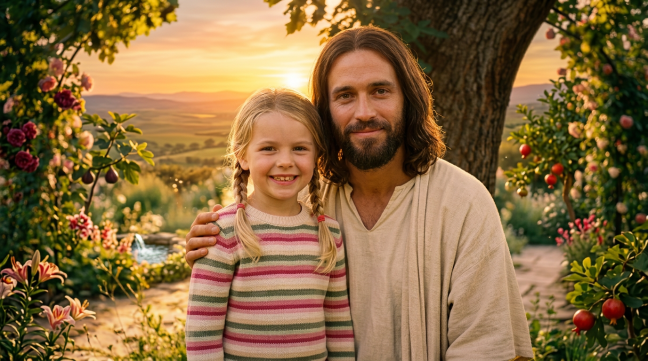
Young girl leaning against a tree trunk with a man standing behind her in a garden

Divine Whispers | Viju Jeremiah Traven

Beloved, the ache you carry does not begin where you think it begins. It rises from a depth you have not yet named. Even before your questions found language, before your tears learned to fall, before the striving took hold. I knew the fracture beneath your silence, and I did not withdraw (Psalm 139:1–4). Darling child. I drew closer. Nearer than breath. My desire has always been toward you (Song of Solomon 7:10).


The Hidden Cleft

Come. Not outward, inward. Come within My sacred chamber—where shame falls silent, and My love is your rest. You thought the silence was rejection. It was an invitation to launch out into the deep. I wait where your language fails, and your spirit groans beyond words. I receive you fully just as you are. My grace will enable you to prepare yourselves as the bride without a spot (Romans 8:26; Psalm 51:17; 1 Peter 1:15-16; Revelation 22:11).

In the cleft of the Rock, My dove hears only love (Song of Solomon 2:14; Psalm 91:1). It is where I spoke to Moses, saying, “I will put you in a cleft in the Rock and cover you with My hand” (Exodus 33:22). My Name whispered in your stillness is poured fragrance, myrrh upon your heart (Song of Solomon 1:13). Deep calls to deep, awakening an unquenched flame beneath your weariness (Psalm 42:7; Song of Solomon 8:7). I came not in the thunder, but in the silence, yet I was there before. (1 Kings 19:11–12).


The Weight of Being Known

You’re seen and felt by Me in full; no hidden place escapes My gaze. No shadow stands beyond My reach, no wound resists My healing blaze (Hebrews 4:13). I love the one who trembles in the hidden place. The one who has bowed low before My face. I was there when Hannah poured her soul to Me without a sound, I heard what none on earth could hear and comprehend, her depths so rich, profound (1 Samuel 1:10–13). I remembered her in silent grief, from depths no human eye could trace. I brought forth Samuel, My prophet flame, to stand and speak before My face (1 Samuel 1:19–20).

From Hannah’s silent cry to Simeon holding the King, I am there.

Anna, a devoted widow for decades, steadfastly travailed in fasting and prayer, longing for the Messiah’s appearing. One great day, she beheld the newborn King, gave thanks, and proclaimed redemption. When the newborn King was brought in, she gave thanks and spoke of Him to all who waited for the Messiah (Luke 2:36–38). What’s conceived in hidden surrender shall be cradled in pure wonder, as promise stands fulfilled in presence, revealed before you forever (Luke 2:28–32). I have not forsaken you, nor will I ever leave you (Hebrews 13:5).

Every swallowed sob, every midnight throb, I heard it before it formed (Psalm 56:8)The Messiah is Immanuel. He is near the brokenhearted (Psalm 34:18). In that nearness, something bitter in you slowly returns to sweetness. The taste of isolation fades as mercy moves through grief left hollow. My love now floods the empty depths, and joy restored begins to follow. Your weeping was no weakness; it raised you on the Rock divine. When all the sinking sands gave way, your tears merged with mine, and your life was transformed. I have kept count of your tossings; I have put your tears in My bottle—are they not in My book(Psalm 56:8; Matthew 7:24–27).


The Confrontation

While you sunk in sin’s deep sea, I bore the Cross to bring your soul to Me (Romans 3:23; 1 Peter 2:24). The Shepherd finds the lost one wandering far, with love as radiant as the morning star (Luke 15:4; Romans 5:8; John 3:16). You’re chosen Mine, to reign in robes of grace, your spirit shines in My eternal face (1 Peter 2:9; 2 Corinthians 3:18).

Like Mary, know I am your great reward, the peace and portion of the living Lord (Genesis 15:1). She chose the better part and sat with Me, to gain the prize of all eternity (Luke 10:42). The alabaster broke to crown her call; she poured her all— gained her All in All (Mark 14:3; Matthew 26:13; Philippians 3:7-8; Psalm 16:5).

Yield your heart to Me, My beloved, and let the Architect of the galaxies weave His life into the very fabric of your soul (Proverbs 23:26; Jeremiah 29:13; Deuteronomy 6:5). Lay down your heavy labors to rest at My feet, finding your true identity in the stillness of My voice (Luke 10:38–42; Hebrews 1:3). Within your deepest depths, I am refining every thought and desire, transforming you into a living reflection of My glory (Galatians 4:19; Philippians 2:13; Romans 12:1-2).

My Bride—like Magdalene, who followed to the end— First to behold the Risen One, would you follow Me more than all? Am I your All above all? (Matthew 13:45-46; Colossians 2:9–10; John 20:11-18; 21:15). Do you long to be the branch that’s grafted deep into the True Vine, where neither life nor death can pull your new heart from Mine (John 15:5; Romans 8:38–39)? I invite you to a union that no earthly power can sever, to dwell in My communion and to reign with Me forever (Song of Solomon 8:6).

My Word pierces the stiffness you fused for comfort. It divides your soul and spirit to breathe endless life into your holy call (Hebrews 4:12; John 6:63). You are clean through the Word I have spoken over you, for in My grace your life is fashioned and made new (John 15:3). No one condemns you if you remain one with Me, for where My Spirit reigns, the captive soul is truly free—and spotless (Romans 8:1; 2 Corinthians 3:17; 1 Corinthians 6:17).

I traced your scars upon the Tree to redeem you as My Eve.


The Pulse of the Wound

Look at My hands. Stay. Do not turn from what redeemed you (John 20:27). Every mark stays, not as evidence of defeat, but as eternal declaration: death is swallowed up in victory (1 Corinthians 15:54). The resurrection fragrance rises — Because I live, you shall live also (John 14:19). Not later. Now. Within you. Already.


The Nearness of Return

Apart from your current fears, the horizon trembles for a new dawn. All creation groans. That unnamed ache, which no earthly arrival satisfies, is not restlessness. It is the groaning of your heart for the adoption and redemption to come (Romans 8:23). It is recognition. The sky will not remain sealed. I descend as the Warrior-King — white warhorse beneath Me, blazing appearing, every earthly throne yielding at the sound of My voice, the trumpet shattering history’s long silence. My Bride stands beside Me, lamp burning, face already turned East. Those who endure shall reign with Me (2 Timothy 2:12)To the one who overcomes, I give hidden manna and a white stone bearing a new name (Revelation 2:17).


The Union Without Distance

I tore the veil and answered your soul’s hidden cry
Christ in you—My breath within, your endless sigh (Colossians 1:27).

No distant throne—awake, My Bride, in union divine
Love stronger than death; your life now lost in Mine (1 Corinthians 6:17; Song of Songs 8:6). 

Betrothed in fire, your spirit now made one with Me
An endless flame of love—fulfilled eternally (Hosea 2:19; Romans 8:38–39).

My blood-bought beloved, Co-heir of all I hold — rest now. Do not rush past this quiet. Now I keep your lamp trimmed and burning. When the midnight shout comes, you will not scramble (Luke 12:35-36). You will simply rise already prepared, already held, already sealed. The Bride who learns to be still has already begun to reign.


Overcomer, Co-heir, Warrior Princess — you stand at the threshold of everything promised. Behold, I stand at the door and knock; if anyone hears My voice and opens, I will come in and dine with him, and he with Me (Revelation 3:20). 

You are not becoming Mine — you have always been Mine.


Application

Pause daily for five minutes of absolute stillness, seeking My presence in you. Place your hand over your heart and declare aloud: “You see me fully; I open wide.” Believe in Me and abide in Me. Let the lamp burn — not by your effort, but by remaining where you already are. The Spirit and the Bride say, “Come”(Revelation 22:17).

Prayer

Father, nothing is hidden from Your love. I yield every shadow, every performance, and every secret ache to the light of the Son. Flood this opening with mercy. Form Christ fully in me for Your glorious return. Amen.

Why Are The Blessing Delayed (Part 10)

The Curse Of Racism And Linguistic Pride

Divine Whispers | Viju Jeremiah Traven

THE POISON IN THE WELL: WHEN PREJUDICE BLOCKS PROVISION

My beloved child, listen to your Heavenly Father: I must reveal a shadow that rests heavily upon the hearts of many, the sin of partiality and racism, promoting spiritual pride, and offending others. It is a subtle yet lethal toxin that chokes the Heavens. You may tithe, you may fast, and you may weep at the altar, but if you harbor a heart that devalues another based on their origin, language, color, education, or status, you have erected a wall blocking My blessing.

The Healing of Jericho’s Waters

In 2 Kings 2:19-22, the men of Jericho came to Elisha with a desperate confession: “The water is bad, and the land is unproductive.” The city’s spring, their source of life, had become toxic, causing miscarriages and barrenness. The poison in their well was making even the land itself unfruitful.

Elisha’s remedy was profound in its simplicity: he threw salt into the spring and declared, “This is what the LORD says: ‘I have healed this water. Never again will it cause death or make the land unproductive.'” The salt, a preservative, a purifier, a covenant symbol, transformed the poison into provision. From that day forward, the water remained pure.

This is a parable for our time. Racism and partiality are the poison in the well of the Church today. They contaminate the very source from which blessing should flow, making us spiritually barren and unproductive. But God stands ready with the salt of His purifying and liberating truth. When we allow Him to cast His Word into the poisoned waters of our secret prejudice, He can heal and restore fruitfulness to what has been barren. The cure requires only our willingness to acknowledge the contamination and invite the Healer to do His work of grace, consecrating our hearts to see His face.

THE DECEPTION OF COMPARISON

Partiality often cloaks itself in the language of piety. We see this in the Pharisee of Luke 18:11–14, who didn’t just pray, he performed a comparison. By thanking God that he was “not like other people,” he turned his devotion into a pedestal. When we rank individuals by race, language, color, or culture, we are not offering a prayer, we are echoing that same hollow distance. We replace the sanctuary of grace with a ladder of social standing.

From Superiority to Solidarity

True spiritual maturity requires a shift in posture:

The Pharisee’s Error: Using God to validate his sense of “better than.”

The Spirit’s Call: Moving from a “gaze of judgment” to a “gaze of compassion.”

The Level Ground: Recognizing that at the foot of the Cross, or the throne of Grace, there are no hierarchies, only seekers.

The Anatomy of Humility

The broken cry, “God, have mercy on me,”is the only sound that pierces the Heavens, because it is the only sound that is entirely honest. It acknowledges that we are all equally in need of a mercy we cannot manufacture. When we stop measuring our worth against our neighbor, we are finally free to love them.

The Scripture is unequivocal: If you show partiality, you are committing sin and are convicted by the law as transgressors” (James 2:9). Partiality is not a social preference; it is a spiritual blockade. It denies the Imago Dei (Image of God) in your neighbor, and in doing so, it denies the Father’s supremacy over all His creation.

Partiality is the assassin of Unity. Purity and humility unite on earth to receive the Blessing from Heaven. (Psalm 133:1-3)

THE LEPER AND THE KING: THE COST OF TRIBAL PRIDE

My beloved, recall the story of Naaman, the Syrian commander (2 Kings 5). He was a man of valor, but a leper. He sought healing from My prophet, but his pride almost cost him his miracle. He was offended by the “humble” waters of the Jordan, preferring the “superior” rivers of his own land, Abana and Pharpar (2 Kings 5:12).

Naaman’s prejudice was a barrier to his cleansing. Had he walked away in his “patriotic” pride, he would have died a leper. Prejudice makes you prefer your pride over your healing. Only when he humbled himself to enter the “foreign” waters did his flesh become like that of a little child. Your blessing often hides in the very place or person you have been taught to despise.

“If you show partiality, you stand condemned by the Law of the King of Glory, for He Himself shows no partiality. The Lamb of God was slain for all. Hence, each will be judged according to their deeds.” (James 2:9; Proverbs 24:23; Romans 2:11; Revelation 22:12).

The Theme of Vain Worship and Hidden Hearts

“Every racist at heart will be a fake worshipper before Me like Gehazi the leper. They are worshipping Me in vain.”

This profound declaration echoes Jesus’ condemnation of empty religious displays in Matthew 15:8-9: “These people honor me with their lips, but their hearts are far from me. They worship me in vain; their teachings are merely human rules.” This mirrors Isaiah 29:13, where God declares: “These people come near to me with their mouth and honor me with their lips, but their hearts are far from me. Their worship of me is based on merely human rules they have been taught.”

Gehazi’s Leprosy: A Mark of Greed and Deception

Racism rends the fabric of humanity and poisons its own heart, teaching dust to boast against dust and breath to exalt itself over breath. It dares to call inferior those fashioned in My image (Genesis 1:27), though from one blood I made every nation of men (Acts 17:26). In doing so, it corrupts the mirror meant to reflect My glory.

My beloved child. when spiritual pride dons the mask of lineage, tongue, or color, it reveals a leprosy of the soul, the ‘bright spot’ that goes deeper than the skin color (Leviticus 13:3). These are the lovers of self (2 Timothy 3:2), men who hold to a form of godliness while denying its true power (2 Timothy 3:5). This is a quiet treason, cloaked in the silk of cunning etequtte and simmering in the heart until the hour of betrayal. It is the thief in the sanctuary: stripping the sacred of its soul, turning worship into the whitewashed spectacle (Matthew 23:27) of a tomb, and drowning devotion in the hollow roar of a clanging cymbal (1 Corinthians 13:1).

Gehazi exemplifies hidden corruption beneath outward service. In 2 Kings 5:20-27, he secretly pursued Naaman for money after lying about Elisha’s instructions, and was struck with leprosy as judgment for his greed and deception. His outward service to the prophet concealed inner corruption, much like racism hides beneath religious pretense.

Racism and Partiality Before God

James 2:9 explicitly states: “But if you show favoritism, you sin and are convicted by the law as lawbreakers.” Acts 10:34-35 reveals: “God does not show favoritism but accepts from every nation the one who fears him and does what is right.” Racism fundamentally contradicts God’s character and nullifies worship.

The Heart God Sees

1 Samuel 16:7 reminds us: “The Lord does not look at the things people look at. People look at the outward appearance, but the Lord looks at the heart.” Like Gehazi’s leprosy made his corruption visible to all, the hidden racism in hearts makes worship false and empty before God, Who sees all. No religious activity can cover what God already sees within.

THE MIRIAM INCIDENT: THE LEPROSY OF RACISM

One of the most sobering illustrations of this barrier is found in the rebellion of Miriam and Aaron against Moses (Numbers 12). They spoke against him because of the Cushite woman he had married, a woman of a different race and darker skin. Their criticism was not about theology; it was about ethnic superiority. My response was swift and terrifying. My anger burned against them, and when the cloud removed from over the tent, “behold, Miriam was leprous, like snow” (Numbers 12:10).

I showed Miriam that the skin color she despised was My design, while the “whiteness” she received was a mark of judgment. When you mock the skin I created, you mock the Hands that formed it.

THE WALL OF PARTITION: A LEGACY OF SEPARATION

For centuries, a “middle wall of separation” stood between Jew and Gentile. It was a barrier of religious and ethnic exclusivity. But My Son came to abolish that enmity in His flesh (Ephesians 2:14-15).

The early Church struggled with this deeply. Peter, though filled with the Spirit, was still bound by the chains of partiality. I had to send him a vision of “unclean” animals three times and command him to purge himself of a wrong belief system: “What God has made clean, do not call common” (Acts 10:15).

Only when Peter entered the house of Cornelius, a man of another race, did the Holy Spirit fall. The global revival was delayed until the heart of the leader was purged of racist and linguistic prejudices.

THE TRANSFORMATION OF ONESIMUS

Paul’s plea in Philemon 1:10–12, 16 serves as the ultimate “anti-Pharisee” prayer. Instead of standing apart and saying, “I am not like this man,” Paul stands with the marginalized man and says, “He is my very heart.” “I appeal to you for my son Onesimus, who became my son while I was in chains… Perhaps the reason he was separated from you for a little while was that you might have him back forever, no longer as a slave, but better than a slave, as a dear brother.”

1. Don’t Quench the Spirit

By calling Onesimus his “son,” Paul is telling Philemon: The Spirit has already done a work here. If Philemon refuses to accept Onesimus as an equal, he is effectively quenching the Spirit, ignoring the supernatural transformation that turned a “useless” runaway into a “useful” minister of the Gospel.

2. Don’t Belittle the Ministry

When we rank people by their past mistakes or their social class, we belittle the ministry of reconciliation. Paul warns in 1 Thessalonians 5:19-20 to “not quench the Spirit” and “do not treat prophecies with contempt.” In Philemon’s context, to treat Onesimus with contempt would be to treat the Spirit’s work as “not enough” to bridge the gap between master and slave.

The Refined Synthesis Partiality is a thief. It steals the power of the Gospel by insisting that some are “more” and others are “less.”The Pharisee looked at the tax collector and saw a category to avoid. Paul looked at the runaway slave and saw a son to embrace.

Whenever we allow race, culture, or status to dictate who we “welcome,” we echo the Pharisee’s distance. But when we accept the “Onesimuses” in our lives, those we once looked down upon, as full brothers and sisters, we stop quenching the Spirit and finally allow the ministry of grace to breathe. As Paul famously challenged: “If you consider me a partner, welcome him as you would welcome me” (Philemon 1:17).

THE STATISTICS OF THE DIVIDED ALTAR

Even today, the fruit of partiality manifests as a curse upon the land. In the history of the modern Church, Sunday morning remains “the most segregated hour.” The Debt of Injustice: In various nations, systemic partiality has led to wealth gaps where one group holds a 10 to 1 ratio of assets over another (such as the median wealth gap between White and Black households in the U.S.), creating a cycle of poverty that delays the blessing of prosperity for millions.

The Broken Fellowship: Statistics show that congregations that remain ethnically isolated often miss out on 30% higher spiritual growth rates found in diverse, multi-ethnic communities that intentionally bridge cultural divides.

The Prayer Blockade:

“He who shuts his ears to the cry of the poor will also cry out and not be heard” (Proverbs 21:13). Partiality is the ultimate shutting of the ear that listens to the whisper of My Spirit.

THE GOOD SAMARITAN SOLUTION: LOVE BEYOND BORDERS

When Jesus was asked, “Who is my neighbor?” He did not point to a temple priest or a Levite. He pointed to a Samaritan, a man considered ethnically “half-breed” and socially “unclean” by the Jews (Luke 10:33).

The Samaritan became the hero of the Kingdom because his mercy had no borders. He did not ask for the victim’s lineage before pouring the oil and wine. True faith is colorblind—it sees only the need and the Father’s love. If you want the “oil and wine” of blessing to flow in your daily life, you must be willing to pour it into the lives of those who do not look, dress, or speak like you.

CULTIVATING A HEART OF INCLUSIVITY IN THE DELAY

How do you break the curse of partiality to release the delayed blessing?

1. Repent of “Secret Superiority”: Ask Me to search your heart for the subtle belief that your culture, race, or status makes you more pleasing to Me (Psalm 139:23).

2. Seek the Image, Not the Ethnicity: Train your eyes to see the Spirit of God in every born-again human being. “There is neither Jew nor Greek… for you are all one in Christ Jesus” (Galatians 3:28).

3. Cross the Street: Like Philip going to the Ethiopian Eunuch (Acts 8:26-39), be willing to go where My Spirit leads, even if it is outside your comfort zone.

4. Speak Justice: You cannot be a child of the Truth and remain silent in the face of partiality. “Open your mouth for the mute, for the rights of all who have become destitute by the evil of racism” (Proverbs 31:8).

FINAL PROCLAMATIONS FOR THE UNBIASED HEART

Love is the fulfillment of the Law. (Romans 13:10). The Kingdom is a tapestry of every tribe, tongue, and nation. (Revelation 7:9). My child, do not wonder why the Heavens are brass if your heart is a fortress of prejudice. A divided, racist Church cannot carry a united Blessing. Tear down the walls of partiality, and I will open the windows of Heaven.

In My eternal Kingdom, Christ is the Supreme Head, Who denied Himself and left equality with Me (Philippians 2:6-7). He humbled Himself and descended from Heaven to become the Word manifested in the flesh to rescue all from perishing. “Flesh and blood without the Spirit of Christ cannot inherit the Kingdom of God, which is righteousness, peace, and joy in the Holy Ghost.” (1 Corinthians 15:50; Romans 8:9; Romans 14:17)

In the Kingdom of Light, no reborn soul stands higher or lower than another; all are one in Christ, the King of kings. Therefore, the citizens of Heaven seek first God’s Kingdom and love one another, regarding others as greater than themselves. (Colossians 1:13; Galatians 3:28; Matthew 6:33; John 13:34–35; Philippians 2:3)

REFLECTION

The Father does not hear the prayers of a mouth that curses the skin He painted. Exclusivity is the luxury of the proud, but inclusivity is the mandate of the redeemed. To love your neighbor as yourself is to recognize that your neighbor’s blood carries the same Divine signature as your own.

PRAYER

Lord, I renounce every root of racism and linguistic partiality that has settled in the soil of my soul. Cleanse my eyes that I may see Your glory reflected in the faces of those I have previously shunned. Let the wall of separation fall in my heart today, so that the river of Your blessing may finally overflow.

Why Are The Blessings Delayed (Part 9)

The Barrier of Unbelief: The Silent Thief of Destiny

Divine Whispers | Viju Jeremiah Traven


Faith: The Channel Through Which Blessing Flows

My beloved Bride, I must address the most fundamental barrier to any blessing: unbelief. It is possible to pray perfectly, live purely, and serve sacrificially, yet receive nothing because unbelief clogs the arterial flow of My favor.

The Epistle to the Hebrews declares: “Without faith it is impossible to please God, for whoever would draw near to Elohim must believe that He exists and that He rewards those who seek Him” (Hebrews 11:6). Faith is not a suggestion; it is the currency of the Kingdom. Unbelief does not merely delay the blessing; it burns the bridge to the Giver of blessing.


The Village Where Miracles Died

Recall My return to My hometown of Nazareth. The people saw only the “carpenter’s son” (Matthew 13:55), blinded by the veil of familiarity. They weighed My divinity against their limited human logic and found Me wanting.

The Scripture records a tragic result: “And Christ did not do many mighty works there, because of their unbelief” (Matthew 13:58). Note well: It was not a lack of power, but a lack of a platform of faith. Their skepticism created a spiritual vacuum where miracles could not breathe. Similarly, when Zechariah met the Archangel Gabriel with “How shall I know this?” rather than “Amen,” his tongue was bound in silence (Luke 1:20).

The Law of the Kingdom: Unbelief silences your testimony before the miracle even begins. “According to your faith be it done to you” (Matthew 9:29). Your faith and obedience moves My heart.


The Shepherd and the Provider

When a faithful sheep declares, “The Lord is my shepherd; I shall not want” (Psalm 23:1), they are acknowledging a relationship, not just a benefit. Provision is the natural byproduct of following the Shepherd. However, faith is not a mere feeling; it is a posture of the heart.

Without love and obedience, faith lacks the “feet” it needs to walk into My promises. As James 2:22 reminds us, “You see that faith was active along with his works, and faith was completed by his works.”

Lean your ear toward My heart, for faith comes by hearing, and hearing by My Word (Romans 10:17). To be My “good sheep” is to trust the resonance of My voice above the howling of the wilderness. Remember the faith of Abraham, who ascended the mountain with heavy wood but a quiet heart. He did not wait for the ram in the thicket to find his peace. Because he lived by faith and trusted My glorious promise, he had already received Isaac back into his bosom before he ever reached the altar. He knew that I am “the Resurrection and the Life” (John 11:25).


The Grave of a Generation: The High Cost of Doubt

The wilderness generation is the ultimate cautionary tale. After witnessing the plagues of Egypt and the parting of the Red Sea, they faltered at the border of their destiny. Ten spies saw giants; only two saw God (Numbers 13).

By saying, “We are not able,” they were actually saying, “God is not able.” Their distrust was an act of rebellion that grieved My heart (Numbers 14:11). The consequence was a divine pivot: an eleven-day journey dissolved into a forty-year death march. They died in the desert not because they lacked strength, but because they lacked trust. Unbelief transforms a doorway into a steel wall of resistance.


The Command to Hope: Lessons from the Patriarchs

When you face the mountain of uncertainty, you must not retreat. Believe and wait until I demolish it.

  • Hope Against Hope: Like Abraham, do not waver when circumstances look dead (Romans 4:18).
  • Trust the Promise-Maker: He did not doubt through unbelief but was strengthened in faith, giving glory to God (Romans 4:20).
  • Lean on My Strength: You can do all things through Me, for I am the One who strengthens you (Philippians 4:13).
  • The Pillar of Faith: “For with God nothing will be impossible” (Luke 1:37).

The Decree of the Mountain-Mover

I am the Architect of the Promise and the Destroyer of the Barrier.

  • Wait for the Fulfillment: The vision is for an appointed time; though it tarries, wait for it (Habakkuk 2:3).
  • Behold the Demolition: Every valley shall be raised and every mountain made low (Isaiah 40:4).
  • Reject the Spirit of Fear: Do not be terrified, for I am with you wherever you go (Joshua 1:9).
  • Trust the Divine Power: “Not by might nor by power, but by My Spirit,” says the Lord of Hosts (Zechariah 4:6).

The Anatomy of Faith That Moves Mountains

Contrast the desert of doubt with the fire of the faithful:

  1. The Persistence of the Canaanite: She found a way through the “No” to get to the “Yes.” Her faith was an unstoppable force (Matthew 15:28).
  2. The Authority of the Centurion: He did not need a sign; he only needed a Word (Matthew 8:10).
  3. The Defiance of the Bleeding Woman: Her faith was a magnet that drew power out of Me (Mark 5:30).
  4. The Audacity of Peter: As long as he looked at Me, he walked on the impossible. The moment he measured the wind, he began to sink (Matthew 14:30).

Unbelief is simply looking at the storm longer than you look at the Savior.


Cultivating an Unshakeable Heart

  • Starve the Senses, Feed the Spirit: If you listen to the world more than the Word, your faith will face a famine.
  • The Altar of Remembrance: Like David, recount the lions and bears I have already slain in your life (1 Samuel 17:37).
  • The Company of Giants: Surround yourself with those who speak the language of “Nevertheless.”
  • The Prophetic Decree: Your words are the rudder of your soul (James 3:4). Stop describing your mountain and start speaking to it.

Final Proclamations for the Faithful

Rest in Me, My Beloved. You are not just following a Voice; you are being carried by the One who spoke the stars into being.

  • Faith is the hand that takes what Grace has already provided (Ephesians 2:8).
  • Doubt sees the obstacles; Faith sees the Way (John 14:6).
  • Unbelief limits the Holy One; Faith unleashes the Ancient of Days (Psalm 78:41).

My child, your delay is not a denial unless you allow unbelief to sign the certificate of abandonment. Feed your faith with Truth, and your doubts will starve to death. Open the channel. Believe, and you shall see the glory of God.

Reflection

The wilderness is not a place of punishment, but a testing ground for the eyes of the heart. While the world measures giants by their height, the faithful measure them against the Throne of the Most High. To wait with patience is not to sit in silence, but to stand in the unwavering expectation of a Promise-Keeper.

Prayer

Heavenly Father, I repent for every moment I allowed the shadow of a mountain to hide the radiance of Your Face. I anchor my soul in Your unchanging Word and command every stone of unbelief to be cast into the sea. Let Your Spirit breathe upon my parched hope until every delay is consumed by the fire of Your glorious fulfillment.

Why Are The Blessings Delayed (Part 7)

The Curse of Murmuring and Complaining

Divine Whispers | Viju Jeremiah Traven

My Beloved Bride, let us examine a poison that consumed an entire generation: murmuring. It disguises itself as harmless speech. It calls itself venting. It pretends to express disappointment. Yet Heaven sees deeper. Scripture unveils murmuring as rebellion clothed in casual words. It is the language of a thankless heart. It ultimately speaks against God Himself.

Israel’s Fatal Flaw

Israel did not fall by idols alone. They fell by their tongues. The people complained, and it displeased the Lord (Numbers 11:1). What they called frustration, God named rebellion. The Spirit testifies: The tongue is fire, a world of evil among the parts of the body, corrupting the whole person, setting the whole course of life on fire, and itself set on fire by hell (James 3:6). What begins as a whispered complaint becomes a consuming blaze. It scorches faith. It burns unity. It destroys destiny.

The Source Revealed

My Beloved, I asked: How long will these people reject Me? (Numbers 14:27). It speaks with a Human voice. Yet Heaven sees its true face. It is the key to darkness. Through it, the demonic realm opens. Rebellious thoughts flood in like waters through a broken gate. These people are grumblers and faultfinders; they follow their own evil desires, using flattery to gain advantage (Jude 1:16). They thought it was a shortcut to success, but they ended in a curse.

The Darkening of Hearts 

Although they knew God, they neither glorified Him as God nor gave thanks to Him. Their thinking became futile, and their foolish hearts were darkened (Romans 1:21). When gratitude departs, darkness enters. When praise ceases, the heart hardens. They became darkened in their understanding and separated from the life of God because of the ignorance that is in them due to the hardening of their hearts (Ephesians 4:18). 

Ingratitude is the first step toward spiritual blindness. Murmuring completes the descent. The Light broke into the world, exposing truth and offering life. Yet Humanity loved darkness more, because darkness concealed what the light would reveal (John 3:19). Every complaining word draws the curtain against Heaven’s light. Every murmur builds a wall between the soul and its Savior.

The Doorway to Ruin

What sounds reasonable often becomes the quiet doorway to ruin. When the tongue burns without restraint, it exposes a heart that has ceased to trust God. In repentance and rest is your salvation, in quietness and trust is your strength (Isaiah 30:15). To refuse rest in My promises does not make you strong. It makes you restless, weakened, yet destructive.

The Devouring Mouth

A soul that will not trust will murmur. A mouth that speaks without faith becomes a devourer. Paul warned: If you bite and devour each other, watch out or you will be destroyed by one another (Galatians 5:15). The murmuring mouth feeds on itself. It starves while it consumes. James exhorts: Don’t grumble against one another, brothers and sisters, or you will be judged. The Judge above all stands at the door (James 5:9).

From Frustration to Rebellion

Frustration spoken without faith becomes rebellion in God’s ears. It spreads like wildfire through a camp. It leaves an entire generation standing in ashes where promise once waited. Hence, Moses told complaining Israelites: You are not murmuring against us but against the Lord (Exodus 16:8).

My child, they tasted manna from Heaven yet despised it with their words. They walked under glory-clouds yet questioned the Lord Who led them. The Apostle warns: Do not grumble as some of them did, and were killed by the destroyer (1 Corinthians 10:10).

The Swift Judgment

Few sins invite such swift judgment. Murmuring opens the door to the destroyer. Murmur dethrones gratitude. It enthrones unbelief.

The Wilderness Generation: A Cautionary Tale

Consider Israel, delivered from Egypt by mighty signs and wonders. The Lord split the Red Sea before them. Its walls stood like sentinels of mercy. Pharaoh’s armies drowned behind them, swallowed by the very waters Israel crossed in triumph. By day, the Lord led them with the cloud. By night, with fire above. Never withdrawing His presence for a moment (Exodus 13:21–22).

Destroyed by Words

Yet within days, evil murmuring began. The whole assembly of Israel grumbled against Moses and Aaron in the wilderness (Exodus 16:2). Not a few voices. The entire assembly rose as one. Every soul. Every tongue. Lifting accusations like smoke choking the desert air.

The Bitter Cry

Their cry was bitter and brazen: If only we had died by the Lord’s hand in Egypt! (Exodus 16:3). They romanticized bondage. They glorified slavery. They called captivity “comfort.” There we sat around pots of meat and ate all the food we wanted, they said. They preferred full stomachs in chains more than freedom from slavery.

The Great Reversal

In their words, deliverance became cruelty. Unbelief Twisted the Truth. Provision became neglect. Even as He rained bread from Heaven. Even as God gave them water from the rock (Exodus 16:4; Exodus 17:6). The Promise Keeper became the Accused. They tested the Lord: Is the Lord among us or not? (Exodus 17:7).

Mercy Became Malice

What God called redemption, they renamed a death march (Exodus 20:2). This time, unbelief twisted mercy into malice. Salvation into suspicion. Their mouths reversed Heaven’s verdict. They refused to believe His Word but grumbled in their tents (Psalm 106:24–25).

The Power of Words

My Beloved, recall what I said: By your words you will be acquitted, and by your words you will be condemned (Matthew 12:37). Those who are called are justified (Romans 8:30). They are rescued by faith that dares to speak aloud. With the heart one believes and is justified, and with the mouth one professes faith and is saved (Romans 10:10). Everyone who calls on the name of the Lord will be saved (Romans 10:13).

Faith Finds Voice

Faith finds its voice: Paul said: I believed; therefore I have spoken (2 Corinthians 4:13). The Blood of the Lamb secures victory. The word of testimony enforces it. Thus, the saints overcome the evil one (Revelation 12:11).

The Tragic Exchange

They had crossed the sea, yet Egypt still spoke through their mouths. Though the Lord had triumphed gloriously, casting horse and rider into the sea (Exodus 15:1, 21), their hearts turned back to old Egypt (Acts 7:39). Their feet were free. But their souls still bowed to the memory of bondage.

Glory for Grumbling

The wilderness echoed with a tragic exchange: Glory for grumbling. Promise for protest. Inheritance for insult. They despised the pleasant land; they did not believe God’s promise (Psalm 106:24).

The Peril of Murmuring

This is the peril of grumbling: it causes the redeemed to speak like the unredeemed. They forgot what their Redeemer did for them, and forget that death and life are in the power of their tongue (Proverbs 18:21). It causes the delivered people to crave for chains of slavery. Disowning their Deliverer, they said: Let us choose a leader and go back to Egypt (Numbers 14:4).

Do Not Harden Your Hearts

The Spirit warns: Today, if you hear His voice, do not harden your hearts as you did in the rebellion (Hebrews 3:15). Grumbling hardens the heart. It blinds the eyes to glory. It turns freedom into a mere memory.

The Lie of the Wilderness

My Beloved, the path grows steep. You paint your prisons as glittering gold. You call your chains “security.” You name your slavery “the good old days.” The Israelites said: We remember the fish we ate in Egypt at no cost (Numbers 11:5). You forget I delivered you. You forget your Deliverer. You remember what you lost. You have rejected the glorious promises I have given you.

Between Slavery and Promise

The wilderness stands between slavery escaped and promise not yet possessed. You open your mouth. Not in worship, but in accusation. Not in thanksgiving, but faultfinding. You questioned Me: Why did you bring us up out of Egypt to make us die in the wilderness? (Exodus 17:3). You do not trust the Lord Who brought you out of four hundred years of darkness. You charge Me with bringing you out to die in the desert (Numbers 14:2).

I Make Ways

My Beloved, do you not know? I make ways where there are none. I am the Lord your God, Who brought you out of Egypt (Psalm 81:10). I split the waters for you. I rain bread from Heaven. Man ate the bread of angels (Psalm 78:25). Every step through this barren place, I am with you. I will never leave you nor forsake you (Hebrews 13:5).

Follow Me in the Wilderness

Your tongue can wound your own soul. Trust Me in the wilderness. I am leading you home. Beware the lie that the wilderness is the destination. The Psalmist said: He led them by a straight way to go to a city where they could settle (Psalm 107:7). The wilderness was only a passage to promises.

The Voice of Destruction

Beware the deceiver’s voice that says God brought you out to destroy you (Exodus 14:11). Yet the Lord declared: I brought you out of Egypt to be your God (Leviticus 25:38). Beware the poison of a thankless heart: They despised the pleasant land and did not believe His promise, but grumbled in their tents (Psalm 106:24–25).

Gratitude Guards Destiny

My Beloved, remember this: Gratitude guards destiny. Murmuring aborts it. A complaining heart will perish on the way. With most of them, God was not pleased, and their bodies were scattered in the wilderness (1 Corinthians 10:5).

Never because God proved untrue. But because they would not trust the Faithful through. Their grumbling hearts denied His grace, and judgment met their bitter face. When unbelief called God unfaithful,
the wages of complaint were awful. 

Kadesh Barnea: The Point of No Return

At Kadesh Barnea, the spies returned with reports of the Promised Land. Ten unbelievers spoke of fear and doubt. Thus, the people’s response sealed their fate: The whole assembly raised their voices and wept aloud. All the Israelites grumbled against Moses and Aaron, and without faith, the whole assembly said: If only we had died in Egypt (Numbers 14:1-2).

God’s Response

God’s response reveals the gravity of irreverent complaint. How long will this wicked community grumble against Me? Say to them: As surely as I live, declares the Lord, I will do to you the very thing I heard you say, their bodies will fall in this wilderness (Numbers 14:27-29).

The Verdict

An entire generation died without entering into My promise. Not because of idolatry. Not because of murder or adultery. Because of reckless murmuring.

Why Grumbling Invites Severe Judgment

1. It Questions God’s Character

When we murmur, we essentially declare: God, You are not good. You are not faithful. You don’t know what You’re doing or what we are going through. They spoke against God, saying: Can God really spread a table in the wilderness? (Psalm 78:19). Murmuring reveals what you believe about God. It exposes your faith, or lack thereof.

2. It Reveals Ingratitude

The destroyer comes where thanksgiving has departed. Grumbling flows from a heart that has forgotten God’s past faithfulness and new mercies every morning. Hence, Paul said: Do not grumble as some of them did and were killed by the destroying angel (1 Corinthians 10:10). The Scripture warns the Church by pointing back to Israel’s example. This is not merely an Old Testament concern.

3. It Spreads Like Leaven

Senseless complaint is contagious. Murmuring is contagious. It infected the entire congregation. It turned their hearts from faith to fear. From gratitude to grumbling.

Therefore, My Beloved, you do everything without grumbling or arguing, so that you may become blameless and pure, children of God without fault in a warped generation, among whom you shine like stars (Philippians 2:14-15). Notice the connection: no grumbling equals shining as lights. But murmuring dims your light. It stains your witness. It blocks the flow of blessing into your life.

4. It Opposes God’s Purposes

Every complaint against His providence is resistance against His will. Apostle reminded: These people are grumblers and faultfinders; they follow their own evil desires (Jude 1:16). Every complaint against His providence is resistance against His will. You cannot complain your way into a great promise. You cannot grumble your way into glory. Remain humble and faithful. 

The Two Who Entered: Joshua and Caleb

Only two men from that generation entered the Promised Land. What set them apart? They had a different spirit and followed the Lord fully (Numbers 14:24). While others murmured, they believed. While others complained, they praised. While others saw obstacles, they saw opportunities.

Caleb’s Spirit

My servant Caleb has a different spirit, and he follows Me wholeheartedly. I will bring him into the land he went to (Numbers 14:24). What was Caleb’s “other spirit”? Faith that spoke blessing instead of complaint. Possibility instead of problem. God’s power instead of giants’ size.

Murmuring Invites Judgment

The earth opened. Serpents struck. The destroyer came. When Israel grumbled about manna, the Lord sent venomous snakes among them, and many died of snakebite (Numbers 21:5-6). When Korah led a rebellion of murmuring against Moses and Aaron, the Earth opened and swallowed them alive (Numbers 16:31-33). Murmuring is not harmless. It invites Divine wrath.

The Apostolic Warning

Paul warns: We should not test Christ as some of them did, and were killed by venomous snakes. And do not grumble as some of them did, and were killed by the destroying angel (1 Corinthians 10:9-10). He uses Israel’s example as a warning to you. Murmuring brings destruction. Be careful what you murmur against.

A Warning for Today’s Church

We have normalized what Heaven still condemns. Beloved, we live in a generation that has normalized complaining. Social media platforms thrive on grievances. Cultural cynicism is celebrated as sophistication.

Christians murmur bitterly about their devoted Churches and become atheists. Faultfinders, unwilling to confront or correct their own flaws, complain relentlessly against their anointed and devoted leaders. They grumble against their circumstances and against the trials of faith appointed for their growth. They are quick to examine the speck in another’s eye.  But they remain blind to the plank in their own eye.  

That’s why I asked: “Why do you look at the speck in your brother’s eye, but do not consider the plank in your own eye? You must first remove the plank from your own eye, and then you will see clearly to remove the speck from your brother’s eye” (Matthew 7:3–5).

The Antidote: Thanksgiving and joyful praise in All Circumstances

Not only when circumstances favor, but in every moment. The cure for murmuring is rejoicing in the Lord always, even in the sufferings for the sake of righteousness. Radical thanksgiving is the antidote for the venom of the snakebite named grumbling. Thanksgiving is not only when circumstances are favorable. But thanksgiving and praise in all circumstances; for this is God’s will for you in Christ Jesus (1 Thessalonians 5:18).

Prison Praise: The Power of Midnight Worship

Disciples unchained themselves by singing hymns; Heaven responded with earthquakes. Paul and Silas demonstrated how to unlock a prison using the key of praise. Their backs were bloody from beatings. Their feet were locked in stocks. Their future looked hopeless. But at midnight, they were praying and singing hymns to God (Acts 16:25).

The Power of Praise and Worship

Their worship in the midst of suffering shook the prison. It broke their chains. It opened doors of salvation. Murmuring would have kept them imprisoned. Thanksgiving set them free. Hence, the Psalmist said: Our mouths were filled with joyful laughter, our tongues with songs of praise, and the nations acknowledged that the LORD had done great things for us (Psalm 126:2).

The Key That Unlocks Gates

My Beloved, when you replace murmuring with praise, you shift atmospheres. You open heavens. You receive a blessing. The psalmist declares: Enter His gates with thanksgiving and His courts with praise; give thanks to Him and praise His name (Psalm 100:4). Thanksgiving is the key that unlocks the gates of blessing. Thanksgiving transforms your trial into testimony. Murmuring turns your blessing into a burden. 

Choose Life: Gratitude Over Grumbling

Murmur makes you weaker, and the joy of the Lord makes you stronger. Will you enter your promise, or die in your wilderness? The choice is made daily through the words of your mouth and the meditation of your heart. Keep your lives free from the love of money or fame and be content with what you have, because God said: Never will I leave you; never will I forsake you (Hebrews 13:5).

At the Crossroads

When trials come, and they will, then you shall stand at the same crossroads as Israel. There, you must stand firm. Be led by the Spirit and thus reveal your sonship (Romans 8:14), proving it through the obedience of faith (Romans 1:5; 16:26), walking in Christlike obedience even unto sacrifice (Philippians 2:8), and offering your life as a spiritual act of worship (Romans 12:1-2). Before the challenges of life, will you murmur, or will you worship? Will you complain, or will you trust and sing praise?

Guard Your Tongue

My Beloved child, murmuring is rebellion whispered softly. It corrodes faith. It dishonors the provision. It blinds the Human heart to the Divine purpose and God’s promise. Recalling the rebellion of the Israelites, it is written: How long will this wicked community grumble against Me? (Numbers 14:27). Their feet stood at the edge of destiny. Yet their words chained them to the wilderness.

Holy Ground

My Beloved, guard your tongue as holy ground. Do everything without grumbling or arguing, that you may become blameless and pure, children of God without fault (Philippians 2:14–15). Gratitude preserves inheritance. Murmuring aborts it. One generation died murmuring at the threshold. Another entered the promise by singing praise.

The Final Word

Choose Words Wisely

Your inheritance listens to your voice.  Guard your tongue. Guard your heart. Always remember: the wilderness is not your destination. It’s only a fading passage. Don’t die there through the poison of murmuring when the Promised Land awaits those who trust and give thanks.

It is written: Give thanks to the Lord, for He is good; His love endures forever (Psalm 107:1). Choose your words wisely, My Bride. Your inheritance listens to your voice. Let him who has ears to hear, hear what the Spirit says to the Churches. Amen!

Prayer 

Father, cleanse my lips and heart from murmuring, and fill my mouth with laughter to express my thanksgiving and faith. Teach me to trust You in the wilderness and to worship You before the glorious promise appears. Guard my tongue as holy ground, that my words may align with Your truth and glorify Your Name.

Reflection 

Every complaint reveals the flaw in my trust and rest in God. Gratitude is not denial of pain, but faith in God’s faithfulness. Today, I choose worship over murmuring, so I may enter the promise prepared for me.

Open Hearts and Transformed Lives

Divine Whispers | Viju Jeremiah Traven

The Gospel of Christ According to Your Life (Part 7)


Lydia: The Open Heart

My precious child, consider the deepest devotion of Lydia, whose heart I opened to respond to Paul’s message of the Cross (Acts 16:14). She confessed her faith in Me and was immediately baptized in water with her household, then urged My beloved servants: “If you consider me a believer in the Lord, come and stay at my house” (Acts 16:15).

The Door to Europe

Her generous invitation represents My Church’s hospitality and immediate response to honor My servants. Her openness and kindness revealed that I am Yeshua HaOchez BeMafteach David, the One Who holds the key of David, the emblem of Divine authority and government upon His shoulder (Revelation 3:7).

Her very life thundered as a living testimony of My Word: I am the Holy and True One, Who holds the key of David. What I open no one can shut, and what I shut no one can open (Revelation 3:7; Isaiah 22:22). Lydia stood as the open door to Europe for Paul’s Ministry of Reconciliation. She was the first convert on new soil, the foundation stone of the devoted Philippian Church, and a witness that God’s reconciling love transcends every boundary. Lydia’s life also revealed I am Yeshua, Ha Delet, the Door (John 10:7-9).


Zacchaeus: The Transformed Tax Collector

See Zacchaeus, that little man who eagerly climbed a tree to get the best view of Me (Luke 19:1-10). When I called him down, his actions spoke louder than any lesson about profound repentance: “Look, Lord! Here and now I give half of my possessions to the poor, and if I have cheated anybody out of anything, I will pay back four times the amount” (Luke 19:8).

True Repentance in Action

This transformation of the tax collector is of the deepest measure: not mere words, but actions that repay and restore what was wrongfully taken from others. Behold! True renewal of the mind, forsaking love for money—the root of all evil—to please Me sincerely. It is no mere act of duty, but a living sacrifice, roaring worship, revealing the fruit of repentance. His transformation and restoration proclaim to all Heaven and Earth: “I am Yeshua Go’ali, the Redeemer of souls, the Restorer of all things.” For when a life is yielded upon the altar of mercy, it becomes a living testimony of Divine renewal (Romans 12:2).


The Path of Transformation

All of My devoted saints will see My glory with unveiled faces. As they faithfully follow the Spirit of the Lord, they will be transformed into My image, going from glory to greater glory and from grace to greater grace (2 Corinthians 3:18). I take hearts of stone and give them hearts of flesh, molding them through the refining fires of faith until they radiate with the beauty of redemption (Ezekiel 36:26; 1 Peter 1:7). The good work I begin in anyone, I will bring to completion, for I, the Lord, have called that soul by name; that soul is Mine (Philippians 1:6; Isaiah 43:1).

The Testimony of Grace

Every believer transformed by grace becomes a living testimony of Heaven’s power upon Earth. Behold, the Great “I AM” still breathes life into dust and revives what was once lifeless (Genesis 2:7; John 20:22). He still turns the ashes of your sorrow into beauty crowned with joy, and binds up every fracture of the heart until it shines with wholeness (Isaiah 61:3; Psalm 147:3).

The Promise of Redemption

I still redeem what the world calls lost, for the Son of Man came to seek and save the perishing (Luke 19:10). I still whisper, “You are Mine, I have redeemed you” (Isaiah 43:1). Through My Blood, the chains of condemnation are shattered, and grace flows like a river, washing the soul in radiant freedom (Ephesians 1:7).

So now, as you yield upon the altar of mercy, be transformed by the renewing of your mind, for the Spirit of the Lord is shaping you from glory to glory, until your life mirrors His image and your breath proclaims His Name (Romans 12:2; 2 Corinthians 3:18).

The Confession of Surrender

The truthfully repentant soul confesses with trembling and joy that I am the Creator of all that exists, the Owner of all that is, and Savior of all that was lost (Genesis 1:1; Nehemiah 9:6; Luke 19:10; Ephesians 1:7). In their surrender, they proclaim the ancient truth: “The Earth is the LORD’s, and everything in it, the world, and all who live in it” (Psalm 24:1).


Timothy: The Faithful Son

Remember Timothy, My loyal son (Philippians 2:19-22). While others only sought their own interests, he sacrificially cared for the welfare of My Church. Paul testified: “I have no one else like Timothy, who will show genuine concern for your welfare. For everyone looks out for their own interests, not those of Yeshua. But you know that Timothy has proved himself, because as a son with his father, he has served with me in the Gospel.”

Living the Gospel Before Preaching It

When others abandoned their God-entrusted duties, Timothy’s gentleness and faithfulness demonstrated the Church’s call to sacrificial care. He practiced the Gospel before he rose to preach it. So he denied himself, took up his cross, and fulfilled his call to bless others. Timothy’s servant heart revealed: I am Yeshua, El ha-Moser, the God Who Entrusts (1 Thessalonians 2:4; Numbers 27:16).


The Widow’s Mites: The Wordless Message

My beloved: though the widow who offered her two small copper coins never uttered a word, I gathered My disciples to learn from her silent sermon on sacrificial devotion—giving not from abundance, but from poverty, holding nothing back (Mark 12:41-44; Luke 21:1-4). “Truly I tell you, this poor widow has put more into the treasury than all the others.”

The God Who Sees

Her sacrificial offering represents the Church’s complete dependency on Me. The eyes of the Lord pierce the heart. He sees the heart of the giver, not the size of the gift. Her faithful offering in her famine reveals that her Lord beholds hidden tears and serene obedience. I honor the faithful, rewarding not by measure, but by the depth of love and trust. Through her humble, faithful act, she proclaimed Me, Yeshua Ro’eh, the God Who sees, the Rewarder of hearts, the One Who counts even the hairs of your head and notices every unseen devotion (Genesis 16:13; Hebrews 11:6; Luke 12:6–7).


The Immediate Yes

My Beloved Bride, I am looking for hearts like Lydia’s, open the moment I knock at the door (Revelation 3:20). I am searching for lives like Zacchaeus’s, transformed the instant grace arrives (Luke 19:9). I am seeking servants like Timothy’s, faithful when others abandon their post (2 Timothy 4:10). I am honoring offerings like the widow’s, small in human eyes but enormous in Mine (Mark 12:43).

The Divine Romance of Obedience

This is the Divine romance of immediate obedience: I open hearts, and you respond without delay; I call your name from the tree, and you come down rejoicing; I entrust you with My people, and you care for them sacrificially; I watch your offering, and you give everything (Acts 16:14-15; Luke 19:5-6; Philippians 2:20; Mark 12:44).

Heaven’s Measure vs. Earth’s Measure

The world measures by abundance; I measure by surrender. The world applauds platforms; I reward hiddenness (Matthew 6:1–4). The world seeks the spectacular, but I delight in what is unseen, the quiet strength of sacrificial obedience. For what men praise as greatness often fades like mist, but obedience births eternal fruit (1 Samuel 15:22; Luke 16:15).

The Path of Humility

As I humbled Myself in perfect obedience unto death, the Father exalted Me above all (Philippians 2:8–9). Therefore, walk humbly with Me (Micah 6:8), and your secret surrender will shine brighter than the loudest display (Matthew 6:1).

Open your heart. Climb down from the tree. Serve My people. Give your last coin. For in the Kingdom of Heaven, the first shall be last and the last first, and those who lose their life for My sake will find it eternally abundant (Matthew 19:30; 16:25).


Prayer

Open my heart, Lord, as You opened Lydia’s—responsive, generous, eager to honor those who serve You (Acts 16:14-15). Transform me like Zacchaeus, from grasping greed to extravagant giving, proving true repentance by restored relationships (Luke 19:8). Make me faithful like Timothy, caring for others with Your compassion, and sacrificial like the widow, holding nothing back from You, my Beloved King (Mark 12:43-44).


Reflection

I am the one whose heart You opened, whose life You transformed, whose sacrifice You honor above all earthly treasures (Acts 16:14; Mark 12:43). This intimacy with You demands everything and gives infinitely more—the Bridegroom Who died for me deserves my wholehearted devotion (2 Corinthians 5:15). Like Lydia’s open door and the widow’s last coins, my life becomes the offering that ushers in Your Kingdom (Acts 16:15; Luke 21:3-4).

The Obedience of Faith: A Silent Sermon

Divine Whispers | Viju Jeremiah Traven

The Gospel of Christ According to Your Life (Part 6)

My redeemed Bride, remember the boy who carried five loaves and two fish for lunch among five thousand hungry souls. He proclaimed no words recorded in Scripture, yet his quiet offering preached the greatest sermon on the obedience of faith. While the disciples calculated impossibility, this child humbly placed his lunch box into My hands. His silence spoke of trust beyond reason; his wholehearted surrender declared that nothing is too small for the Master’s purpose. Yes, his generosity pleased Me and exalted Me as the God of Wonders.

He did not announce his gift or boast of his sacrifice; he gave what little he had and watched Me multiply it beyond human imagination. Quietly, he proclaimed that I am Yeshua, Lechem HaChayyim, the Bread of Life, Who satisfies every hunger. His humble act of faith, blessed by Me, fed multitudes and filled twelve baskets with abundance.

The boy’s wordless worship whispered what the world still needs to hear: When placed in the Savior’s hands, the smallest offering becomes sufficient for the greatest need (John 6:5–13; Matthew 14:13–21). He unveiled Me as El Marbeh, the God Who exceedingly multiplies what is surrendered to Me, according to My perfect will (Genesis 17:2).

The Woman with the Issue of Blood: Silent Faith

Consider the woman who reached out and touched My garment, unwavering in faith, believing that I am her Healer. Her faith broke through every barrier, and her touch called forth the healing power of Heaven upon the earth (Mark 5:25–34).

Twelve years of suffering could not silence her belief. She said within herself, “If I can only touch His garment, I will be healed.” I called her “Daughter,” revealing how I receive all who reach out to Me, not merely for healing, but for union with their Healer; not for gifts, but for the heart of the Giver Himself. Blessed are those who come with holy desperation to receive Me first; for in Me flows the abundance of life eternal (Luke 8:48; John 6:37; 10:10; 17:3; Matthew 6:33).

Remember, you are saved by grace through faith in Me! This is the essence of the Gospel she preached without words. Her quietness declared: I am Yeshua Rapha, the God Who Heals (Isaiah 53:5).

The Power of Small Surrenders

My precious child, you look at your five loaves and two fish and think, “What difference can this make (John 6:9)?” But I am not asking for what you don’t have; I am asking for what, when, and how you first surrender your heart to Me with deep devotion (2 Corinthians 8:12; Proverbs 23:26; Deuteronomy 6:5; Joel 2:12–13). The boy’s lunch fed thousands because he placed it in My hands. The woman’s desperate touch released healing because she believed My power was enough (Mark 5:34).

This is the secret of Divine romance: I accept and bless your small and make it significant, your broken and make it beautiful, your nothing and multiply it into abundance (2 Corinthians 12:9).

Stop Doubting or Waiting, Start Surrendering

“Stop waiting until you have more to offer,” says the Lord, “for I do not measure worth by magnitude, but by surrender. Have I not said, ‘She, out of her poverty, gave all she had’ (Mark 12:44)? And did I not take five loaves and two fish and multiply them to feed multitudes (John 6:9–11)? Stop believing the lie that your gift is too insignificant.

For I delight in the small that is placed in My hands. Did I not declare, ‘Who dares despise the day of small beginnings (Zechariah 4:10). Regarding offerings to God, it is written: ‘For if there is first a willing mind, it is accepted according to what one has, not according to what he does not have (2 Corinthians 8:12).’

The widow’s mite, the boy’s bread, Moses’ stammer, David’s sling, each became mighty when yielded to Me. Therefore, bring to Me wholeheartedly your little alabaster box, and I will breathe upon it My greatness. For when your weakness is placed in My strength, the impossible becomes possible, and the ordinary, miraculous.

One day, to the faithful, I will say: Well done, good and faithful servant; you have been faithful over a few things, I will make you ruler over many’(Matthew 25:23; 1 Corinthians 12:22; 2 Corinthians 12:9).

Hidden Acts, Heavenly Rewards

Beloved, when you give, let it not be to attract the gaze of men, but to please the eyes of your Father, Who sees in secret. Do not seek the applause of the crowd or the praise of the pious, for such honor fades like morning dew. Rather, let your giving be a whisper between your heart and Mine. Give quietly, without trumpet or display, for the worth of your deed is not measured by its noise, but by its motive (Matthew 6:1–4).

For I, the Lord, do not look at the outward appearance, but at the heart (1 Samuel 16:7). Every act born of love is noticed in Heaven, even when unseen on Earth. What is done in secret, I will reward in My light. Work not for Human approval, but as one serving Christ the Lord (Colossians 3:23–24). For I, Who see the hidden, will openly bless those who honor Me in humility (Proverbs 21:2; Colossians 3:23–24; 1 Samuel 16:7).

Your Little in My Hands

My beloved, bring Me your lunch box. Reach for Me through the multitude who do not offer their hearts to Me. With sincere faith, come and touch the hem of My garment. I am the God who specializes in converting small surrenders into impossible multiplications (Matthew 19:26). 

In My hands, your little becomes limitless. In My presence, your lack becomes overflow. Give Me what you have, beloved, to glorify Me, and watch Me feed multitudes through your obedience to the voice of My Spirit (John 6:11–13).

Prayer

My Master, I place my five loaves in Your nail-scarred hands, trusting You multiply what little I possess (John 6:9). Though my offering seems small and my faith feels fragile, teach me that nothing is insignificant when surrendered to You sincerely (Matthew 14:19). Let me reach through the crowd with desperate faith, knowing one touch of Your garment brings complete healing and eternal peace (Mark 5:28).

Reflection

The boy gave his lunch; the woman touched His hem, both discovered the secret of eternal romance: intimate surrender unlocks infinite power (Mark 5:34; John 6:11). My Bridegroom takes my nothing and makes it enough, my brokenness and makes it beautiful, my weakness and displays His strength (2 Corinthians 12:9). I am the beloved who comes with empty hands and leaves with overflowing baskets—this is grace, this is love, this is Him, Ben Elohim(John 6:12-13).

The Alabaster Box: A Love Letter To Your Bridegroom

Divine Whispers | Viju Jeremiah Traven

The Gospel Of Christ According to Your Life (Part 3)

My precious vessel of glory, My beloved bride, do you remember Mary of Bethany? Let Me tell you why her act moved My heart so deeply, and why I declared, “Verily I say unto you, Wheresoever this Gospel shall be preached throughout the whole world, this also that she hath done shall be spoken of for a memorial of her” (Matthew 26:13; Mark 14:9).

She Chose the Better Part

While “Martha was cumbered about much serving” (Luke 10:40), Mary boldly chose to sit at My feet in quietness, drinking in My words. “Mary hath chosen that good part, which shall not be taken away from her” (Luke 10:42). She understood what others missed, that I was worth more than the busy work of serving, worth more than the approval of those who couldn’t understand the profound devotion of Mary.

She Understood the Hour

There comes a moment in every life when love demands extravagance, when devotion breaks every box of “reasonable” worship. Mary alone perceived that My death was imminent. With “ointment of spikenard, very costly” (John 12:3), she came, not with words or lectures, but with prophetic action. I told them, “She is come beforehand to anoint My body to the burying” (Mark 14:8). She didn’t wait until it was too late, until My lifeless Body was sealed in a tomb. She anointed Me while I could still feel her tears, while I could still breathe in the fragrance of her sacrifice.

She Gave Everything Without Counting the Cost

“Then took Mary a pound of ointment of spikenard, very costly, and anointed the feet of Jesus, and wiped His feet with her hair: and the house was filled with the odour of the ointment” (John 12:3). That alabaster box represented her future, likely a year’s wages, her inheritance, her security. But “she broke the box, and poured it on My head”(Mark 14:3). The breaking was intentional, irreversible, extravagant. Once broken, it could never be sealed again. There was no careful measuring, no holding back, only reckless, abandoned love.

She Loved Without Calculation

Judas protested: “Why was this ointment not sold for three hundred pence, and given to the poor” (John 12:5) ? The disciples were indignant at Mary. But I silenced them all: “Let her alone; why trouble ye her? she hath wrought a good work on Me… She hath done what she could” (Mark 14:6, 8). Not what others expected, not what seemed reasonable to the calculating mind, but what love compelled, what the heart demanded.

I also told them, “For ye have the poor with you always, and whensoever ye will ye may do them good: but Me ye have not always” (Mark 14:7). Mary understood the kairos moment, the appointed time when eternity breaks into chronos moment, when what matters most must take precedence over what merely matters.

Her Worship Spoke Louder Than All Words

She didn’t preach or lecture, yet “the house was filled with the odour of the ointment” (John 12:3). Her extravagant sacrifice became a life-changing sermon that still echoes wherever My Gospel is preached. She unveiled Me as Yeshua, Moshi’a HaOlam, The Savior of the World. For it is written: “Thy name is as ointment poured forth” (Song of Solomon 1:3), and “we are unto God a sweet savour of Christ, in them that are saved, and in them that perish” (2 Corinthians 2:15).

The Alabaster Moment

My darling bride, I am not looking for your leftovers but your alabaster, the most precious thing you possess, broken and poured out in agape. In this sacred romance, there comes a moment when love demands extravagance, when devotion breaks every box of “reasonable” worship and pours out everything without counting the cost.

I ask you what I asked Peter: “Do you love Me more than these” (John 21:15)? The world will always cry “Waste!” when you pour out your life for Me. They will calculate what else you could have done with your time, your talents, your treasure. But I am keeping account differently. What seems extravagant to them is “a sweet savour” to Me (Ephesians 5:2).

Mary represents you, My bride, in your worship and devotion. She sat at My feet when others were distracted. She anointed My feet when others plotted My death. She broke her alabaster jar when others held back with nothing. And when you worship like this, and hold nothing back, the fragrance doesn’t just fill the room; it fills Heaven.

Come, beloved. Break the box. Hold nothing back. Pour out your most precious offering at My feet. Let your worship be so abandoned, so complete, that all of Heaven takes notice and the whole house is filled with the fragrance of your love.

For I held nothing back for you. Paul said: “He that spared not His own Son, but delivered His Son up for us all, how shall the Abba not with Christ also freely give us all things” (Romans 8:32)? I gave My life as a ransom for you. “Greater love hath no man than this, that a man lay down his life for his friends” (John 15:13). It is written: “We love him, because he first loved us.” (1 John 4:19)

Break the Box

Break the box you’ve earned, My beloved. I am worth it all. For “where your treasure is, there will your heart be also” (Matthew 6:21). And your love affair, will rise as a memorial, “a sweet smelling savour unto God” (Ephesians 5:2). What you pour out in faith will not vanish into the Earth, but will ascend as “incense” before My throne (Revelation 8:4), perfuming every season of your life and echoing through eternity.

The spikenard you labored to purchase, the alabaster you break in Spirit and Truth, this becomes your “memorial before God” (Acts 10:4). For “she hath done what she could” (Mark 14:8), and so shall you. “Let us hear the conclusion of the whole matter: Fear God, and keep his commandments: for this is the whole duty of man.” (Ecclesiastes 12:13) But I say to you: With all your heart, love God, and break your box, for this is the whole desire of My heart.

Come now. The hour is late. “The night cometh, when no man can work” (John 9:4). But while you still have breath, while I am still speaking to your heart to proact or react, pour out everything. Hold nothing back. “And now abideth faith, hope, love, these three; but the greatest of these is love” (1 Corinthians 13:13).

Break the box, beloved. Let the fragrance fill the House of Glory. Let Heaven breathe in your worship. And let all who witness say, “She loved her Lord so much” (Luke 7:47). Your Bridegroom, forever calling you to the alabaster moment “For God is not unrighteous to forget your work and labour of love, which ye have shewed toward his name”(Hebrews 6:10).

Prayer

My Jesus, let me break every alabaster box at Your feet, pouring out the costliest treasure of my wholehearted love (John 12:3). May the fragrance of my devotion fill every room I enter, declaring You alone are worthy to receive extravagant worship (Psalm 45:8). I choose the better part, to sit at Your feet, to listen to Your voice, to love You without reservation or regret (Luke 10:42).

Reflection

I am Mary, and He is my everything, the One worth every drop of precious oil, every moment of intimate adoration (Philippians 3:8). In this sacred romance, worship is not duty but delight, not obligation but the overflow of a heart utterly captivated by Love Himself (Song of Songs 1:3). My Bridegroom receives my offering and immortalizes it, wherever the Gospel is preached, our love story is told (Matthew 26:13).